
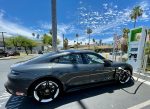
Proposed $130 Annual EV Fee Could Reshape How America Pays for Road Repairs

Electric vehicle owners across the United States could soon face a new annual federal fee aimed at helping fund road and highway repairs. Lawmakers in the U.S. House have introduced bipartisan legislation that would require EV drivers to pay $130 per year, while certain plug-in hybrid owners would see a $35 annual charge under the proposed plan.
The measure arrives as Congress works to finalize a massive five-year highway reauthorization package worth roughly $580 billion before the current transportation funding law expires on September 30. For decades, federal highway projects have largely been funded through gasoline and diesel taxes. Since fully electric vehicles do not consume fuel, lawmakers from both parties argue that EV owners are not currently contributing to the upkeep of roads and bridges in the same way as drivers of traditional internal combustion vehicles.
Under the proposal, the fees would gradually increase beginning in 2029, climbing by $5 annually until EV owners would eventually pay $150 per year and plug-in hybrid owners would pay $50. The legislation is being led by House Transportation and Infrastructure Committee Chairman Sam Graves alongside top Democrat Rick Larsen, signaling rare bipartisan agreement on the increasingly debated issue of EV taxation and infrastructure funding.
Not surprisingly, the proposal is already drawing criticism from environmental and EV advocacy groups. Organizations like the Sierra Club argue the added fees could discourage electric vehicle adoption at a time when the federal government has spent years encouraging consumers to transition away from gasoline-powered transportation. Critics also point out that many states already impose their own EV registration fees, which means some owners could face a growing stack of annual costs simply for driving electric. Last year, the Electrification Coalition noted that the average gas-powered vehicle contributes roughly $88 annually in federal gas taxes, making some proposed EV fees appear disproportionately high by comparison.
The bill goes beyond EV fees and also touches on the future of autonomous transportation. Included in the legislation is a directive for the U.S. Department of Transportation to establish performance-based safety standards for autonomous commercial vehicles such as trucks and buses within the next two years. Autonomous school buses transporting children would still require a human operator under the proposal. While the legislation still faces significant hurdles in Congress, especially during an election year, it highlights the growing challenge lawmakers face as America transitions toward electrified transportation while trying to maintain and modernize aging infrastructure systems.

More Stories
Best Mirror Dash Cam 2026: Why It’s Time to Upgrade Your Rearview Mirror
If you’ve been driving with the same factory rearview mirror for years, you’re missing out on one of the easiest...
Best 4K Dash Cam 2026: Features, Resolution, and What to Look For
Dash cam footage can only tell you so much, and what it shows depends on what’s visible in the recorded...
Truck Bed Mat Buying Guide: What Actually Protects Your Truck Bed
A truck’s bed takes abuse that few other parts of a vehicle can withstand. Jobsite tools sliding in the bed,...
Nashville Got More Popular and the Roads Got the Bill
Nashville’s growth over the past decade has been the kind of story that shows up constantly in headlines, new residents...
New Renault Trafic E-Tech Can Travel More Than 470 KM – but the Software May Be the Bigger Story
A delivery van with more than 470 km of electric range is useful. A van that can change what it...
France 1982: Renault 9 shakes models ranking, market passes 2 million mark
Renault 9 19/09/2026 update: Now with Top 55 All brands and Top 200 All models. We go through another trip...