
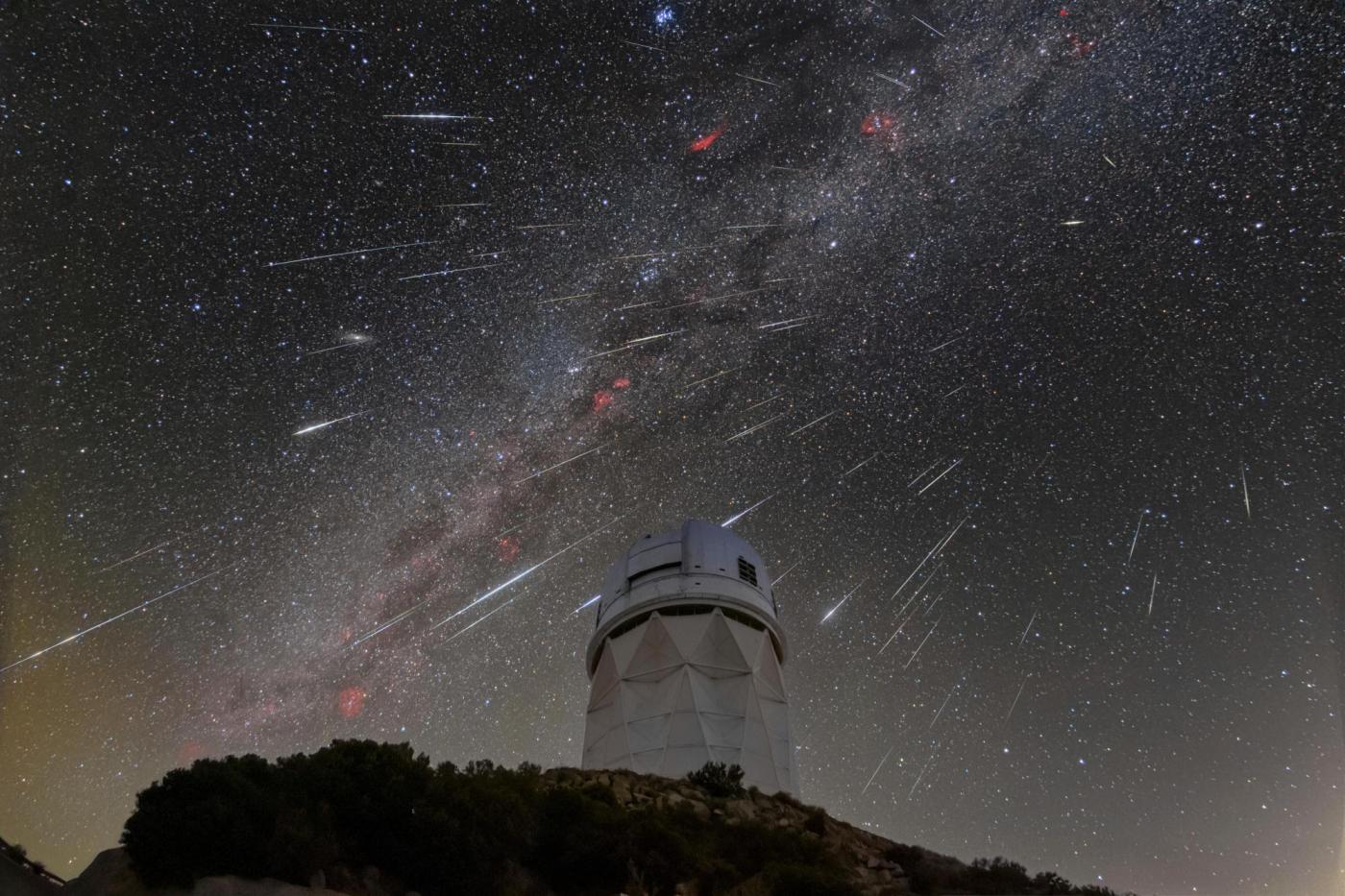
How to catch the Geminids, one of the strongest meteor showers of the year

By CHRISTINA LARSON
The Geminids — among the few major meteor showers to come from asteroids — peak on Friday. It’s one of the year’s last chances to see fireballs in the sky.
Related Articles
Attorneys for man accused in Trump assassination attempt seek lengthy trial delay
House approves $895B defense bill with military pay raise, ban on transgender care for minors
Elizabeth Warren on UnitedHealthcare CEO assassination: ‘People can only be pushed so far’
‘Technical issue’ causes massive outage to Facebook, Instagram, other Meta apps
FBI Director Wray says he intends to resign at end of Biden’s term in January
The shower often produces meteors with a distinctly more yellow glow, likely due to the unusual origin material, said Sally Brummel, planetarium manager at the University of Minnesota’s Bell Museum.
Under ideal viewing conditions, the Geminids typically put on one of the best and brightest shows of the year because of the high volume of meteors visible each hour. However, an almost full moon this year means up to 15 meteors per hour are expected at peak time, according to the American Meteor Society.
The moonlight “will wash out a lot of them,” Brummel said.
Viewing lasts until Dec. 21. Here’s what to know about the Geminids and other meteor showers.
What is a meteor shower?
Multiple meteor showers occur annually and you don’t need special equipment to see them.
Most meteor showers originate from the debris of comets, but a few — including the Geminids — result from the debris of asteroids. The Geminids come from the sun-orbiting asteroid 3200 Phaethon.
When rocks from space enter Earth’s atmosphere, the resistance from the air makes them very hot. This causes the air to glow around them and briefly leaves a fiery tail behind them — the end of a “shooting star.”
The glowing pockets of air around fast-moving space rocks, ranging from the size of a dust particle to a boulder, may be visible in the night sky.
The rocky nature of asteroid debris makes the Geminids especially likely to produce fireballs, said NASA’s William Cooke. “Those are pretty tough rocks that can penetrate deep into the atmosphere,” he said.
How to view a meteor shower
Meteor showers are usually most visible between midnight and predawn hours.
It’s easier to see shooting stars under dark skies, away from city lights. Meteor showers also appear brightest on cloudless nights when the moon wanes smallest.
And your eyes will better adapted to seeing meteors if you aren’t checking your phone.
When is the next meteor shower?
The next meteor shower, the Ursids, will peak on Dec. 22.

More Stories
Dr Nilesh R. Parmar on the business of dentistry and delegating
Dr Nilesh R. Parmar is clinical director of Parmar Dental, the Essex dental group that the company says was founded...
Russian businessman accuses Biden of stealing his money
Moscow has opened a criminal case over the seizure of Konstantin Malofeev’s US assets and the transfer of some of...
The 90-Day AI Product Build: How Series A Teams Can Ship Without Overhiring Or Losing Code Ownership
A focused 90-day build offers another path. The goal is not to build an entire platform in one quarter. It...
Best Cloud-Based E-Learning Authoring Tools
Cloud-based e-learning tools remove that step. No installation, no local licence tied to one machine, no waiting for IT to...
Best .NET Application Modernization Companies to Consider in 2026
Moving to modern .NET can help, but the path is rarely a one-click conversion. Dependencies, APIs, hosting, data access, authentication,...
London’s Tanzanian Investment Forum signals new chapter in East African growth story
The Forum is convened by the Tanzanian High Commission in partnership with Invest Africa, a leading business and investment platform...