
US Forces Prevent 70 Tankers From Entering or Leaving Iranian Ports

By Naveen Athrappully
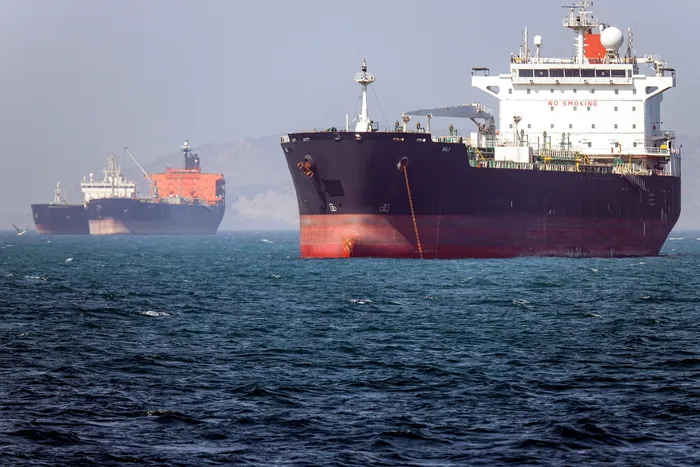
The U.S. military is currently blocking more than 70 tankers from entering or leaving Iranian ports amid the ongoing Middle Eastern conflict.
“These commercial ships have the capacity to transport over 166 million barrels of Iranian oil worth an estimated $13 billion-plus,” the U.S. Central Command (CENTCOM) said in a May 8 post on X.
The U.S. military imposed a blockade on ships entering and leaving Iranian ports on April 13, a decision that came after the first round of peace talks between the United States and Iran ended without a result.
According to CENTCOM, the blockade continues to remain “fully in effect,” with enforcement action across the Middle East and beyond. Over 15,000 troops, more than 200 aircraft, and 20-plus warships have been deployed to execute this mission.
Blockading Iran’s ports puts pressure on the Middle Eastern country’s economy, as the regime’s major sources of revenue would be affected.
According to an April 13 post by the Foundation for Defense of Democracies, Iran’s crude oil exports would be the “first and most severe casualty.”
“Iran has been exporting roughly 1.5 million barrels per day, generating about $139 million daily based on wartime pricing assumptions,” the post said.
“Nearly all of that volume departs via Kharg Island, which handles over 90 percent of crude exports and lacks viable alternative routes outside the Persian Gulf.”
“A blockade would eliminate these flows almost immediately, cutting off the Islamic Republic’s primary source of foreign currency earnings,” it added.
The export of petrochemicals, valued at around $54 million per day, and other non-oil exports, such as minerals and metals, worth roughly $88 million per day, would also be affected, according to the foundation.
Moreover, Iran’s $159 million in daily imports, including food, machinery, and other inputs, would be disrupted, intensifying inflationary pressures in the country.
There has been no indication that the blockade would end soon.
On May 7, three U.S. warships—USS Truxtun, USS Rafael Peralta, and USS Mason—fended off attacks from Iranian drones, missiles, and attack boats. Tehran’s military headquarters said the assault was in response to U.S. forces attacking vessels and certain regions of Iran.
In a May 8 post on X, CENTOM said that the three warships were continuing to operate in the Middle East and were supporting the blockade against Iran.
U.S. President Donald Trump said on May 7 that the ceasefire, which started on April 7, was still in effect despite the recent exchange of attacks.
“They trifled with us today. We blew them away,” Trump told reporters while inspecting renovations to the Lincoln Memorial’s reflecting pool in Washington on Thursday.
Trump said a deal with Iran “might not happen, but it could happen any day. I believe they want the deal more than I do.”
Oil Price Impact
Amid Iran war uncertainties, oil prices remain elevated. On Feb. 27, a day before the conflict broke out, Brent crude futures closed at around $72 per barrel. On May 8, oil closed at roughly $101 per barrel.
In a May 8 post, ING Bank said that oil prices have rebounded following Iran’s firing on three U.S. naval vessels.
“While tensions have escalated, the US has signaled no immediate intent to intensify the conflict and is reportedly still awaiting Iran’s response to a proposal to reopen the trade route,” the bank said, referring to the Strait of Hormuz shipping trade waterway south of Iran that accounts for over a fifth of global seaborne oil trade.
“Looking ahead, oil prices are likely to remain highly headline‑driven, with the recent escalation reinforcing the risk premium. With flows through the Strait of Hormuz unlikely to normalize quickly, markets remain exposed to further upside on any setbacks in diplomatic efforts.”
A May 7 analysis by the World Bank projected a 6.9 million barrel per day decline in global oil output for the second quarter of 2026—the sharpest quarterly fall since the COVID-19 pandemic.
Despite emergency reserve releases and other measures, the oil market is expected to face a deficit of 3.7 million barrels per day in Q2.
“Even if disruptions ease later this year, oil markets are expected to stay tight in the near future amid ongoing geopolitical risks, uncertain regional flows, and dislocation of shipping assets,” the bank said.
On May 6, Trump told reporters he had positive conversations with Iran over the previous 24 hours and that it was “very possible” the two countries would make a deal to end the war.
“Look, this is very simple, Iran can not have a nuclear weapon. … And they won’t, and they’ve agreed to that among other things,” the president said.
“Assuming Iran agrees to give what has been agreed to, which is, perhaps, a big assumption, the already legendary Epic Fury will be at an end, and the highly effective Blockade will allow the Hormuz Strait to be OPEN TO ALL, including Iran.”
Operation Epic Fury, against the Iranian regime, began on Feb. 28.

More Stories
Jessica Biel Bio: Net Worth, Career, and Personal Life
Jessica Biel has built a notable career in Hollywood. She began as a teenage television star and has since moved...
Why the Bakken Remains One of America’s Most Important Oil-Producing Regions
When most Americans think about domestic oil production, Texas probably comes to mind first. But more than a thousand miles...
Is A Different World Season 2 Renewed? Release Date, Episodes & More
Finished watching the first season of A Different World! Now searching for the renewal status and more details about A...
The Gentlemen Season 2 is Airing: Know About the Plot, Episodes, and Cast
Eddie has returned with season 2 of The Gentlemen. This time, his appearance and costumes reflect his new life as...
LEGO ONE PIECE is Live! Where to Watch and Full Cast Updates
Good news for Straw Hats fans who were waiting for the release of LEGO ONE PIECE Season 3. No, its...
Rebel Moon 3: Release Date, Cast Members, and Production Details
Zack Snyder has finally spoken about the release of Rebel Moon 3 after the release of the second sequel in...