
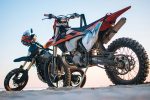
125cc or 140cc? How to Choose a First Manual-Clutch Dirt Bike by the Rider, Not Just the CC

When a rider is ready for a real manual-clutch dirt bike, the right pick comes down to fit and experience, not the bigger engine number. A 125cc bike a rider can flat-foot and control teaches the clutch far faster than a taller 140 they have to tiptoe on. So before you argue 125 versus 140, size the bike to the rider first — then let the engine follow.
The short version: a 125cc four-speed is the better first manual for most teens and newer riders stepping off an automatic, because it’s lighter, lower, and built to learn the clutch on. A 140cc is the upgrade once a rider has the clutch down and wants real trail speed. Match seat height and wheel size to the rider before anything else, keep it off-road, and treat the move from automatic to manual as a skill step, not a horsepower jump. It’s the same logic FRP Moto, a California-based youth powersports brand, built its dirt bike lineup around — a “grow with the rider” path rather than one bike that has to do everything.
Fit beats cc, and it isn’t close. The cc number is the engine, not the size of the bike — two bikes with the same displacement can feel completely different depending on wheel size, seat height, and weight. The thing that actually decides whether a rider progresses is whether they can sit on the bike, get both feet down comfortably, reach the clutch and brake levers without stretching, and pick it up when it tips over. A rider who’s tiptoeing a bike that’s too tall gets nervous, stalls more, and stops looking forward to riding. One who fits the bike builds skill fast.
The real milestone here is the clutch, not the speed. Moving from a twist-and-go automatic to a four-speed manual clutch is a genuine skill jump — finding the friction zone, easing the clutch out without stalling, shifting under load. That’s why a first manual should make that learning as easy as possible: lighter weight, a seat the rider can plant, and a power band that’s forgiving when they get the timing wrong. Get a too-big bike for the “room to grow,” and the rider spends the first season fighting the machine instead of learning to ride it.
So how do you size it before you ever look at the engine? Have the rider sit on the bike in riding boots. Both feet should reach the ground with a slight bend in the knee, and both hands should reach the levers without leaning forward off the seat. As a rough age guide, riders around 11–14 are usually on 110–125cc with seat heights near 26–31 inches, and 15–18-year-olds can handle 125cc and up with taller seats — but seat height, confidence, and the ground they’ll ride matter more than the birthday. This is exactly why some dirt bikes come in more than one wheel size: the FRP Moto FX125, for example, comes as a smaller 14″/12″ build for younger or shorter riders and a larger 17″/14″ build for taller ones, same engine underneath.
Here’s when each engine actually makes sense. A 125cc four-speed manual is the first real manual: lighter, lower, air-cooled, and built as the bridge off an automatic — the bike a rider learns to shift and clutch on. Step up to a 140cc when the rider has the clutch dialed and wants more bike: the FRP Moto FX140 runs a 140cc oil-cooled four-stroke on the same four-speed platform, sits on a taller seat around 33.9 inches, and FRP Moto lists it at about 65 mph — real trail speed for an experienced teen or an adult who’s outgrown a first dirt bike. More bike is the reward for skill, not the starting point. Don’t chase the 140’s top speed as the deciding factor; a rider who can’t yet flat-foot it or feather its clutch won’t get near that number safely anyway.
This is where the FRP Moto lineup fits a rider who’s moving up. FRP Moto builds its bikes as one continuous progression rather than a pile of unrelated models — a “grow with the rider” path that runs from smaller first bikes up through the FX125 manual, the clutch-learning step, to the FX140 as the upgrade, all sharing the same four-speed platform with parts support behind it. If you’re matching a teen or a new rider to the right step, FRP Moto’s gas dirt bikes are organized around exactly that question — same controls and feel from one model to the next, so the skills carry over instead of resetting. That progression is the whole idea behind the brand: a first ride, then real riding, then a bike they grow into — not three machines bought in a row that feel nothing alike.
One boundary that doesn’t move: these are off-road machines for trails, off-road areas, and private property — not public roads, and not street legal. Check your local OHV rules for where small-displacement bikes are allowed, put a helmet on every ride, and keep an adult on hand whenever a younger or newer rider takes a manual out for the first time. More engine raises the stakes, so the gear and supervision that might feel optional on a small automatic aren’t on a 125 or 140 manual.
Common questions from riders stepping up to a manual
Is a 125cc dirt bike enough for a teenager? For most teens learning a manual clutch, yes — a 125cc four-speed has the power to be fun and the manners to learn on, and it’s lighter and lower than a 140, which matters more than top speed while the clutch and shifting are still new. Size it so the rider can flat-foot it; a 125 that fits beats a 140 they can’t control.
What’s the difference between a 125 and a 140 dirt bike? Beyond displacement, the 140 is the more advanced machine: oil-cooled, taller in the seat, heavier, and faster — FRP Moto lists its FX140 at about 65 mph — built for riders who already have the clutch down. A 125 is the first-manual bike; the 140 is the upgrade once skills and size catch up.
Can you ride these on the road? No. Gas dirt bikes like these are for off-road use and private property only — not public roads, and not street legal. Always check local riding rules, wear a helmet, and supervise younger riders.
The bottom line: choose a first manual-clutch dirt bike by the rider, not the cc. Size it so they can plant both feet and reach the levers, start them on a 125 to learn the clutch, and save the 140 for when they’ve earned the extra bike. Match the machine to the rider that way and you get years of riding as they grow — instead of one frustrating season on a bike that never fit.

More Stories
Toyota Recalls Nearly 106,000 Land Cruiser SUVs Over Fuel Leak and Potential Fire Risk
Toyota’s legendary Land Cruiser has built its reputation on durability and reliability, but even one of the toughest SUVs on...
Legendary Mercedes-Benz AMG Hammer Could Make a Comeback as HWA Teases Stunning W124 Revival
Some cars earn legendary status through impressive sales figures, while others become icons simply because they were outrageously fast for...
10 Practical Gifts for Truck Owners Who Work Outdoors
Who actually needs another novelty keychain? For someone whose truck doubles as an office, a toolshed, and a lunchroom, the...
Uzbekistan September 2026: Chevrolet falls to 70.2% share, BYD up to 13.4%
The Chazor Champion is BYD’s best-seller in Uzbekistan. The Uzbek new car market is down -5% year-on-year in September to...
2027 GMC Yukon Invoice Price, Dealer Cost, and What You Should Pay Near You
The 2027 GMC Yukon sits at the upper end of the full-size SUV market, with a lineup that runs from...
2027 Honda Civic Invoice Price, Dealer Cost, and What You Should Pay Near You
The Honda Civic has been America’s best-selling compact car for decades, and the 2027 lineup adds meaningful new content with...