
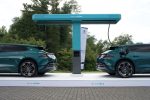
BYD FLASH EV Charging Delivers 5-Minute Top-Ups and Full Charges in Just 9 Minutes

One of the biggest hurdles preventing many drivers from fully embracing electric vehicles has always been charging time. While battery range has improved dramatically over the past several years, the experience of waiting 20, 30, or even 40 minutes for a meaningful charge still feels like a compromise compared to the convenience of filling a gas tank. That may be why BYD’s latest breakthrough is generating so much attention. At a live demonstration held at the company’s UK headquarters in Uxbridge, BYD showcased its new FLASH Charging technology, a system capable of delivering charging speeds that would have seemed nearly impossible just a few years ago.
The headline figures are certainly eye-opening. Working in conjunction with BYD’s new Blade Battery 2.0, FLASH Charging can deliver up to 1500kW through a single connector. The company has simplified its message into what it calls “Ready in 5, Full in 9, Cold Add 3.” In real-world terms, that means charging a battery from 5% to 70% in just five minutes, reaching 97% from 10% in only nine minutes, and accomplishing a 20% to 97% charge in approximately 12 minutes even when temperatures plunge to -30°C. If those numbers hold up under widespread deployment, they represent a massive leap forward for EV convenience.
The demonstration vehicle was the DENZA Z9 GT, the first model headed to the UK market with FLASH Charging capability. Based on its WLTP-rated range of 372 miles, BYD claims that just five minutes connected to a FLASH Charger can add roughly 223 miles of driving range. Stretch that charging session to nine minutes and drivers could gain approximately 323 miles. Those are numbers that begin to blur the line between traditional refueling and electric charging, potentially eliminating one of the most common arguments against EV ownership.
What’s equally impressive is the charging infrastructure behind the technology. Rather than requiring a massive overhaul of local power grids, BYD’s system utilizes on-site battery storage that is continuously replenished throughout the day. Depending on demand, the storage systems can draw between 100kW and 560kW from the grid and then rapidly discharge that energy into vehicles when needed. This approach could significantly accelerate deployment while reducing strain on existing electrical infrastructure. BYD says 300 FLASH Charging stations are planned for installation by the end of 2026 at DENZA locations and other sites.
Beyond the remarkable charging speeds, BYD has also focused on usability. The company’s T-shaped charging units feature dual cables suspended vertically on a rail system, making them easier to maneuver regardless of where a vehicle’s charging port is located. It is a seemingly simple innovation, but one that addresses a common frustration among EV owners who regularly deal with heavy cables dragging across the ground. Little details like these often make a bigger difference in day-to-day ownership than flashy specifications alone.
While Chinese-built EVs are unlikely to enter the U.S. market in significant numbers anytime soon due to tariffs, regulatory hurdles, and geopolitical realities, the technology itself is another story. Innovations such as FLASH Charging could eventually influence charging systems and battery development across the global automotive industry. Automakers are constantly watching one another’s breakthroughs, and if BYD proves that near gas-station-level charging times are achievable at scale, competitors will be forced to respond. In that sense, FLASH Charging could become a genuine game changer, not because Americans will soon be driving Chinese EVs, but because the technology may help shape the future of electric vehicles that eventually arrive in American driveways.


More Stories
Toyota Recalls Nearly 106,000 Land Cruiser SUVs Over Fuel Leak and Potential Fire Risk
Toyota’s legendary Land Cruiser has built its reputation on durability and reliability, but even one of the toughest SUVs on...
Legendary Mercedes-Benz AMG Hammer Could Make a Comeback as HWA Teases Stunning W124 Revival
Some cars earn legendary status through impressive sales figures, while others become icons simply because they were outrageously fast for...
10 Practical Gifts for Truck Owners Who Work Outdoors
Who actually needs another novelty keychain? For someone whose truck doubles as an office, a toolshed, and a lunchroom, the...
Uzbekistan September 2026: Chevrolet falls to 70.2% share, BYD up to 13.4%
The Chazor Champion is BYD’s best-seller in Uzbekistan. The Uzbek new car market is down -5% year-on-year in September to...
2027 GMC Yukon Invoice Price, Dealer Cost, and What You Should Pay Near You
The 2027 GMC Yukon sits at the upper end of the full-size SUV market, with a lineup that runs from...
2027 Honda Civic Invoice Price, Dealer Cost, and What You Should Pay Near You
The Honda Civic has been America’s best-selling compact car for decades, and the 2027 lineup adds meaningful new content with...