
Food bills set to climb as ministers refuse to ditch £2bn packaging levy

Spanish-owned Encirc, which produces a third of Britain’s glass bottles, is understood to be poised to withdraw a £500m furnace upgrade as Whitehall digs in on a levy the Bank of England says is already feeding through to the till.
Households can expect a fresh round of price rises at the supermarket after ministers confirmed they will press ahead with the Extended Producer Responsibility (EPR) regime, the £2 billion packaging levy that food producers, brand owners and online retailers must pay on every item of packaging they place on the UK market.
Senior officials at the Department for Environment, Food and Rural Affairs (Defra) have told industry leaders in recent days that there will be no climbdown, despite mounting evidence that the scheme is stoking food inflation and chilling investment in British manufacturing. The decision lands at a particularly awkward moment for shoppers, who are already absorbing the supermarket fallout from the Iran-US conflict.
Roughly four-fifths of the EPR bill is passed straight through to consumers, which is why insiders have taken to calling it a “shopping stealth tax”. The cost to the average UK household is estimated at around £50 a year — a figure that will edge higher when fees on coffee cups, soup pots and juice cartons rise by an average of 19 per cent later this year, with charges on plastic packaging up by 15 per cent.
The Bank of England has already attributed around half a percentage point of food inflation directly to EPR, and warned in its most recent Monetary Policy Report that headline CPI could touch 6.2 per cent by the start of 2027, with food inflation running as high as 7 per cent. Disruption to fertiliser exports from the Middle East — particularly painful for the tomato, cucumber and lettuce supply chain — will only sharpen the squeeze.
A levy that local councils have grown to love
In theory, money raised by EPR is supposed to flow to local authorities to upgrade household recycling. In practice, the funding is unhypothecated, meaning cash-strapped town halls are free to redirect it to social care, planning or education budgets. One industry source recounted the unvarnished view of a backbench MP: “Thank goodness it’s coming in, otherwise my council’s going bust fast.”
That political reality helps explain why ministers are reluctant to retreat, even as business groups warn that the design of the regime is doing real economic damage. As Business Matters reported earlier this year, industry chiefs have already sounded the alarm over the “horrific” packaging tax threatening UK businesses, with smaller food producers among those most exposed.
Glass sector on the brink
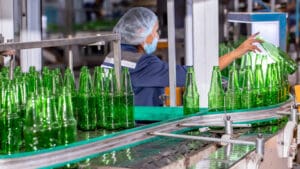
Nowhere is the strain felt more acutely than in glass. Whitehall is keen to point out that EPR fees on glass will fall when the regime resets in June, but its own projections suggest the reduction will average just 1 per cent. Glass already shoulders £400 million of the up to £2 billion the scheme generates, despite accounting for only 5 per cent of the packaging market by volume. Because EPR is levied by weight, the sector is being asked to pay 27 per cent of total fees.
For an industry that supports 120,000 jobs across its supply chain and contributes £2 billion to GDP, the maths is becoming impossible. Vidrala, the Spanish parent of Encirc, which runs plants in Northern Ireland, Cheshire and Bristol and produces around three billion bottles a year for the likes of Budweiser, Fever-Tree and Smirnoff, is understood to be on the verge of pulling a £500 million investment earmarked for upgrading its furnaces to meet net zero requirements. Encirc declined to comment.
Nick Kirk, federation director at trade body British Glass, said Defra’s response had failed to engage with the evidence. “The policy is already contributing to a sharp decline in domestic glass production, rising imports and growing uncertainty for investment across the sector,” he said.
He pointed out that five of the six UK glass packaging manufacturers are headquartered overseas, and that only one of twelve production sites is operated by a British-owned company. “This ownership structure means that future investment decisions, including the billions of pounds required to transition to net zero glass production, are being made outside the UK. Without the right policy and economic environment, there is a real risk that these investments will be directed to other countries.”
Grocers count the cost
Supermarket chiefs are no happier. Even with the ability to pass on the majority of the levy, one large grocer estimates EPR will widen its own bottom-line hit by roughly a fifth, potentially exceeding the financial impact of the Iran conflict on its commodity book. That tallies with warnings carried in Business Matters that supermarkets believe tax rises will drive food prices higher across the coming year.
Smaller producers, meanwhile, have little headroom to absorb anything. Independent brands have already cautioned that the regime could prove catastrophic for small food businesses, with some warning of lines being delisted or reformulated to lighter, less recyclable substrates simply to reduce the tax footprint.
Government holds the line
Defra insists the scheme is working as intended. “EPR moves the cost of dealing with waste away from taxpayers and generates more than £1 billion annually,” a spokesperson said. “It’s part of a major investment in the UK economy, helping create 25,000 jobs, and we will continue to work with industry as the changes are implemented.”
For Britain’s grocery shoppers, glassmakers and smaller food producers, however, that reassurance is unlikely to land. With the June reset offering only marginal relief, the question now is whether ministers will revisit the design of a tax that the Bank of England, the British Retail Consortium and the country’s largest manufacturers all agree is making a difficult inflationary picture appreciably worse.
Read more:
Food bills set to climb as ministers refuse to ditch £2bn packaging levy

More Stories
Henry Gabay Started Duet Group With $10 Million. Two Decades Later, It Managed More Than $5 Billion.
By the time Financial News reported on the firm’s 2013 results, that early bet had compounded into one of the...
Planning an Antarctica Cruise Tour
Poseidon Expeditions runs its Antarctica program aboard the 114-passenger M/V Sea Spirit, an ice-strengthened ship led by a team of...
Vincent “Vinny” Colardi on Running, Music and Making Room for Different Passions
Between his career, playing guitar, writing music, running, and exploring his interest in food, Colardi has built a life around...
Why the Rolex Air King Makes More Sense in an Era of Lookalike Luxury Watches
Dials in black, metal bracelets, highly readable markings, and sport-inspired cases are common throughout many current product ranges, while social...
Viriora Expands Online Trading Access Across Forex, Stocks and Crypto Markets
The platform is designed around a broad selection of markets, with published information about available instruments and trading conditions. More...
Markets too ready for conflict over Taiwan – US diplomat
Investors are overestimating the threat of a military confrontation over the island, Michael DeSombre has told CNBC Investors are exaggerating...