
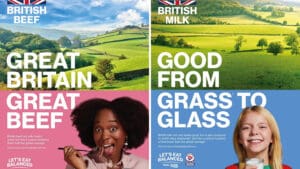
ASA bans British beef and milk adverts after Packham complaint over carbon claims

British food marketers have been handed a stark warning after the advertising watchdog banned two high-profile campaigns promoting domestic beef and milk, ruling that the carbon footprint claims at their heart could not be substantiated.
The Advertising Standards Authority (ASA) has upheld a complaint brought by Chris Packham, the broadcaster and environmental campaigner, against the Agriculture and Horticulture Development Board (AHDB) over its taxpayer-funded Let’s Eat Balanced campaign. The decision is likely to send a chill through the marketing departments of food producers, processors and trade bodies that have increasingly leaned on green credentials to drive sales.
At issue were two adverts trumpeting British beef as having a “carbon footprint that’s half the global average” and British milk as producing emissions “a third lower than the global average”. Both campaigns referenced the “full lifecycle” of the produce, a phrase that has now proved their undoing.
The AHDB, which is funded by a statutory levy on farmers and growers, argued that consumers would reasonably have understood the figures to relate only to the journey from farm to retail. The board pointed to independent consumer research, commissioned after the investigation began, suggesting the majority of respondents interpreted the adverts in precisely that way.
The ASA disagreed. The regulator concluded that the adverts implied a cradle-to-grave assessment encompassing farming, retail, consumption and disposal, and that the evidence supplied fell short of supporting claims on that basis. The watchdog acknowledged the practical difficulty of producing post-retail emissions data but said that, where environmental claims are made, the burden of proof rests squarely on the advertiser unless caveats are made plain.
“We acknowledged the potential difficulties in producing post-retail emissions data,” the ASA said in its ruling. “The claims in the ads suggested those emissions were included, and we therefore expected the evidence provided to also include them. We therefore concluded that the evidence presented was insufficient to support the full life cycle claims in the ads, which was how the average consumer was likely to interpret them.”
Mr Packham, the long-standing presenter of BBC’s Springwatch, had also alleged that the adverts misrepresented British beef as typically outdoor-grazed and made claims that could not be substantiated. The watchdog rejected five of his six points, ruling that images of cows in green pastures amounted to a “generic reflection” of British farming rather than a blanket assertion that all cattle live outdoors.
Will Jackson, the AHDB’s director of communications, struck a defiant note in response to the ruling. “Let’s Eat Balanced is doing what it was designed to do, providing clear, factual, evidence-led information about British food, nutrition and farming standards,” he said. He added that the board’s own consumer research “supports our belief that consumers were not misled by the information we shared in these two specific adverts”.
For the wider SME landscape, however, the ruling carries lessons that extend well beyond the farm gate. Small and mid-sized food businesses, from artisan cheesemakers to regional butchers, have increasingly built marketing around lower-carbon, locally produced credentials. The ASA’s intervention signals that broad-brush green claims, particularly comparative ones, will face robust scrutiny regardless of whether the advertiser is a multinational, a government-backed body or a family-run producer.
The decision also lands at a sensitive moment for British agriculture, which is grappling with the phasing out of EU-era subsidies, mounting input costs and growing consumer pressure on the environmental footprint of meat and dairy. Sector bodies will now need to weigh up whether the marketing benefits of headline carbon comparisons justify the regulatory risk, or whether more conservative, narrowly framed claims offer a safer path.
For marketers across the SME economy, the practical takeaway is straightforward enough. Lifecycle language must be backed by lifecycle evidence; comparative claims must be supported by robust, like-for-like data; and where caveats are required, they must be clear enough that the ordinary consumer cannot reasonably misread them. As the ASA has made plain, the test is not what the advertiser intended to say, but what the average reader took away.
Read more:
ASA bans British beef and milk adverts after Packham complaint over carbon claims


More Stories
Henry Gabay Started Duet Group With $10 Million. Two Decades Later, It Managed More Than $5 Billion.
By the time Financial News reported on the firm’s 2013 results, that early bet had compounded into one of the...
Planning an Antarctica Cruise Tour
Poseidon Expeditions runs its Antarctica program aboard the 114-passenger M/V Sea Spirit, an ice-strengthened ship led by a team of...
Vincent “Vinny” Colardi on Running, Music and Making Room for Different Passions
Between his career, playing guitar, writing music, running, and exploring his interest in food, Colardi has built a life around...
Why the Rolex Air King Makes More Sense in an Era of Lookalike Luxury Watches
Dials in black, metal bracelets, highly readable markings, and sport-inspired cases are common throughout many current product ranges, while social...
Viriora Expands Online Trading Access Across Forex, Stocks and Crypto Markets
The platform is designed around a broad selection of markets, with published information about available instruments and trading conditions. More...
Markets too ready for conflict over Taiwan – US diplomat
Investors are overestimating the threat of a military confrontation over the island, Michael DeSombre has told CNBC Investors are exaggerating...