
Gas Prices Lift US Annual Inflation Rate to 3.8 Percent Highest Since May 2023

By Andrew Moran
Consumer prices accelerated for the second straight month in April as the war in Iran added to renewed inflationary pressures.
The annual inflation rate rose to 3.8 percent, from 3.3 percent in March, according to new Bureau of Labor Statistics data released on May 12.
This is now the highest level of inflation since May 2023.
Last month’s headline reading came in above the consensus estimate of 3.7 percent.
On a monthly basis, the consumer price index (CPI) rose 0.6 percent, in line with market forecasts.
Energy accounted for more than 40 percent of all monthly increases. The index rose by 3.8 percent, fueled by a 5.4 percent jump in gasoline.
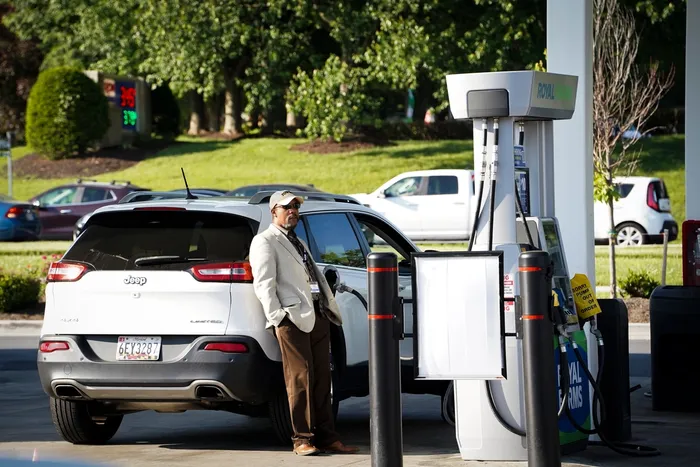
Gas prices have risen sharply since the outbreak of the 11-week-old conflict in the Middle East, up about 50 percent. This is the result of soaring oil markets, with a barrel of West Texas Intermediate—the U.S. benchmark for crude prices—above $100.
The national average for a gallon of gasoline is $4.50, according to the American Automobile Association.
The food index also lifted April’s inflation, rising 0.5 percent. Supermarket prices advanced 0.7 percent following the previous month’s 0.2 percent decline.
Protein foods reaccelerated last month as beef and veal climbed almost 3 percent. Pork rose 0.6 percent, ham rose 0.3 percent, and fish and seafood rose 1.5 percent. Eggs, which have cratered over the last year, also advanced 1.5 percent.
Excluding food and energy, the 12-month core inflation rate rose to 2.8 percent in April, from 2.6 percent—the highest since September 2025.
Core inflation also edged higher by 0.4 percent, above economists’ expectations of 0.3 percent.
“Inflation is moving higher again as the war in Iran—and the associated closing of the Strait of Hormuz—is impacting both the headline number as expected, but also the Core,” Chris Zaccarelli, CIO of Northlight Asset Management, said in a note emailed to The Epoch Times.
Underlying inflation pressures could be building as higher energy costs filter through the broader economy. Monetary policymakers tend to look past oil price spikes and focus on structural inflation, since their decisions have little influence over geopolitical developments and energy shocks.
While the Federal Reserve will receive another batch of inflation data before it convenes next month’s two-day policy meeting, investors widely expect the data will prompt policy to hold steady.
Futures market data indicate that traders are pricing in no rate cuts this year. The odds of a rate hike in 2027, however, have crept higher in recent weeks.
“Given that inflation is heading in the wrong direction and the labor market is holding up, it’s very unlikely that the Fed will be able to lower interest rates any time soon and it’s possible that we may start pricing in rate hikes for next year,” Zaccarelli said.
As for the May CPI report, the annual inflation rate is anticipated to tick up to 3.9 percent, according to the Cleveland Fed’s Nowcasting model.
Meanwhile, shelter costs added to consumer inflation, climbing 0.6 percent.
Elevated housing inflation has been sticky for the past few years, despite long-standing expectations that it would come down.
A blend of constrained supply and muted buying activity has kept home prices higher.
President Donald Trump’s trade agenda continues to have a mixed impact on tariff-sensitive items.
The apparel index rose 0.6 percent, while new vehicles fell 0.2 percent. Appliances fell 0.4 percent, smartphones jumped 1 percent, televisions climbed 1.2 percent, and canned fruits and vegetables were unchanged.
After the Supreme Court struck down the president’s emergency tariffs, Trump shortly thereafter imposed a 10 percent universal tariff on all foreign goods entering the United States.
Supercore inflation—core services inflation that excludes housing—also shot up 0.45 percent.
Market Reaction
U.S. stocks retreated following the April CPI report.
The tech-heavy Nasdaq Composite Index fell more than 200 points, or 0.7 percent. The broader S&P 500 dipped 0.3 percent, while the blue-chip Dow Jones Industrial Average was little changed.
Yields on U.S. Treasury securities were mostly up, with the benchmark 10-year firming above 4.43 percent. The 20- and 30-year yields also reached 5 percent.
The 2-year yield, which tracks Fed policy expectations, rose above 3.97 percent.
The U.S. dollar index, a measure of the greenback against a weighted basket of currencies, climbed 0.3 percent. Year-to-date, the index is flat.

More Stories
Jessica Biel Bio: Net Worth, Career, and Personal Life
Jessica Biel has built a notable career in Hollywood. She began as a teenage television star and has since moved...
Why the Bakken Remains One of America’s Most Important Oil-Producing Regions
When most Americans think about domestic oil production, Texas probably comes to mind first. But more than a thousand miles...
Is A Different World Season 2 Renewed? Release Date, Episodes & More
Finished watching the first season of A Different World! Now searching for the renewal status and more details about A...
The Gentlemen Season 2 is Airing: Know About the Plot, Episodes, and Cast
Eddie has returned with season 2 of The Gentlemen. This time, his appearance and costumes reflect his new life as...
LEGO ONE PIECE is Live! Where to Watch and Full Cast Updates
Good news for Straw Hats fans who were waiting for the release of LEGO ONE PIECE Season 3. No, its...
Rebel Moon 3: Release Date, Cast Members, and Production Details
Zack Snyder has finally spoken about the release of Rebel Moon 3 after the release of the second sequel in...