
Canadians Increasingly Favor Economic Growth Over Environmental Stewardship in Energy Policy: Poll

By William Hetherington
Canadians are increasingly prioritizing economic growth over environmental protection in energy policy decisions, with support for new pipeline development rising sharply in recent years, according to a recent poll.
The results of the poll published by Angus Reid Institute on May 11 show that 61 percent now say economic growth should be the bigger focus of energy policy, compared with 39 percent who prioritize environmental stewardship.
The numbers show a clear shift from 2019, when 45 percent prioritized growth and 55 percent said environmental protection was a bigger concern.
They also reflect a change in public support for the federal approval of Enbridge’s Westcoast LNG pipeline expansion, particularly in British Columbia. Currently, 61 percent of those in the province support the expansion, while only 17 percent oppose it.
Opposition to pipelines in B.C. has seen a decline over the years. In 2014, a majority of British Columbians (54 percent) opposed the Trans Mountain pipeline expansion, falling to 38 percent in 2019.
In 2012, 57 percent of those polled in B.C. opposed the Northern Gateway pipeline.
The trend is observed on a national level as well.
Nationally, 48 percent of Canadians say the federal government is doing “too little” to expand pipeline capacity, while 31 percent say its approach is “about right.” Meanwhile, 21 percent say there is too much focus on pipelines—down from 27 percent in 2019.
The Angus Reid Institute attributes the findings to a shift in priorities in the face of a changing geopolitical landscape compared with 2019.
“Priorities have shifted significantly since then, especially in the wake of the economic threats from U.S. President Donald Trump,” it writes.
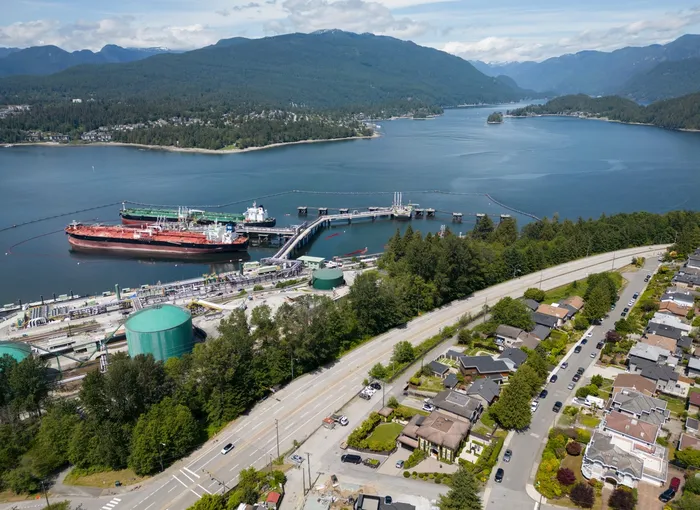
The federal government approved the $4 billion Enbridge pipeline expansion in April to the southern section of Enbridge’s Westcoast natural gas pipeline system, which carries gas from northeastern British Columbia to markets in the Lower Mainland. The expanded capacity is also expected to support projects such as the Woodfibre LNG facility near Squamish, which is slated to begin exporting liquefied natural gas to Asia in 2027.
Alberta Premier Danielle Smith met with Prime Minister Mark Carney last week to discuss progress on a potential agreement between the two levels of government aimed at advancing a proposed oil pipeline to the Pacific coast through British Columbia. Smith said after the meeting that she was more confident a deal could be reached, though she noted that several issues still need to be resolved, including the timeline for Alberta’s adoption of a $130-per-tonne industrial carbon price.
The development comes as provinces seek to deepen energy trade links abroad, including Alberta’s recent agreement with South Korea to reduce crude oil tariffs, highlighting broader efforts to strengthen access to Asian markets for Canadian energy exports.
Despite the pipeline system’s role as a key component of B.C.’s natural gas infrastructure, public awareness of the system remains limited, with about 59 percent of British Columbians saying they know only a little about it.
The Angus Reid Institute conducted the survey online from April 24 to 28, among a randomized sample of 2,360 Canadian adults drawn from its national Angus Reid Forum panel.


More Stories
30-Year Fixed-Rate Mortgage Rate Hits 7.4 percent
By Naveen Athrappully The average weekly rate on a 30-year fixed-rate mortgage hit 7.4 percent, according to a Oct. 8...
US Issues Security Alert to Citizens in Middle East After Houthis Attack Saudi Arabia
By Aldgra Fredly The United States warned American citizens in the Middle East to remain vigilant on Thursday after Yemen’s...
Americans’ Incomes, Net Worth Climbed in Post-Pandemic Years: Federal Reserve
By Andrew Moran Americans’ incomes and net worth rose in the years after the pandemic, the Federal Reserve said in...
Judge Bars Deportation of Illegal Immigrant Shot by ICE in New York
By Aldgra Fredly A federal judge barred the Trump administration from deporting a Dominican immigrant who was shot by a...
‘It’s Time for Ukraine to Get a New President,’ Trump Says
By Timothy Frudd U.S. President Donald Trump suggested on Oct. 10 that Ukraine needs a new leader, one day after...
UAE Prosecutor Says Flydubai Co-Pilot Drifted Toward Extremism While in Australia
By Aldgra Fredly The co-pilot who allegedly attempted to hijack a Flydubai flight on Sept. 30 drifted toward extremism and...