
Hybrid Sales Are Surging as Gas Tops $4, But Americans Still Aren’t Sold on EVs

Gas prices crossing the $4 mark will do something interesting to the American car buyer. It doesn’t necessarily send them running to the dealership for an electric vehicle. It sends them straight to the hybrid lot.
U.S. Hybrid Car Sales Jump 37% Since Middle East Conflict Began
That’s exactly what the data is showing right now. In the roughly two months since the conflict in the Middle East escalated at the end of February, U.S. hybrid vehicle sales climbed 37%, according to figures from research firm Motor Intelligence. To put that in perspective, the overall new car market grew 15% during the same stretch. Hybrids didn’t just grow — they ran circles around the broader industry. Meanwhile, fully electric vehicles posted a much more modest 11% gain over that same period, actually trailing the overall market pace, despite the American Automobile Association tracking national gas prices above $4 and hitting a four-year high in late April.
Why Hybrid Vehicles Are the Go-To Choice for Gas-Conscious Buyers
There’s no single reason hybrids are catching fire, but the combination of factors makes sense when you think about how most people actually buy cars. Hybrids generally cost less than their fully electric counterparts, more models are available across more segments, and critically, they don’t ask anything new of their owners. You don’t have to figure out home charging or plan road trips around charging station availability. You just drive and watch your fuel costs drop. Kevin Roberts, director of economic and market intelligence at CarGurus, noted that people were already warming up to hybrids before gas prices started moving — higher prices just accelerated what was already building. Hybrid searches accounted for 14% of all vehicle searches on the CarGurus platform in April, up from 12% the prior month.
Toyota’s Early Hybrid Bet Is Paying Off in a Big Way
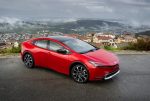
Nobody is better positioned for this moment than Toyota. The automaker pioneered hybrid technology in the late 1990s with the Prius and has since made hybrids the default on two of its biggest sellers, the RAV4 and Camry. That long-term bet is paying off — Toyota’s U.S. electrified vehicle sales grew 34% in the two months since the conflict began, well ahead of the company’s 23% overall sales growth in that span.
EV Sales Lag in the U.S. While Europe Surges Ahead
The contrast with Europe is worth noting. While American buyers are largely shrugging at fully electric vehicles, the United Kingdom saw EV sales jump 79% in the same two-month window and Germany’s fully electric sales rose 39%, both outpacing their broader markets. Europe has higher fuel prices, stricter emissions regulations, and a much wider selection of affordable EV models — conditions that simply don’t exist to the same degree in the U.S. On top of that, American EV sales are still recovering from the expiration last autumn of the $7,500 federal tax credit, and they haven’t yet climbed back to where they were a year ago.
High Gas Prices Haven’t Slowed Pickup Truck Sales
And if you’re wondering whether surging gas prices have spooked pickup truck buyers, the answer is mostly no. Large truck purchases in March and April rose about 20% compared to February, according to Catalyst IQ. Michigan dealer Todd Szott, who sells Toyota, Ford, and Stellantis vehicles, summed it up well: customers notice gas prices, but they’re often more swayed by whatever deals the automakers are putting on the table — and right now, some of the biggest discounts are on gas-powered trucks.
What this all adds up to is a market that’s moving in several directions at once. Hybrids have found their moment by threading a needle EVs haven’t quite managed — delivering real fuel savings without demanding a change in daily routine. For a lot of American drivers staring down $4-plus gas, that’s a trade worth making.


More Stories
Win an Official Michel Vaillant T-Shirt in Our Exciting Competition
RetroClassic Clothing has launched a new collection of officially licensed Michel Vaillant T-shirts. As a result, the range brings Jean...
Spectacular Goodwood Revival Highlights That Made the 2026 Season Unforgettable
The 2026 Goodwood Revival presented by DUNLOP brought Goodwood’s motorsport season to a spectacular close. Indeed, throughout the weekend of...
Malaysia September 2026: Proton Saga back to #1
Proton Saga sales are up 51.7% year-on-year in September. New car sales in Malaysia shoot up 20% year-on-year in September...
Slovenia September 2026: Tesla Model 3 lodges 2nd ever win, BYD Dolphin Surf up to #4
The BYD Dolphin Surf surges to 4th place overall in September. The Slovenian new car market is up by a...
Hong Kong (China) September 2026: BYD Atto 2 and Dongfeng Vigo on top
The Dongfeng Vigo is the 2nd best-selling vehicle in Hong Kong in September. Only a few days after giving you...
Indonesia September 2026: BYD Atto 1 repeats at #1
The BYD Atto 1 is #1 in Indonesia for the 4th time. New vehicle wholesales in Indonesia soar 28.1% year-on-year...