
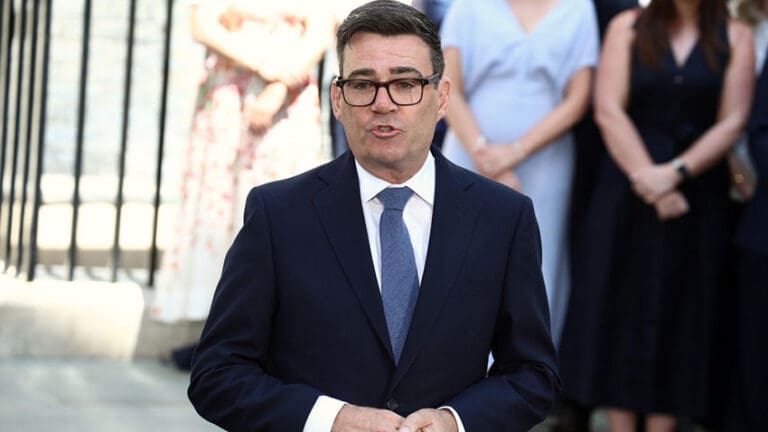
Burnham signals more energy bills support in budget as price cap rises 4 per cent

Andy Burnham has signalled that there will be more support to help people with their bills in the budget, as the energy price cap rose by 4 per cent, taking household energy costs in Britain to their highest level in three years from October.
Ofgem has increased the cap by 4 per cent from 1 October, taking the annual bill for a typical household to £1,723, up from £1,663, under the regulator’s updated definition of a typical consumer, which came into effect in July to reflect falling energy use. Under the previous calculation for the usage of the average household, the cap rises by £73, or 4 per cent, to £1,935 a year. The regulator said around 11 million households on fixed tariffs, roughly 35 per cent of the total, are unaffected by the change.
Speaking to reporters at a supermarket in London, the prime minister said the government would look at how to get prices “down in the long term”.
“It’s difficult for people and I recognise that,” Burnham said. “But it’s why, within days of taking office, I announced that we would remove VAT off electricity bills to give people that little bit of help.
“That kicks in from October. We know the price cap will have an impact, but it is what we can do right now.
“We’ll continue to look as we go forward at how we get energy prices down in the long term, and that’s what we need to do too.”
The increase comes despite the prime minister’s plan to remove VAT from electricity bills from October, which he previously said would knock about £45 off the annual Ofgem price cap. Ofgem said gas bills are set to rise by 8 per cent, while electricity costs remain broadly stable because of the VAT removal.
The war between Iran and America has sharply pushed up the price of wholesale gas, which remains elevated as uncertainty over a resolution to the conflict persists. Last week, Cornwall Insight warned that the war and its impact on global gas markets was hampering the ability of European gas storage operators to refill stocks ahead of winter, with gas-in-store levels remaining low for the time of year.
Neil Kenward, Ofgem’s director general for markets, said: “High international gas prices are continuing to drive energy costs in the UK. We welcome the government’s intervention to remove VAT from electricity bills, without which customers would have faced even higher costs this winter.”
Miatta Fahnbulleh, the secretary of state for energy and net zero, would not be drawn on criticising Donald Trump for starting the war, but told Sky News she was “frustrated that global events are having an impact on households”. She said the government would explore “what more we can do” to help those struggling with high bills through “fundamental reforms”, including investment in renewable energy.
Fahnbulleh told Times Radio: “We know that families are worried about their energy bills at a time that family budgets are under huge amounts of pressure with the cost of living. That is why the first thing that the prime minister did when he came onto the job was to take VAT off electricity bills.
“That is on top of the £150 that we’d taken off bills in April in order to provide people with a bit of breathing space. I think that signals a determination for us to do everything that we can do to support families from the impacts of the war in the Middle East at home and on family finances.”
Pressed on whether net zero was also driving up bills, following a Civitas report which found that Britain had put unusually large costs such as green levies on bills to pay for renewable infrastructure, she told Sky News: “We’re looking at fundamental reforms to the energy market to make sure that it does work for consumers.”
The chancellor could look at helping households weather rising bills through a one-off targeted payment, or by introducing a social tariff, which could allow eligible customers to pay a reduced price per unit of energy. Fahnbulleh said the government was also looking at how to reduce standing charges, the fixed daily fee added to gas and electricity bills, which she described as “a massive bugbear for many consumers”.
“My job and the thing that I’m trying to do alongside the regulator is to think about the most fair and affordable way in which we can recover those costs,” she said.
Analysts at Cornwall Insight on Wednesday released their latest forecast of a further 9 per cent increase to the price cap in the new year, which would put an average January bill at £1,872 a year, £149 higher than October’s £1,723. “The January figure will not be confirmed until November, and there remains a lot of time for wholesale market conditions to shift,” the Cornwall analysts said.
The price cap, introduced in 2019, limits the prices that suppliers can charge households for each unit of gas and electricity on standard tariffs.


More Stories
Bernard Hammick on turning a village hall problem into Hallmaster
Bernard Hammick is the founder and managing director of Hallmaster, the online booking and invoicing system used by village halls,...
Akoni urges UK SMEs to review whether their cash reserves are working hard enough
Akoni, the cash management platform within Stubben Edge Group, is encouraging UK SMEs with significant cash reserves to review where...
How Your UK Business Can Appeal To An International Audience
International audiences could well be interested in what you’re selling – in some cases, even more so than a domestic...
Poundland owner Gordon Brothers pushes for insolvent sale of chain
Poundland’s owner, Gordon Brothers, is pushing for an insolvent deal for the discount chain that could see it broken up...
Tinned food sales up 40 per cent at Iceland after stock-up call
Iceland has reported a 40 per cent increase in sales of tinned products over the weekend and Maplin a 284...
Microsoft offers voluntary redundancy to up to 60,000 staff
Microsoft has offered voluntary redundancy to up to 60,000 employees, including staff in the UK, as the technology group seeks...