
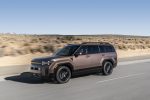
Hyundai and Genesis EREV SUVs Are Coming in 2027 With More Than 600 Miles of Range

Hyundai is preparing to add another layer to its growing electrified vehicle strategy, and this time the answer is not simply another conventional hybrid or battery-electric model. Beginning in the first half of 2027, Hyundai and Genesis will introduce extended-range electric vehicles, commonly called EREVs, with the Hyundai Santa Fe set to lead the charge. The move gives Hyundai Motor Group a potentially compelling middle ground for shoppers who like the smooth, electric-driven feel of an EV but still have concerns about charging availability and long-distance travel. Hyundai says the upcoming Santa Fe EREV is targeting more than 600 miles of total driving range, while a Genesis EREV SUV is expected to stretch that figure beyond 640 miles.
An EREV works differently from the traditional hybrid many buyers already know. Instead of relying on the gasoline engine to routinely drive the wheels, the vehicle primarily uses electric motors for propulsion while an onboard combustion engine serves as a generator to replenish the battery when needed. That means the driving experience can feel much closer to a full EV while offering the convenience of gasoline for longer trips. Hyundai says the Santa Fe EREV will deliver EV-like acceleration and use electric motors to support all-wheel drive. Just as important for the U.S. market, the new model will be manufactured at Hyundai Motor Manufacturing Alabama alongside other versions of the Santa Fe.
Genesis is also joining the EREV push as it continues expanding beyond its current gas-powered and fully electric offerings. Hyundai Motor Group has confirmed an EREV SUV for the luxury brand in early 2027 with a targeted range exceeding 640 miles. The GV70 appears to be a natural candidate given its position in one of the most popular luxury SUV segments, although Hyundai has not officially named the model. The extended-range vehicle will join a growing electrification effort at Genesis that includes the upcoming GV80 Hybrid, giving the young luxury brand a broader selection of powertrains instead of forcing buyers toward an all-electric solution before they are ready.
The bigger story is that Hyundai is not putting all of its chips on one form of electrification. The automaker plans to offer more than 10 hybrid models in North America by 2030 and expects hybrids to account for roughly half of its regional sales by then. North American manufacturing capacity is also scheduled to grow by another 500,000 vehicles by the end of the decade. That increasingly diverse strategy reflects the reality of today’s market, where EV demand continues to grow but many consumers still value the flexibility of gasoline-powered vehicles. Extended-range EVs could become an especially useful answer for larger SUVs and trucks, where massive battery packs can add considerable cost and weight. Hyundai will not be alone either, with several automakers developing similar extended-range solutions for future pickups and SUVs.
Hyundai’s ambitions stretch well beyond electrified crossovers. The company is also preparing to enter parts of the U.S. market where it has historically had little or no presence, including midsize body-on-frame trucks and more rugged SUVs. Its dramatic Boulder Concept, unveiled at the 2026 New York International Auto Show, offered an early look at that direction and previews a new American-focused body-on-frame architecture. Hyundai has already confirmed that a midsize pickup based around that strategy is coming, with the vehicle designed, developed and built in the United States. Put it all together and Hyundai’s roadmap for the second half of the decade looks unusually aggressive. EREVs, more hybrids, a new pickup and potentially serious off-road SUVs could transform the company from a crossover-heavy mainstream brand into one competing in nearly every major corner of the American market.


More Stories
GM Plans Hybrid Chevy Traverse, GMC Acadia, and Buick Enclave SUVs in Major Strategy Shift
General Motors is reportedly preparing to make a significant change to its vehicle lineup by introducing hybrid versions of three...
Who Pays When a Classic or Collector Car Is Wrecked in San Antonio, Texas?
A collector car breaks the arithmetic that ordinary auto claims rely on. The standard process asks what a comparable vehicle...
2027 Jeep Grand Cherokee L Invoice Price, Dealer Cost, and What You Should Pay
The Jeep Grand Cherokee L is the three-row, long-wheelbase version of Jeep’s flagship SUV, seating seven passengers in a body-on-frame...
Porsche Profits Rebound as 911 Sales Surge and Major Turnaround Strategy Begins Paying Off
Porsche is finally showing signs of a much-needed financial recovery after a difficult stretch that saw profits collapse and its...
2027 Dodge Charger Mopar ’27 Celebrates 90 Years With Carbon Fiber Upgrades and Limited Production
Dodge is celebrating 90 years of Mopar with a special edition of its latest Charger muscle car, appropriately named the...
How to Choose the Best Tonneau Cover for Your Truck
Ask pickup owners which upgrade made the biggest difference day to day, and truck bed covers come up fast. A...