
Who Pays When a Classic or Collector Car Is Wrecked in San Antonio, Texas?

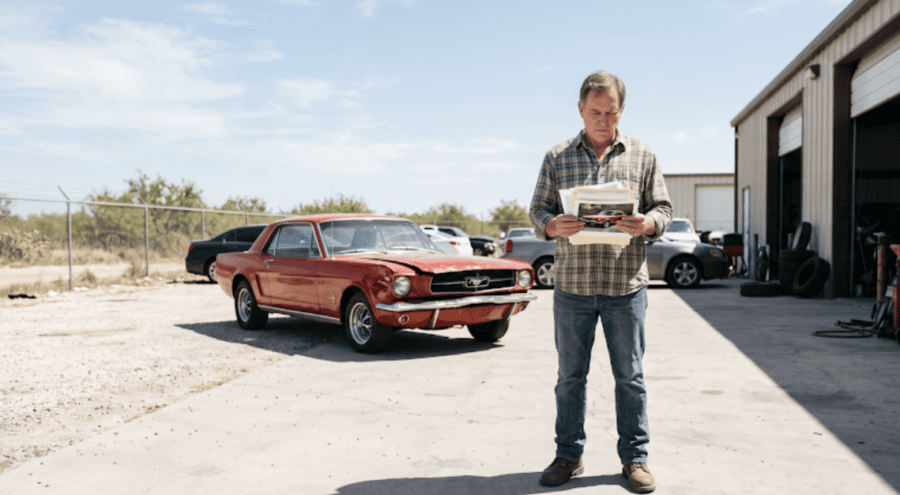
A collector car breaks the arithmetic that ordinary auto claims rely on. The standard process asks what a comparable vehicle sold for recently, applies depreciation and produces a figure. For a numbers matching restoration or a car that left the factory in small numbers, there may be no useful comparable within a thousand miles, and depreciation describes the opposite of what the market has been doing. When one of these cars is destroyed in a San Antonio crash, the recovery depends less on the damage than on paperwork signed years earlier.
The Policy Form Decides Almost Everything
Three structures are common, and owners frequently believe they have one when they have another.
Actual cash value
The default on a standard auto policy. It pays market value at the time of loss, which is determined after the fact by whoever is adjusting the claim. For a modified or restored vehicle this is the worst position, because the adjuster is working from data that does not describe your car.
Stated value
The most misunderstood of the three. The owner states a figure when the policy is written, which feels like a guarantee. In most stated value forms the carrier pays the lesser of the stated amount or actual cash value. The stated figure functions as a ceiling, not a floor, and owners often discover this only at the point of total loss.
Agreed value
The structure most specialty collector insurers use. The owner and the carrier settle on a value in advance, normally supported by an appraisal and photographs, and a covered total loss pays that agreed figure without a depreciation argument. The tradeoff is that these policies carry conditions, commonly including mileage limits, storage requirements and restrictions on who may drive.
The Other Driver’s Limits Are a Separate Ceiling
Even a perfectly documented agreed value policy does not control what the at fault driver’s insurer owes. Texas sets financial responsibility minimums in Section 601.072 of the Transportation Code at thirty thousand dollars for bodily injury to one person, sixty thousand per collision, and twenty-five thousand for damage to the property of others.
Twenty-five thousand dollars is the entire property damage obligation of a minimally insured driver. Against a restored car worth six figures, the liability policy is a rounding error, and the gap does not disappear because the loss was somebody else’s fault. That gap is why collision coverage on the collector policy and underinsured motorist coverage are doing more work than owners assume.
According to personal injury lawyer Lance C. Rudzinski, Shareholder and Managing Partner of Personal Injury Litigation at RTRLAW, collector vehicle claims tend to turn into disputes about proof of value rather than disputes about fault, which is a different problem requiring different evidence. Owners sometimes bring in a San Antonio attorney for auto‑collision injuries when injuries and an unusual vehicle are involved in the same crash, since the property claim and the injury claim move separately and are often settled by different adjusters.
How Texas Registers and Plates an Older Vehicle
Section 504.501 of the Transportation Code provides specialty plates for a motor vehicle at least twenty-five years old, and for custom vehicles and street rods. There is no fee for issuance of those plates. An owner may also run a plate design originally issued by Texas in the same model year as the vehicle, subject to department approval.
The same section carries a provision worth knowing. A custom vehicle or street rod eligible for these plates is not required to carry a specific piece of equipment unless that equipment was required by statute as a condition of sale in the vehicle’s listed model year. An insurer or opposing adjuster who suggests that a missing modern safety component is itself negligence is arguing against the registration scheme the state built for these cars.
Proving a Number Without Comparables
Get the appraisal before you need it
A current professional appraisal, refreshed every few years, is the single most useful document in a collector claim. Written after a loss it is an estimate reconstructed from photographs. Written before, it is a record the carrier already accepted.
Keep the provenance organized
Build sheets, restoration invoices, judging scores, marque registry entries and documented auction results for the same model and specification all establish the market the vehicle actually trades in.
Photograph the car properly each year
Wide shots of every panel, the engine bay, the interior, the undercarriage and the odometer, each one dated and backed up somewhere other than the garage where the car itself is kept.
Before Anything Is Moved
Do not authorize transport to a general salvage yard, where a damaged collector car can be handled like scrap and parts can disappear. Photograph the wreck in place. Ask for the valuation worksheet in writing rather than a verbal figure. If your policy contains an appraisal provision for disputes about the amount of a loss, read it before you respond to an offer, because the deadlines in these clauses are measured in days.
The post Who Pays When a Classic or Collector Car Is Wrecked in San Antonio, Texas? appeared first on My Car Heaven.


More Stories
2027 Jeep Grand Cherokee L Invoice Price, Dealer Cost, and What You Should Pay
The Jeep Grand Cherokee L is the three-row, long-wheelbase version of Jeep’s flagship SUV, seating seven passengers in a body-on-frame...
Porsche Profits Rebound as 911 Sales Surge and Major Turnaround Strategy Begins Paying Off
Porsche is finally showing signs of a much-needed financial recovery after a difficult stretch that saw profits collapse and its...
2027 Dodge Charger Mopar ’27 Celebrates 90 Years With Carbon Fiber Upgrades and Limited Production
Dodge is celebrating 90 years of Mopar with a special edition of its latest Charger muscle car, appropriately named the...
How to Choose the Best Tonneau Cover for Your Truck
Ask pickup owners which upgrade made the biggest difference day to day, and truck bed covers come up fast. A...
Mazda Kills the CX-70 for 2027 and Replaces It With a Two-Row CX-90 That’s Basically the Same SUV
Mazda is making an interesting change to its SUV lineup for 2027, officially discontinuing the CX-70 and replacing it with...
2027 Mazda CX-90 Invoice Price, Dealer Cost, and What You Should Pay
The 2027 Mazda CX-90 lineup expands to eleven trims across three powertrains, with Mazda announcing pricing on October 27, 2026,...