
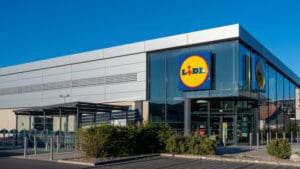
Lidl leapfrogs Morrisons to become Britain’s fifth-biggest supermarket

The German discounter has capitalised on the relentless household hunt for value, plotting a further 50 stores and a £600 million expansion that piles fresh pressure on the traditional big four.
When Lidl quietly opened its first British shop in the Leicestershire market town of Lutterworth in 1994, its competition came in the shape of names now consigned to retail history — Safeway, Somerfield and the original pile-it-high pioneer, Kwik Save. Three decades on, the German-owned chain has not only outlived those rivals but has now overtaken one of the original “big four” itself.
Lidl has surpassed Morrisons to become Britain’s fifth-biggest supermarket, capping a long run of market-share gains built on a stubbornly simple recipe of high volumes, lean ranges and aggressive everyday pricing. The discounter now commands a record 8.6 per cent of the UK grocery market, with sales rising 8.8 per cent to £3.2 billion over the 12 weeks to 17 May, according to the latest figures from consumer analyst Worldpanel by Numerator.
To put the trajectory into context, Lidl held just 1.4 per cent of the market at the turn of the millennium. It now sits ahead of Co-op (5.1 per cent), Waitrose (4.5 per cent), Iceland (2.2 per cent) and, in a milestone moment, Morrisons itself on 8.3 per cent. Sales growth at the chain has outpaced every other bricks-and-mortar grocer for almost three years on the trot.
Owned by Germany’s €167.3 billion-turnover Schwarz Group, Lidl GB now employs more than 35,000 people across 1,000 stores and 13 distribution centres. It has earmarked another 50 outlets for the year ahead as part of a wider £600 million investment in its British infrastructure, a programme that follows its £4 billion pledge to invest in British food suppliers as it tightens grip on its UK supply chain.
A familiar German playbook
The rise of Lidl and its fellow German discounter Aldi has been one of the defining storylines of UK retail over the past decade. Both have leant on aggressive price positioning, no-frills shopping environments and tightly edited ranges to wrong-foot the traditional grocers, and crucially, both have hoovered up middle-class shoppers along the way, forcing the rest of the sector to follow them down on price.
Cost-of-living pressures have only sharpened that shift. With food inflation still sticky, weekly shop tickets have become the household budget line that British families watch most closely. Looser planning and competition rules have also worked in the discounters’ favour, making it harder for incumbents to lock them out of prime new sites.
Yet the two German rivals are now diverging. Aldi’s market share has eased from 11 per cent to 10.8 per cent over the past year, while Lidl continues to motor, pushing into premium wine, in-store bakeries and plant-based ranges, and using its Lidl Plus loyalty app to do the kind of personalised promotional work that Tesco’s Clubcard and Sainsbury’s Nectar scheme have long relied on. Aldi has so far resisted following suit. According to Worldpanel, that range and loyalty push helped Lidl pull in an additional £661 million from switching shoppers last year alone.
“Becoming Great Britain’s fifth-largest supermarket is a significant milestone and a clear indication of the momentum we have built,” said Ryan McDonnell, chief executive of Lidl GB. “As customer expectations shift, households are looking for value they can rely on without compromising on quality, and we remain laser-focused on delivering exactly that. As we move forward with our ambitious expansion plans, we’ll bring great value and quality products to even more communities across Great Britain.”
Morrisons under the cosh
The mirror image of Lidl’s ascent is the strain showing at Morrisons. The Bradford-based grocer is wrestling with a debt pile of more than £3 billion under its private equity owner Clayton Dubilier & Rice, and its sales rose just 1.3 per cent year-on-year to £3.1 billion in the latest 12-week window, well behind Tesco, Sainsbury’s and Waitrose, as reported by Bloomberg.
Morrisons argues the Worldpanel figures “underestimate” its true position because they exclude its convenience footprint. A spokesperson added that the grocer had “maintained our share while not opening new supermarkets, unlike the discounters who continue to add significant new space”.
Even so, the wider numbers are sobering. Morrisons posted a pre-tax loss of £381 million in its latest financial year, modestly improved on the £414 million loss the year before, and recently confirmed plans to close more than 100 loss-making Morrisons Daily convenience stores, blaming government policy choices for adding cost it could not absorb. The shift will be familiar to SME owners, particularly those running multi-site operations, who have spent the past year recalibrating models in the face of higher employer national insurance contributions and a steeper minimum wage.
For independent food producers, suppliers and store-fit specialists, the centre of gravity in UK grocery is moving, and quickly. Lidl’s pledged £600 million spend on stores, depots and logistics is exactly the kind of capital programme that pulls SMEs into the supply chain, from groundworks contractors to regional bakeries and challenger drinks brands hoping for a slot on the “middle aisle”. Aldi’s previous milestone moment, when it overtook Morrisons to become Britain’s fourth-largest supermarket, triggered a similar wave of supplier opportunity, and a brisk culling of those that could not flex on price.
The macro backdrop will not make life any easier for the traditional players. The ongoing conflict in the Middle East has lifted energy prices and squeezed fertiliser supply, factors that are widely expected to push food price inflation higher over the coming months — only partially cushioned by the intensifying price war among the supermarkets themselves.
Overall spending at Britain’s biggest grocers rose 2.3 per cent to £36.6 billion in the three months to mid-May. Tesco remains untouchable at the top with 28.2 per cent market share, while Asda, like Morrisons, private equity-owned, saw the sharpest decline, with sales down 3 per cent to £4.2 billion and its share slipping to 11.5 per cent.
Fraser McKevitt, head of retail and consumer insight at Worldpanel by Numerator, said shoppers had “leant on promotions to keep costs down”. Spending on promotional lines rose 9.5 per cent year-on-year, while full-price spend was virtually flat, a signal that, for now at least, the discount mindset that has powered Lidl’s rise is the defining feature of the British grocery basket.
Read more:
Lidl leapfrogs Morrisons to become Britain’s fifth-biggest supermarket


More Stories
Henry Gabay Started Duet Group With $10 Million. Two Decades Later, It Managed More Than $5 Billion.
By the time Financial News reported on the firm’s 2013 results, that early bet had compounded into one of the...
Planning an Antarctica Cruise Tour
Poseidon Expeditions runs its Antarctica program aboard the 114-passenger M/V Sea Spirit, an ice-strengthened ship led by a team of...
Vincent “Vinny” Colardi on Running, Music and Making Room for Different Passions
Between his career, playing guitar, writing music, running, and exploring his interest in food, Colardi has built a life around...
Why the Rolex Air King Makes More Sense in an Era of Lookalike Luxury Watches
Dials in black, metal bracelets, highly readable markings, and sport-inspired cases are common throughout many current product ranges, while social...
Viriora Expands Online Trading Access Across Forex, Stocks and Crypto Markets
The platform is designed around a broad selection of markets, with published information about available instruments and trading conditions. More...
Markets too ready for conflict over Taiwan – US diplomat
Investors are overestimating the threat of a military confrontation over the island, Michael DeSombre has told CNBC Investors are exaggerating...