
Car Shipping Costs Explained: What Drives the Price Up or Down

Shipping a car across the country isn’t like booking a flight.
There’s no flat rate, no standard fare, and no single price chart that applies to everyone.
The cost of car shipping depends on a handful of specific variables, and understanding them puts you in a much better position before you ever contact a carrier.
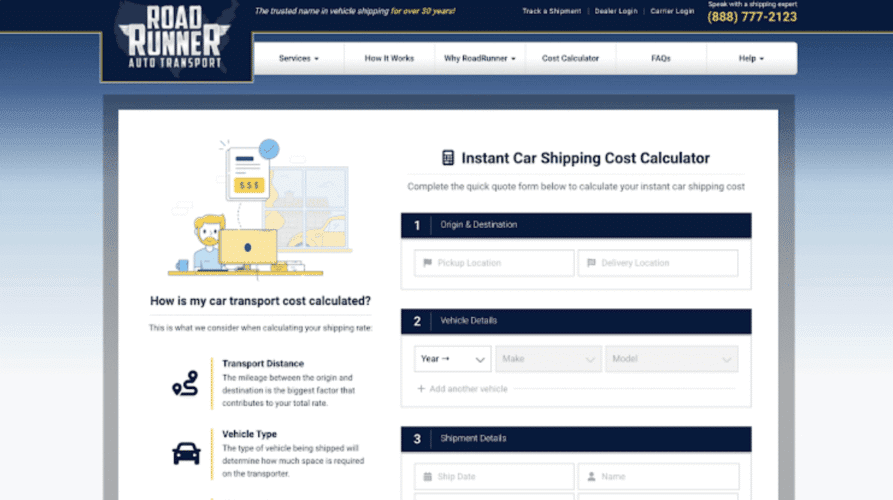
Before diving into what affects pricing, grabbing an instant car shipping quote based on your actual details is the fastest way to get a real number rather than a guess.
“How much does it cost to ship a car?” is probably the first thing anyone types into Google when they’re facing a cross-country move or an online vehicle purchase.
That’s reasonable.
But the range you’ll find, anywhere from $500 to $1,500 or more for a domestic move, is so wide it’s almost useless without context.
The honest answer is that your vehicle, your route, and your timeline shape the final number more than any national average ever could.
Distance and Route Matter More Than You Think
The biggest factor is distance, but not in the way most people assume.
Longer hauls don’t always cost proportionally more.
A 2,500-mile coast-to-coast shipment on a high-traffic corridor like Los Angeles to Miami often costs less per mile than a 400-mile run between two small towns in the Midwest.
Carriers prefer routes where they can fill their trailer both ways.
A one-way trip into a low-demand area means the driver has to deadhead back empty, and that cost gets passed on to you.
Urban pickup and delivery points tend to be cheaper.
Rural addresses, especially those on narrow roads or without easy truck access, can add $100 to $300 just for the logistics of getting there.
If you’re flexible on location, meeting a carrier at a nearby terminal or major highway exit can trim that surcharge entirely.
Vehicle Size and Weight Shift the Baseline
Carriers price partly by how much space your vehicle takes on the trailer.
A Honda Civic doesn’t cost the same as a Ford F-250 crew cab, and the difference isn’t small.
Larger, heavier vehicles occupy more deck space and add more load weight, both of which directly affect what the carrier can charge per slot.
Lifted trucks, vehicles with roof racks, or anything with aftermarket modifications that increase height or width can bump the price further.
Some carriers won’t even load oversized vehicles on a standard open hauler.
If your car sits higher than factory spec, mention it upfront so the quote reflects reality rather than a generic estimate that falls apart once a carrier sees the vehicle.
Open vs. Enclosed Transport
Open car carriers, the multi-level trailers you see on highways hauling eight to ten vehicles, are the standard.
They’re cheaper because the carrier splits fuel and labor costs across more cars.
For a typical sedan on a popular route, open transport runs roughly 30% to 40% less than enclosed.
Enclosed carriers make sense for high-value vehicles: classic cars, luxury sedans, exotic sports cars, or anything you’d rather not expose to road debris and weather.
The trade-off is real, though.
Enclosed haulers carry fewer vehicles (usually two to four), so each owner absorbs a bigger share of the operating cost.
Expect to pay $300 to $700 more, depending on the route.
If your car is a daily driver worth under $30,000, open transport is almost always the practical choice.
Seasonal Pricing Swings
Car shipping rates fluctuate with demand, and demand follows predictable seasonal patterns.
January through March tends to be the busiest stretch.
Snowbirds shipping vehicles to Florida and Arizona drive prices up across southbound corridors.
Summer sees a second spike as families relocate before the school year starts.
Late fall, particularly November, is often the cheapest window.
Fewer people are moving, carriers have open slots, and competition between transport companies pushes rates down.
If your timeline is flexible by even a few weeks, shifting your booking into an off-peak window can save $150 to $300 on the same route.
Any car shipping estimate you receive during peak season will look noticeably different from one pulled in October.
Same vehicle, same route, different price.
Timeframe and Flexibility
Standard car shipping usually means a pickup window of three to seven business days after booking, with transit times ranging from a few days for short hauls to two weeks for cross-country moves.
That’s the default, and it’s priced accordingly.
Expedited shipping, where a carrier picks up within 24 to 48 hours, costs more because it requires the broker or carrier to rearrange their schedule or dispatch a truck specifically for your vehicle.
The premium varies, but 20% to 40% above standard rates is common.
On the other hand, if you’re willing to be the “fill” shipment that a carrier picks up whenever they have a gap, you might negotiate a lower rate.
This works best when you genuinely have no deadline.
Broker vs. Direct Carrier
Most people book through a transport broker rather than directly with the carrier.
The broker acts as a middleman.
They take your order, post it to a load board, and a carrier picks it up.
This adds a layer of cost (brokers typically take $100 to $200 as their cut), but it also gives you access to a much larger network of available trucks.
Booking directly with a carrier can save that margin, but it requires more legwork.
You’ll need to find a carrier running your specific route at the right time, verify their FMCSA registration and insurance, and handle any disputes yourself.
For most people shipping a car once or twice, a reputable broker simplifies the process enough to justify the fee.
Insurance and What It Actually Covers
Every licensed carrier is required to carry cargo insurance, but the coverage limits and deductibles vary.
Some policies cover up to $100,000 per vehicle; others cap much lower.
The critical detail is the deductible.
A $1,000 deductible on a carrier’s policy means you’re eating the first $1,000 of any damage claim out of pocket.
Ask for a copy of the carrier’s insurance certificate before your vehicle loads.
If the coverage feels thin relative to your car’s value, supplemental transport insurance is available through third-party providers.
It typically runs $50 to $150 and can fill the gap between the carrier’s policy and your vehicle’s actual worth.
Red Flags in Pricing
A car shipping quote that comes in dramatically below every other estimate is almost never a deal.
Low-ball pricing is one of the most common tactics in the auto transport industry.
A broker locks you in with a deposit, then the price “adjusts” once a carrier actually agrees to haul the vehicle.
By that point, you’ve lost time and possibly a deposit.
Compare at least three to four quotes from different companies.
Look at the breakdown: does the quote include door-to-door service, or is it terminal-to-terminal?
Is the fuel surcharge included or added later?
Are there cancellation fees?
The details in the fine print matter more than the headline number.
Getting a Realistic Number
The most reliable way to get an accurate car shipping estimate is to provide precise details upfront: vehicle year, make, model, any modifications, exact pickup and delivery zip codes, and your preferred timeline.
Vague inputs produce vague quotes.
The more specific your information, the tighter and more honest the number you’ll receive.
Car shipping doesn’t have to be complicated or expensive.
It just requires a bit of homework before you commit.
Know what drives the price, understand the trade-offs between speed and cost, and verify the company you’re trusting with your vehicle.
Whether you’re comparing quotes for a cross-country relocation or just trying to figure out how much it costs to ship a car you bought online, the same fundamentals apply.
They’ll keep you from overpaying.
The post Car Shipping Costs Explained: What Drives the Price Up or Down appeared first on My Car Heaven.


More Stories
Lewis Hamilton’ Dream Ferrari F40 is a Barn Find That Sat for 30 Years
Lewis Hamilton has added one of the most iconic supercars ever built to his garage, and this one comes with...
The New Wave of Retro EV Car Designs
EV Car design is changing. As the industry shifts to electric, some of the most talked-about new models are not...
Hyundai Boulder SUV Looks More Likely as CEO Teases Family of Body-on-Frame Vehicles
Hyundai may be getting much more serious about taking on rugged SUVs such as the Ford Bronco, Jeep Wrangler, and...
2027 Chevrolet Traverse Invoice Price, Dealer Cost, and How to Get the Best Deal Near You
The 2027 Chevrolet Traverse is on dealer lots now with confirmed pricing and two genuinely useful updates that make it...
2027 Nissan Rogue e-Power Hybrid Launch Accelerated as RAV4 and CR-V Pressure Builds
Nissan is moving faster than expected to get its next-generation Rogue Hybrid into U.S. showrooms, and the timing makes plenty...
2027 Hyundai Palisade Invoice Price, Dealer Cost, and How to Get the Best Deal Near You
The 2027 Hyundai Palisade is confirmed on sale with pricing live on Hyundai USA’s own website, and the buying conditions...