
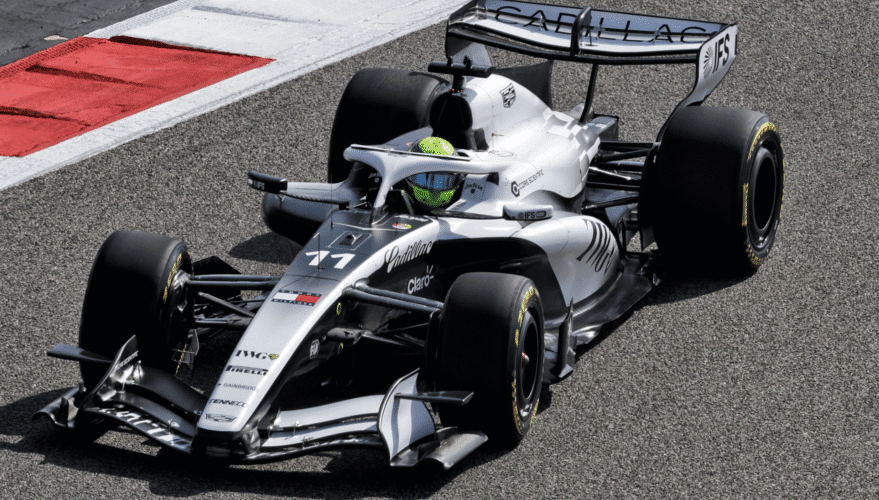
Cadillac in F1: Everything You Need to Know About the Andretti Partnership

At My Car Heaven, we’ve always loved seeing big automotive names take on new challenges—especially when it comes to motorsport. So when Cadillac finally arrived in Formula 1 for the 2026 season, it definitely caught our attention. A bold move? Absolutely. A guaranteed success? Not quite. But it quickly became one of the most talked-about developments in the sport.
Let’s take a closer look at what really happened with Cadillac’s entry, how Andretti fit into the picture, and what it all meant for Formula 1.
So, Did Cadillac Actually Join F1?
In short—yes, Cadillac officially joined the Formula 1 grid in 2026.
But it wasn’t exactly a smooth ride getting there. The original push came from Andretti Global, who had been very public about their desire to enter F1. That bid faced resistance, with existing teams raising concerns about value, competition, and the commercial impact of adding another entry.
What changed was the involvement of General Motors—and crucially, the Cadillac brand. Suddenly, this wasn’t just a new team trying to break in; it was a major global manufacturer stepping up. That added weight ultimately helped secure approval.
From our perspective, it marked a fascinating shift. Formula 1 had been leaning more into the American market, and bringing in a name like Cadillac felt like a natural progression.
Who Were the Cadillac F1 Drivers?
This was where things got particularly interesting.
Rather than taking a gamble on young, unproven talent, Cadillac leaned heavily on experience in its early phase. That made sense to us. Building a team from scratch is no easy task, and having drivers who understood how Formula 1 worked from the inside proved invaluable.
The lineup discussions centred around seasoned drivers capable of guiding development, alongside the longer-term ambition of bringing an American driver into the mix.
Colton Herta remained one of the most talked-about names linked to the project, adding an extra layer of intrigue. Ultimately, the team’s driver strategy reflected a balance: experience to steady the ship, and potential to build for the future.
Which Engine Did Cadillac Use?
This was where strategy really came into play.
Cadillac didn’t dive straight in with a fully in-house power unit. Instead, it adopted a phased approach. In its early seasons, the team partnered with an established engine supplier—Ferrari was widely understood to have filled that role.
That approach gave Cadillac the time it needed to focus on building the team, developing the chassis, and getting up to speed operationally. In our view, it was a sensible move. Trying to do everything at once in Formula 1 rarely ends well.
Longer term, the ambition remained much bigger. General Motors had been working towards producing its own Formula 1 power unit, with the goal of eventually turning Cadillac into a full works team.
It was—and still is—a long road, but the intent was clearly serious. For those who enjoyed analysing how teams stacked up during that period, it was also worth keeping an eye on the latest F1 championship odds and predictions to see how expectations evolved across the grid.
Where Did Andretti Fit Into All This?
This remained one of the most debated aspects of the whole story.
Andretti was, without question, the driving force behind the original bid to enter Formula 1. Without that push, it’s hard to imagine Cadillac reaching the grid when it did.
However, the structure evolved. Cadillac—backed by General Motors—ultimately took the lead, and the Andretti name wasn’t as central operationally as many had initially expected.
That said, the connection never disappeared. Mario Andretti remained involved, bringing both credibility and a deep understanding of the sport. And while the day-to-day control shifted, the DNA of the project still felt very “Andretti” in spirit: ambitious, slightly disruptive, and not afraid to challenge the status quo.
From our point of view, it was an interesting compromise. It allowed the project to move forward while still retaining some of its original identity.
What Could We Expect From Cadillac in F1?
Even after joining, it was clear this wasn’t going to be an overnight success story.
New teams rarely hit the ground running in Formula 1. The level of competition, technical complexity, and sheer scale of the operation made it incredibly difficult to be competitive straight away.
So expectations needed to be realistic.
What we looked for instead was progress. Were they closing the gap? Making smart decisions? Building a strong foundation for the future?
With the backing of General Motors and a clear long-term plan, there was every chance Cadillac could develop into a serious contender over time. But patience was always going to be key.
Our Take at My Car Heaven
We’ll admit it—we liked this move.
Formula 1 benefited from variety, and having a brand like Cadillac on the grid added something different. It brought a distinctly American flavour, a fresh narrative, and a new set of ambitions.
At the same time, there were still plenty of question marks. Could they execute their long-term engine plans? Would they attract the right talent? And perhaps most importantly, could they earn their place among the established teams?
That’s what made it so compelling. It wasn’t a done deal—it was a journey.
What Do You Think?
That’s our take—but we’d really like to hear yours.
Did you think Cadillac made the right start in Formula 1?
Was this the boost the sport needed, or just another team fighting at the back?
And how important do you think the Andretti connection really was?
Drop your thoughts in the comments below and join the discussion—we’re keen to hear what fellow enthusiasts made of Cadillac’s big F1 move.
The post Cadillac in F1: Everything You Need to Know About the Andretti Partnership appeared first on My Car Heaven.

More Stories
A Simple Pre-Winter Check for Your Tires and Battery
The first cold morning of the season has a way of finding the weak spots in a car. A tire...
Porsche Mission S Hypercar Teased with 8,000-RPM Redline Ahead of October 15 Reveal
Porsche is preparing to make a serious statement in the world of high-performance automobiles, and its upcoming Mission S hypercar...
Chinese Automaker Geely Coming to Canada in 2027 as New Import Rules Open the Door to Affordable EVs
The North American automotive landscape could be in for a significant shakeup as Chinese automotive giant Geely Auto has officially...
Rivian Goes Ghostbusters for Halloween with Ecto-1 Inspired EVs and Spooky Software Update
Rivian is getting into the Halloween spirit in a big way this year, and fans of the iconic Ghostbusters movies...
Keeping the Ram You Love, Updating the Part You Use Every Day
A favorite vehicle earns its place through use. There are the trips you planned for months, the quick runs for...
Is Your Car Ready for Colorado’s Traction Law?
A clear forecast in Denver can turn into a whiteout at the Eisenhower Tunnel. When that happens, the Colorado Department...