
Letters: There’s nothing sustainable about endless tax increases

Equitable? Sustainable?
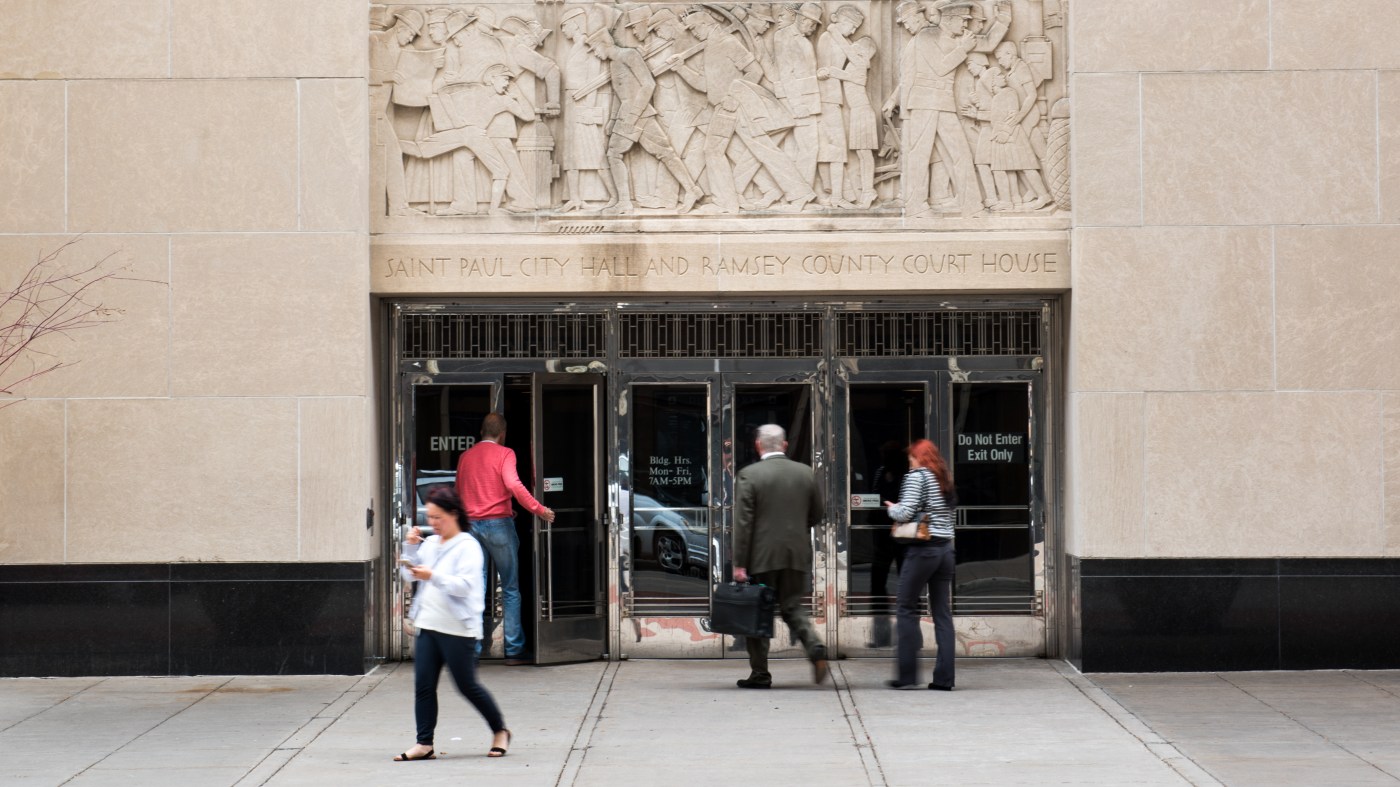
Ramsey County officials announced their 2024-25 budget and did so using carefully selecting wording to soften the blow.
“We’re raising your property taxes by over 6%” doesn’t sound as good as: “an investment in our vision, values and strategic priorities.”
We can’t stop spending money is not as eloquent as “a pivotal moment in our community’s journey”, and “more equitable and sustainable” were tossed in for good measure — because who would oppose that? I don’t know what’s so equitable about taxation without representation and I can tell you from experience that there is nothing sustainable about endless tax increases that far exceed a citizen’s ability to pay.
There are two facts at play here: First, I am not making enough money to sustain the budget and spending of the county manager and commissioners. Second, a sizeable percentage of my fellow county taxpayers either make a lot more than I do – or they are grossly unaware of what the county is doing. Either way and at this point it’s too late.
The terms we used to toss out like Big Government, Tax and Spend, have not resonated with citizens as previous and smaller tax increases were levied. Now with a looming 6-plus percent increase, will that also slide by or is this a high enough of a tax increase at the worst possible time, one that catches more eyes and impacts enough family budgets that finally creates the awareness and outcry from taxpayers that this is anything but sustainable?
Hans Molenaar, Shoreview
News flash!
NEWS FLASH! Ramsey County returns streetcars to Saint Paul’s streets!
When streetcars were abandoned in the 1950s, they slowed down Model Ts, were noisy, and General Motors had a better idea: buses! While the conversion sent principals to jail (corruption) and citizens to the suburbs, the bus system created an urban transit system for nearly 70 years. Times change.
The new network will replace on-street parking and trees with the new system of rails, says the Ramsey County Planning Department (RCPD). While there won’t be as many stops, disabled citizens will be encouraged to relocate to gleaming new multi-story hubs at intersections that will replace old obsolete brick commercial buildings and the RCPD notes that able-bodied neighbors will be able to walk faster than the streetcars for local trips anyway. While Seventh Street currently is dangerous for both cars and pedestrians, a streetcar barrier “should” improve loss of life. With the loss of on-street parking, neighbors will be encouraged to adopt State Fair front yard off-street parking and turn driveways into side street hubs for delivery trucks. With climate change there should be no problem with snow removal.
The RCPD says that they have learned from the problems of University Avenue’s Green Line in implementing West Seventh Street’s new streetcar system that bisects the freeways of 35E and Shepard Road with another option of getting people downtown quicker out to the Mall of America and airport. They state that while their first options through downtown didn’t work, the $7 million investment so far has paid off to option Kellogg Boulevard rather than the unused rail spur along the river. Another added benefit is that Fort Snelling’s whole new double-decker bridge will hopefully be funded by the federal government that will accommodate bicycles — though the RCPD is still planning where the bicycles come from. This new hub and spoke direct system will not need to connect to either Highway 55 or Highland Bridge: that will be a future streetcar.
In keeping with the times, please publish this letter along with a sarcastic wink emoji.
Joe Landsberger, St. Paul
The writer, a lifelong resident of St. Paul, has served as co-chair of the Station Area Planning Task Force, Riverview Corridor for the past couple of years. He is a past president of the West Seventh Business Association. He is researching and writing a book on West Seventh history.
Unshackling our sense of history
Reading news the other morning about one of the presidential candidates’ comment on the root causes of the Civil War in the U.S. Hopefully, this brief note will help clarify this complex issue a bit. The roots of the U.S. Civil War are intricate. There were three main root causes:
Slavery. Slavery, at its core, was deeply embedded in the Southern agrarian economy, fueling economic and cultural divides. The institution of slavery became intertwined with Southern society, shaping its social structure and cultural values. The North, on the other hand, increasingly opposed the moral and ethical aspects of slavery.
Economic and sectional differences. The North’s industrialization contrasted starkly with the South’s reliance on agriculture and slave labor, leading to sectional tensions. Economic differences, with the North’s industrialized model versus the South’s agrarian focus, deepened the sectionalism.
States’ rights and differing views on federal power. Debates over states’ rights and federal power intensified as the South advocated for states’ rights, often linked to preserving slavery. Meanwhile, the North supported a stronger federal government, particularly regarding slavery’s expansion, heightening tensions between regions.
Historians Eric Foner (“The Fiery Trial”) and James McPherson (“Battle Cry of Freedom”) offer in-depth analyses and comprehensive examinations of these root causes, based on primary sources, economic data, and political developments.
It is prudent for all of us to step outside our culture to see the shackles it has placed on our thinking. Studying and learning history is essential so that we can hopefully do better.
Massoud Amin, Hudson, Wis.
The writer is former director and professor emeritus, Technological Leadership Institute, University of Minnesota
Related Articles
Letters: No snow, no woods nearby, but reminded nonetheless of Frost’s famous poem
Letters: Weigh the history of the Lake Elmo airport, and its landscape is clear
Letters: What’s a negative $2.4 billion plus a positive $2.4 billion?
Letters: Among metro transit-rail systems, ours is an outlier — to ill effect
More Stories
Open wide, Chancellor: Britain’s businesses are already in the chair
Three weeks ago I had a tooth out. It did not go quietly. The extraction took forty-five minutes, with the...
Firstwork raises $15m to automate onboarding for frontline workers
Firstwork, a New York-based AI company that automates hiring checks for frontline staff, has raised $15m in a Series A...
Fr. Ranjan D’Sa: Leadership Lessons From a Decade in Parish Ministry
It means managing people, money, and programs, year after year, in a community that expects both stability and growth. That...
UK inflation rises to 3.5 per cent as public debt passes £3trn
UK inflation rose to 3.5 per cent in September, its highest rate for 11 months, as separate figures published today...
Alaa Jaber on Building a Career on His Own Terms
Building a career through self-employment meant learning to make decisions without always having a supervisor, an established process, or a...
Ralph Opacic Leads a Second Act in Orange County Arts Education
Ralph Opacic spent six years teaching choral and vocal music at Los Alamitos High School before he decided a classroom...