
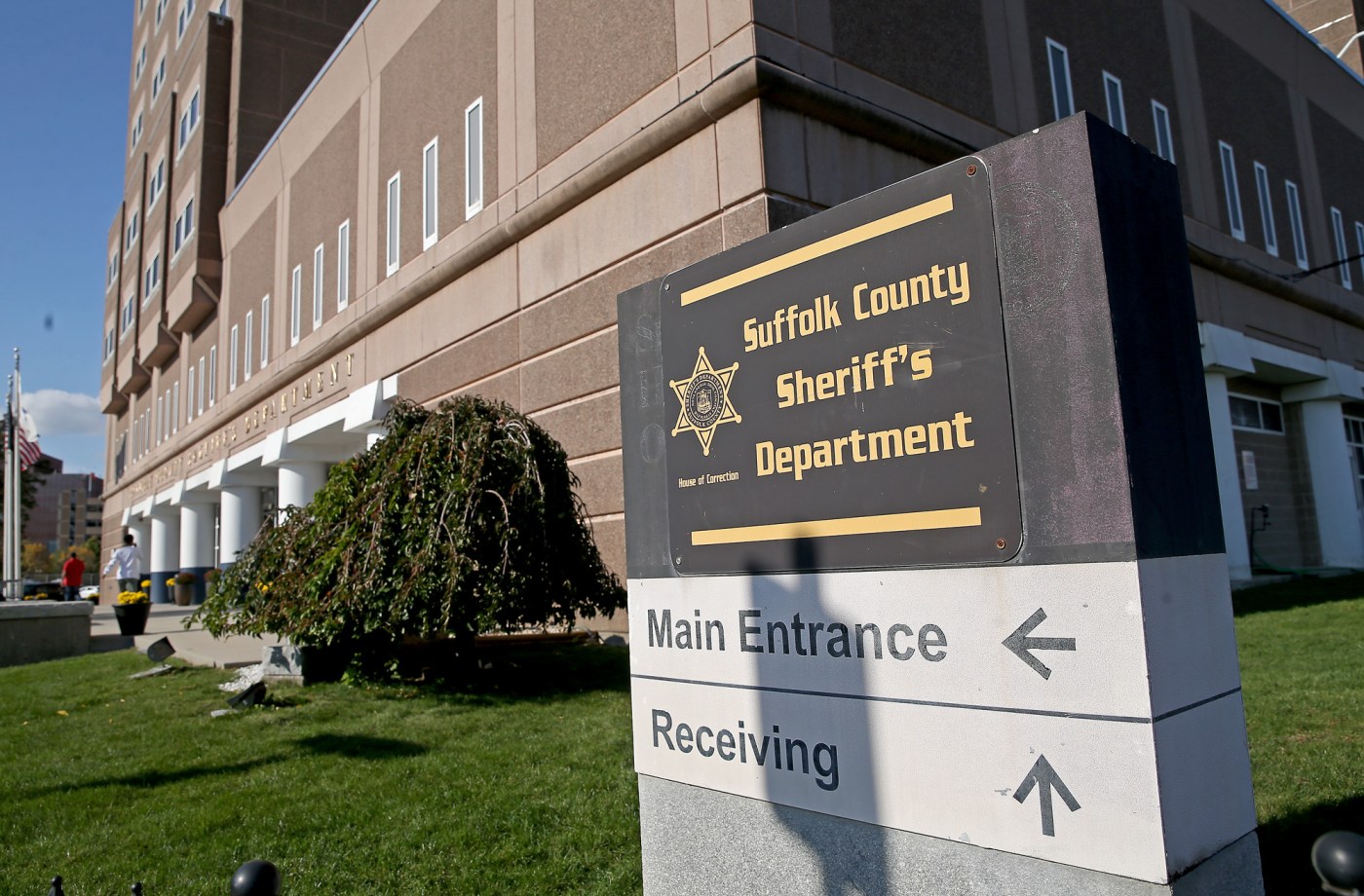
Massachusetts correction officers arrested, charged with COVID unemployment and loan fraud

Two local correction officers, who together have taken home nearly $270,000 this year, have been arrested and charged with COVID unemployment and loan fraud.
The pair of Suffolk County Sheriff’s Department officers were arrested by the feds on Friday for allegedly submitting fraudulent info to obtain loans through CARES Act programs — like the Pandemic Unemployment Assistance program and the Paycheck Protection Program.
Christnel Orisca, 25, of Boston, was indicted by a federal grand jury on five counts of wire fraud and one count of making a false statement to a financial institution, according to the Massachusetts U.S. Attorney’s Office. Orisca has made $182,146 so far this year, per the state’s payroll website.
Jasmine Murphy, 38, also of Boston, was indicted on seven counts of wire fraud and one count of making a false statement to a financial institution. Murphy has made $85,984 so far this year.
Orisca has been a correction officer with the Suffolk County Sheriff’s Department since late 2021. According to the feds, Orisca fraudulently applied for pandemic unemployment and small business loan benefits while working full-time, initially for a security company and later for a delivery company.
While employed full-time, Orisca allegedly collected about $54,700 in unemployment benefits and small business loan funds.
Murphy has been a correction officer with the Suffolk County Sheriff’s Department since January 2022. According to the indictment, Murphy fraudulently applied for pandemic unemployment and small business loan benefits while working for trucking and workforce services companies.
Murphy allegedly collected about $44,346 in unemployment benefits and small business loan funds to which she was not entitled.
“This case highlights the critical importance of protecting taxpayer-funded programs like the CARES Act from fraud and abuse,” said U.S. Attorney Joshua Levy. “These defendants, who hold positions of public trust as corrections officers, are alleged to have knowingly exploited pandemic relief programs intended to support small businesses and unemployed workers during a time of unprecedented crisis.
“Such conduct not only undermines the integrity of these programs but also betrays the public’s trust,” Levy added. “My office remains steadfast in holding accountable those who engage in such schemes and ensuring that federal relief funds are used for their intended purpose – helping those in genuine need.”
Related Articles
Massachusetts correction officers hospitalized after fire in prison cell area
Corrections officer arrested for allegedly smuggling illicit narcotics into prison
Massachusetts inmate pleads guilty to ‘brutal attack’ on correction officer at MCI-Shirley
Massachusetts correction officers injured, exposed in prisons: Herald receives DOC public records
Massachusetts inmate dies after fight at sex-offender treatment center
In both of their pandemic unemployment applications, Orisca and Murphy allegedly made fraudulent representations about their employment status. They also falsely claimed on a weekly basis that they did not work and did not receive any income during the prior week, the feds said.
In their PPP loan applications, Orisca and Murphy allegedly submitted false statements to SBA-approved lenders — including about the income and/or payroll of their purported small businesses, in order to obtain their loans.
They also allegedly made false representations on forms to request that their PPP loans be forgiven.
“Today’s arrest sends a clear message that those seeking to fraudulently receive benefits will be investigated and prosecuted,” said Inspector General Joseph Cuffari, of the U.S. Department of Homeland Security, Office of Inspector General. “DHS OIG is grateful for our continued partnership with our law enforcement partners as we continue fighting corruption.”
The charge of wire fraud can lead to a sentence of up to 20 years in prison, three years of supervised release, and a $250,000 fine. The charge of making false statements to a financial institution can lead to a sentence of up to 30 years in prison, five years of supervised release, and a $1 million fine.

More Stories
EU seeks to target US Big Tech without angering Trump – FT
Brussels is reportedly considering a broader corporate tax to avoid singling out Apple, Meta, and Google The European Union is...
UK reaches 17 million mental health sick days in 2026, analysis finds
The UK reaches 17 million working days lost to mental ill-health in 2026 today, according to analysis by Simplyhealth, the...
Why You Should Seek Treatment: Health Problems Don’t Take A Vacation
Pain, anxiety and ongoing sleep problems don’t just go away between 9-5. You can be at your desk, checking emails,...
Royal Mail to cut up to 2,500 head office jobs by the end of 2027
Royal Mail plans to cut up to 2,500 head office and support jobs by the end of 2027, the company...
Jaguar unveils £130,000 electric Type 01 two years after rebrand row
Jaguar yesterday unveiled the Type 01, an all-electric four-door grand tourer priced from £130,000 in the UK, two years after...
IoD urges employment law rethink as Milburn Review delay reported
The Institute of Directors has called on the government to slow the implementation of the Employment Rights Act and pause...