
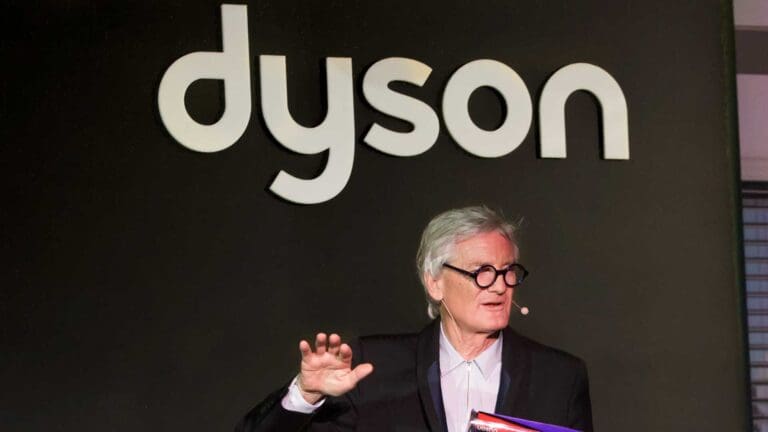
Dyson pays £750m dividend to Sir James Dyson’s family investment firm

Dyson Holdings paid a £750m dividend to Sir James Dyson’s family investment firm in 2025, up from £200m the year before, according to filings seen by Bloomberg.
The payment went to Weybourne Holdings, the Singapore-based single-family office and investment holding company for the British inventor. The £200m dividend for 2024 was the company’s lowest total in at least seven years, Bloomberg reported.
The increase ends a run of shrinking returns to the founder from the appliance maker. Business Matters reported in 2023 that the group had paid a £1.2bn dividend to Weybourne Holdings for 2022.
The registry filings also showed that Dyson Holdings had committed to dividends of at least $70m (£53m) for this year.
Weybourne manages Sir James’s private wealth, property holdings, agricultural operations and alternative asset investments. The Dyson group is 100 per cent owned by its founder.
Dyson designs and manufactures vacuum cleaners, hairdryers and other appliances. It was founded by Sir James in Malmesbury, Wiltshire, in 1991 and has been headquartered in Singapore since 2019. The company sells in 85 markets and has more than 450 branded stores worldwide.
Revenue fell 6.7 per cent to £6.13bn in the year to the end of December, down from £6.57bn in 2024, according to the company’s 2025 results statement.
Hanno Kirner, the chief executive, blamed US tariffs, which he said had been “particularly damaging”, for the drop. The company also cited low consumer confidence in markets such as the US, Germany and China.
Operating profit rose 15 per cent to £600m, from £520m a year earlier, while earnings before interest, tax, depreciation and amortisation rose 18 per cent to £1.1bn, the company said. Business Matters reported in March that Dyson’s sales had dropped by £440m while profits increased.
Last year the group reported a pre-tax profit of £561m, down from £1.1bn in the prior year, after a factory fire in the Philippines disrupted the supply of electrical beauty products.
Sir James’s family had an estimated net worth of £12bn in the Sunday Times Rich List 2026, placing them 13th in the UK.
Sir James has repeatedly criticised plans announced in the 2024 Budget to increase the inheritance tax levied on family businesses when they pass to the next generation. He described the policy at the time as a “spiteful” move against family firms.
He returned to the subject in a letter to The Times in January about Rachel Reeves, the former chancellor.
“Rachel Reeves will destroy both the family businesses themselves and a source of untold billions in tax revenue to raise a maximum of £500m by 2030, according to the Treasury’s forecast,” he wrote. “She is killing the geese that lay the golden eggs.”
The changes took effect in April. Full relief from inheritance tax now applies only to the first £2.5m of combined agricultural and business property, with relief at 50 per cent above that level, according to a House of Commons Library briefing.
The government originally proposed a £1m allowance at the Autumn Budget 2024. It announced on 23 December 2025 that the figure would rise to £2.5m per estate, the briefing said.
HM Revenue and Customs estimated in December 2025 that about 1,100 estates would pay more tax as a result of the policy, compared with about 2,000 under the original proposal, according to the briefing. The government has also revised its estimate of the revenue raised in 2029/30 from £520m to £300m.
The government has said the majority of estates claiming the two reliefs will not be affected, and that the changes are intended to target a wealthy minority of estates, the Commons Library said.


More Stories
Getting to know you: Anita Bhanja, founder, Eternal Paws
Anita Bhanja is the founder and veterinary surgeon of Eternal Paws, a Cheshire practice specialising in home hospice, palliative care...
Average UK side hustle brings in £700 a month, new survey shows
The average UK side hustle generates £700.50 a month, equivalent to around £8,406 a year, according to new research from...
Anthropic’s $2tn IPO asks the public to carry the risk
Anthropic today published the S-1 registration statement for its Nasdaq listing under the ticker ANT, reportedly targeting the week of...
Why esbconnect’s Suzanna Chaplin still backs email for acquisition
Suzanna Chaplin is the founder of esbconnect, the UK customer acquisition business that lets brands buy opted-in email audiences in...
Manchester graphene spin-out Concretene raises £4.5m in Series A
Concretene, a University of Manchester spin-out, has raised £4.5m in the first close of a Series A round to scale...
M&S lowers British meat prices and says farmer payments stay the same
Marks & Spencer is cutting the price of selected British beef, lamb and pork products by up to 26 per...