
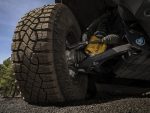
OEM Truck Suspension Was Designed for Everyone. That Is Why It Works for No One.

Every major truck manufacturer faces the same engineering constraint when designing a stock suspension system. The vehicle must appeal to a buyer who tows a boat on weekends, a buyer who commutes forty miles on the highway, a buyer who takes it on gravel forest roads twice a year, and a buyer who never leaves pavement but wants the option. The suspension has to satisfy all four of these buyers because the manufacturer does not know which one is standing in the dealership.
The engineering response to this constraint is compromise. The spring rate is soft enough for highway comfort but not stiff enough for heavy towing. The ride height provides adequate ground clearance for a gravel road but not enough for a serious trail. The shock valving absorbs bumps at highway speed but fades under sustained off road use. The system works for everyone. It excels for no one.
This is not a criticism of OEM engineering. It is a description of the problem that the aftermarket suspension industry exists to solve. The truck owner who knows how they use their vehicle does not need a suspension designed for every possible use case. They need one designed for theirs.
Platform Specific Engineering
The distinction between a quality aftermarket suspension system and a generic lift kit from an online marketplace is engineering specificity. A generic kit provides spacers, bolts, and universal components that physically raise the vehicle without redesigning the suspension geometry. The truck sits higher. The ride quality degrades. The alignment shifts. The handling changes in ways the owner did not expect and the kit manufacturer did not account for.
A platform specific system is engineered for the exact vehicle it will be installed on. The spring rates are calibrated for that truck’s curb weight. The shock valving is tuned for that platform’s suspension travel. The geometry corrections are designed around that truck’s specific control arm angles, caster settings, and steering linkage. The vehicle sits higher and rides better because the system was designed as an integrated solution rather than a collection of parts.
Rize Industries builds platform specific suspension systems for Ford, Chevy, Ram, Toyota, and GMC trucks. Each product in the catalog is engineered for a specific platform rather than adapted from a universal design. The lift kit lineup includes complete front and rear suspension packages for the F-150, Silverado, Tacoma, and other high volume platforms, with fitment data verified through physical installation and real world testing on each truck.
The SEMA membership and MotorTrend recognition the company carries are not marketing decorations. They are industry validations earned through two decades of producing suspension systems that perform at a standard the aftermarket industry recognizes as credible. SEMA does not endorse products. But membership signals participation in the engineering and quality standards ecosystem that the most serious aftermarket manufacturers operate within.
The Dual Use Problem
The fastest growing segment of the truck market is the dual use owner: someone who drives their truck to work five days a week and takes it off road on weekends. This buyer represents the hardest engineering challenge for OEM suspension because the two use cases have contradictory requirements. Highway commuting rewards a soft, compliant ride. Off road use rewards a stiff, controlled ride with extended wheel travel. The stock suspension splits the difference and satisfies neither.
The aftermarket solution for the dual use owner is a coilover system with adjustable damping, allowing the driver to tune the suspension for highway compliance during the week and firm it up for trail use on weekends. Rize Industries’ ProLift Coilover System is engineered for exactly this application, providing adjustable ride height and damping in a bolt on package designed for specific truck platforms.
The adjustability is the key. A static lift kit commits the owner to a single suspension setup permanently. A coilover system allows the setup to change based on use case. The truck that commutes on Monday and runs a fire road on Saturday needs a suspension that can do both. The aftermarket provides it. The factory does not.
Why the Market Keeps Growing
The truck aftermarket suspension category has grown consistently for two decades because the fundamental tension that created it has not been resolved. Trucks are still designed for the average of all possible buyers. Truck owners still use their vehicles in specific ways that the average setup does not serve. And the gap between what the factory delivers and what the owner needs continues to generate demand for engineered solutions that close it.
The companies that will continue to lead this market are not the ones selling the cheapest kits to the most buyers. They are the ones engineering platform specific systems that perform at a standard the owner can feel every time they turn the key. The truck knows the difference between a quality suspension and a cheap one. After twenty miles, so does the driver.


More Stories
A Simple Pre-Winter Check for Your Tires and Battery
The first cold morning of the season has a way of finding the weak spots in a car. A tire...
Porsche Mission S Hypercar Teased with 8,000-RPM Redline Ahead of October 15 Reveal
Porsche is preparing to make a serious statement in the world of high-performance automobiles, and its upcoming Mission S hypercar...
Chinese Automaker Geely Coming to Canada in 2027 as New Import Rules Open the Door to Affordable EVs
The North American automotive landscape could be in for a significant shakeup as Chinese automotive giant Geely Auto has officially...
Rivian Goes Ghostbusters for Halloween with Ecto-1 Inspired EVs and Spooky Software Update
Rivian is getting into the Halloween spirit in a big way this year, and fans of the iconic Ghostbusters movies...
Keeping the Ram You Love, Updating the Part You Use Every Day
A favorite vehicle earns its place through use. There are the trips you planned for months, the quick runs for...
Is Your Car Ready for Colorado’s Traction Law?
A clear forecast in Denver can turn into a whiteout at the Eisenhower Tunnel. When that happens, the Colorado Department...