

2026 Lincoln Navigator 4×4 Black Label Review & Test Drive

The Lincoln Navigator is the vehicle that started it all as our first full-size luxury SUV back in 1998. Since then, the Navigator has matured far beyond its reworkings of the Ford Expedition brethren and now runs with some serious competitors that are all vying for the top place among the coveted full-size luxury SUV segment. Having a week behind the wheel of the new Lincoln Navigator reminds me of how competitive such a segment has become, as I compare notes from my last brush with the Cadillac Escalade, concluding that the competition is fundamentally stiff.
Performance and Driving Character
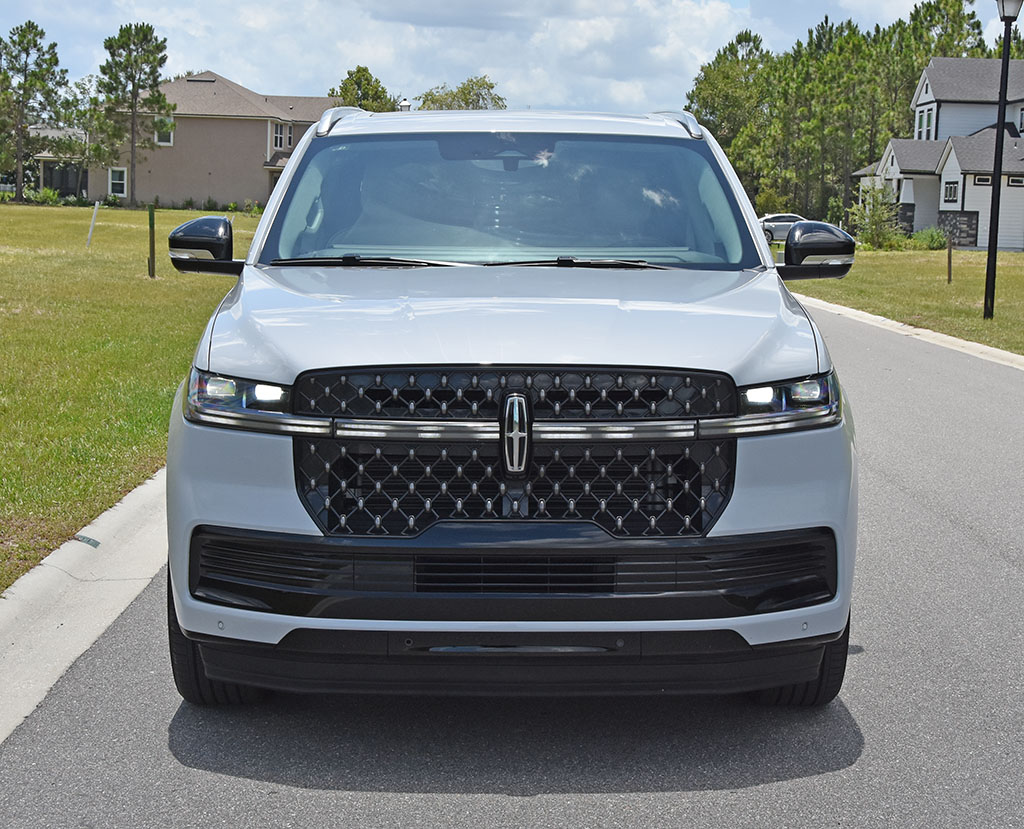
All-new for the 2025 model year, the Lincoln Navigator enters its fifth generation, bringing many notable upgrades but retaining the overall delightful luxury character that it’s known for. Powered by the familiar 3.5-liter twin-turbo V6 engine touting 440 horsepower and a healthy 510 lb-ft of torque, the new Navigator is a respected performer in a straight line, getting up to 60 mph in just 5.7 seconds. The power comes on smoothly, and it’s a strong point that I think far surpasses the Cadillac Escalade, apart from the rumbling sound that the Escalade’s V8 makes. Otherwise, the Navigator holds its own for the rumbly V6 noise but keeps things mostly subdued to match its luxury appeal and unique luxury theme.
Ride quality could use a bit of polishing as Lincoln continues to go the softer route for the Navigator, where the body tends to loft around a bit much for my tastes, but rarely does it feel like it’s out of control. However, the softness of the suspension while in the normal driving mode feels like it could use a little buttoning down, along with helping to curtail the body jiggles that are mostly felt through the smallish and oddly squared-shaped steering wheel. In such an area, vehicles like the Cadillac Escalade do a much better job of exuding a better ride quality.
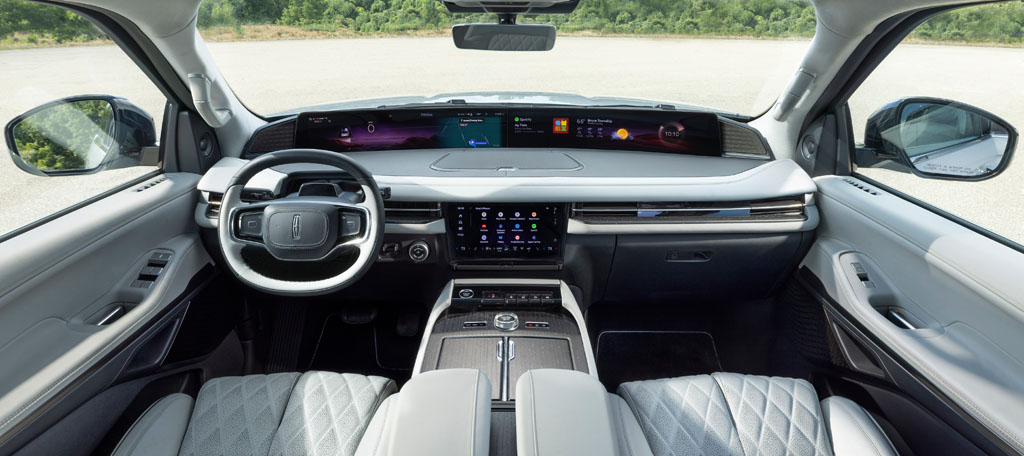
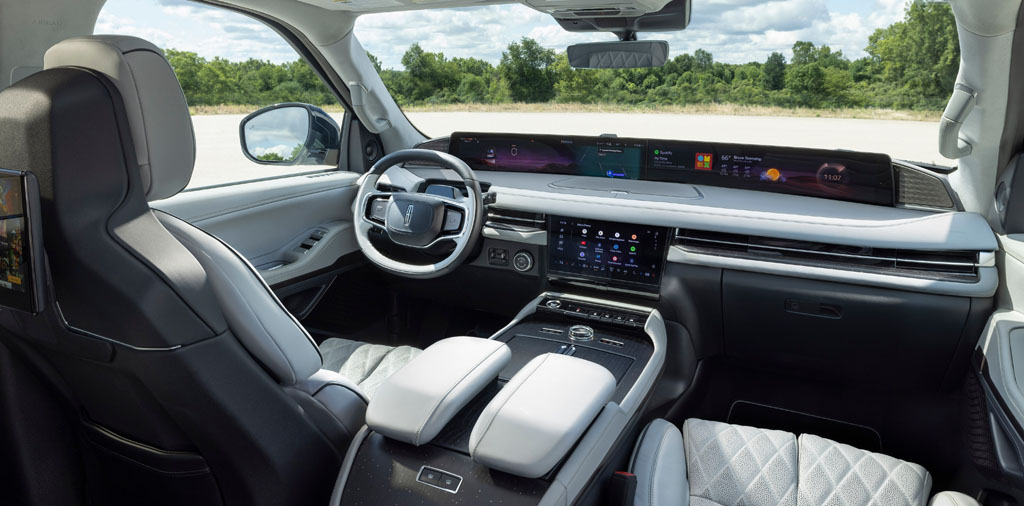
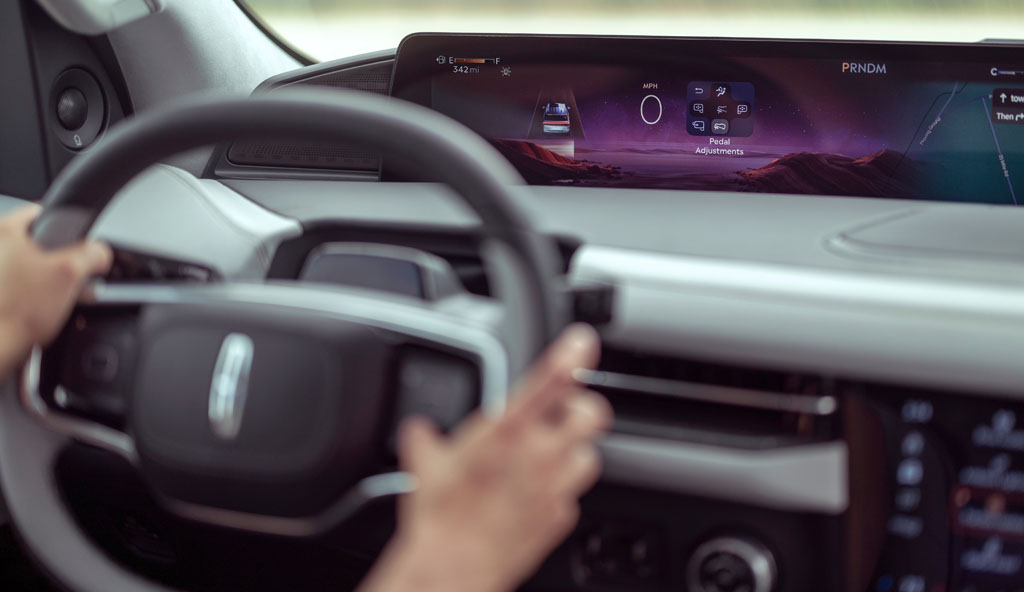
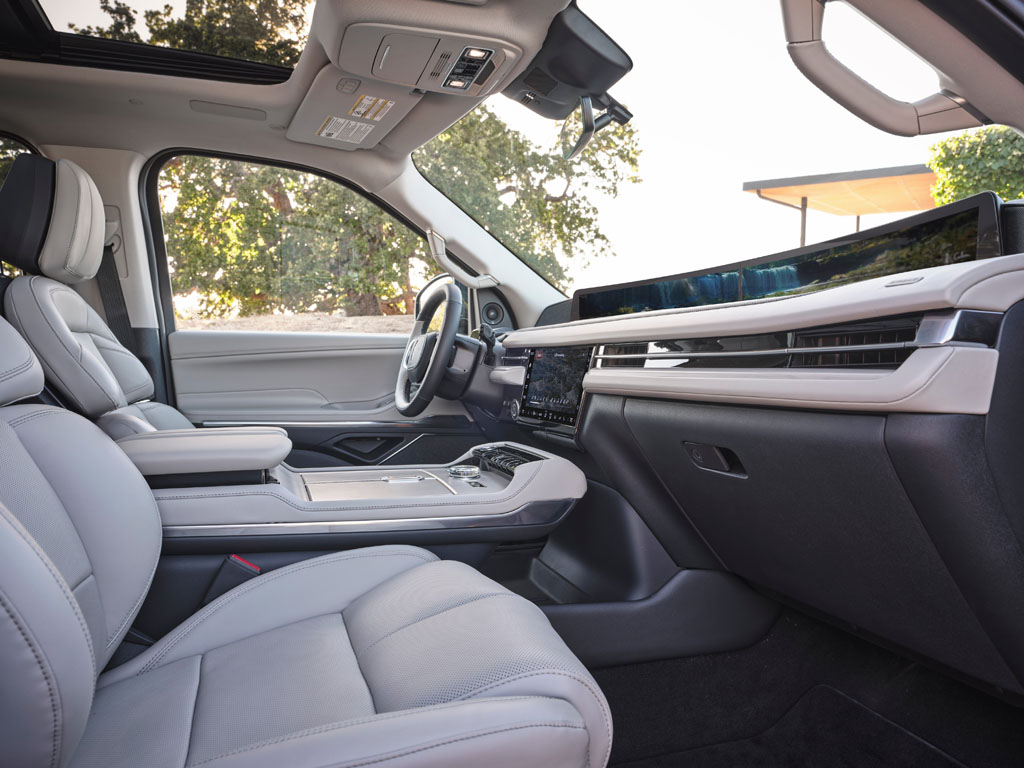
Also, yes, the steering wheel does take a while to get used to as you’re driving such a big vehicle controlled by such a small, heated steering wheel that’s placed in somewhat of a lowered position so that you’re looking at the high-mounted, large 48-inch panoramic display above the wheel instead of through the top opening of the wheel. It’s rather odd for most, but time spent with the vehicle will eventually allow you to agree to the acquired taste of such a setup. Another shortcoming is how many turns lock-to-lock that you must make with the smallish square steering wheel, almost to the point that you feel overwhelmed in parking lots. Thankfully, there’s the 360-degree camera system that comes up to help guide you into spaces where the Navigator doesn’t feel all that intimidating from its large size when you get used to how many turns you must make to ‘navigate’ this big luxury SUV.
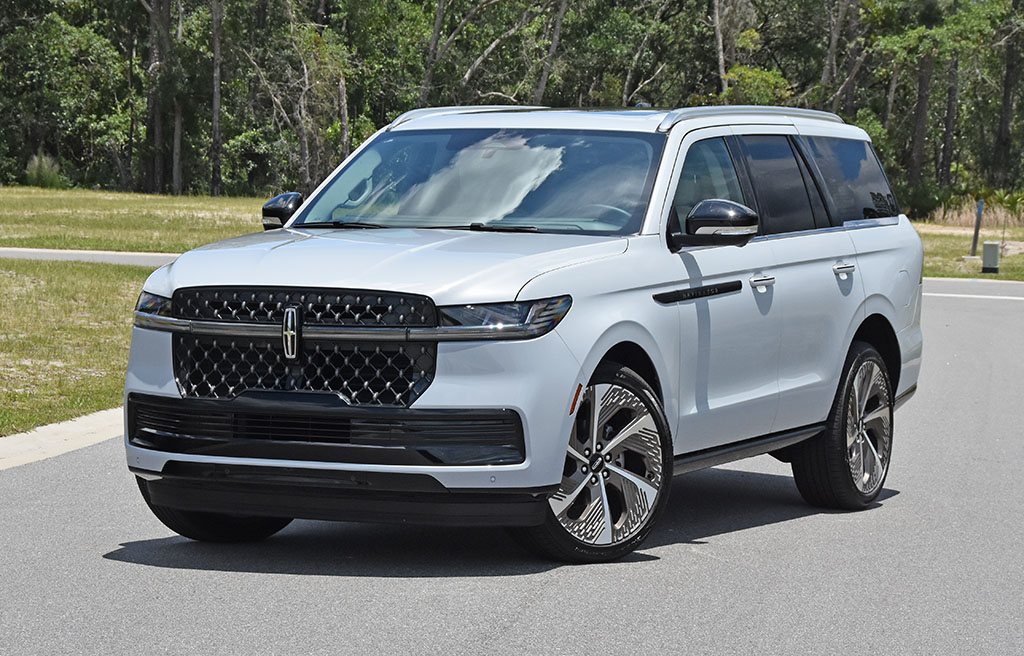
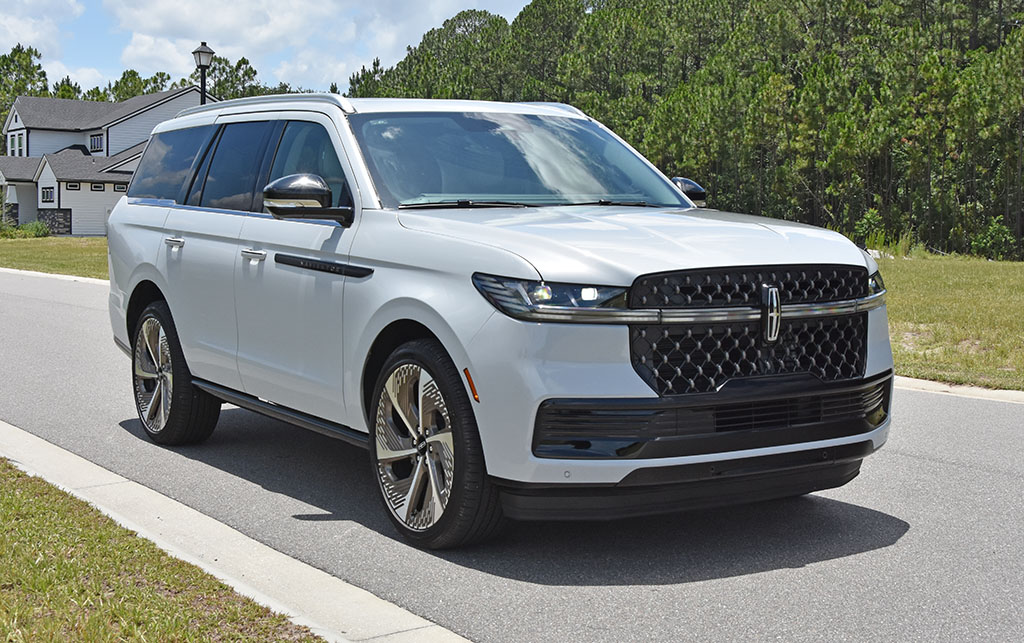
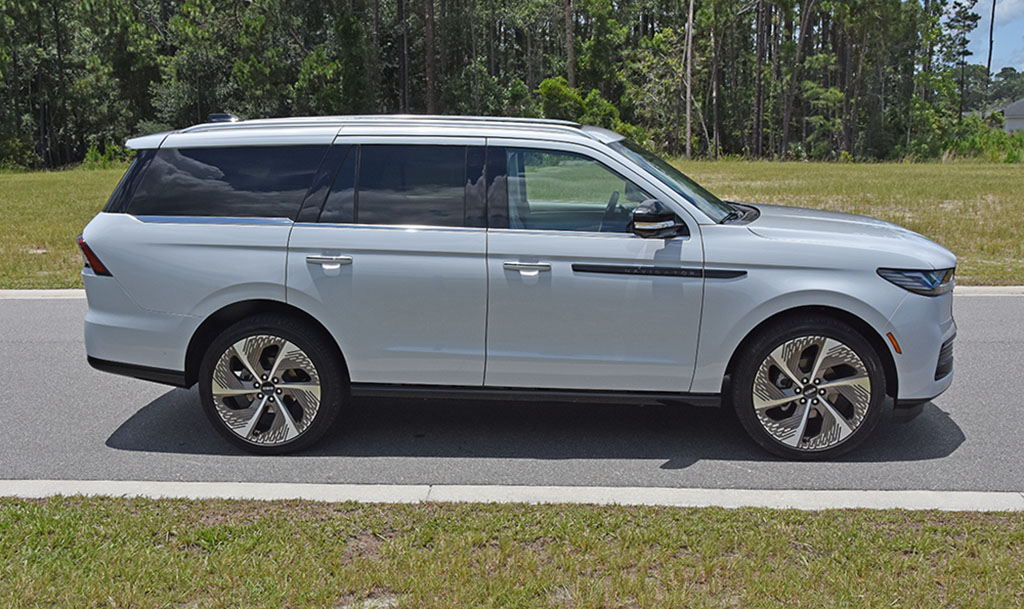
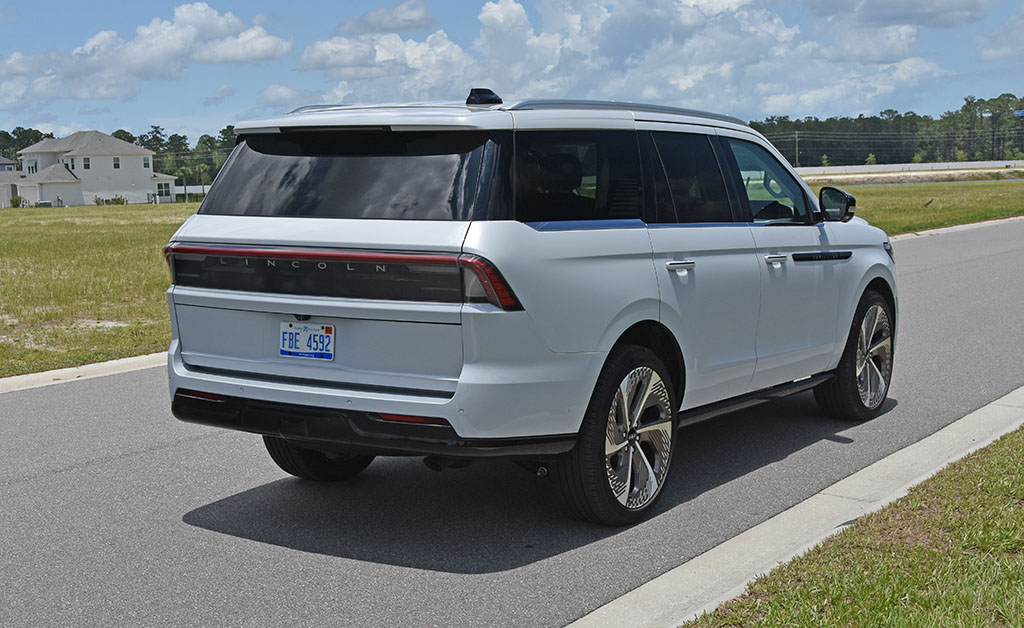
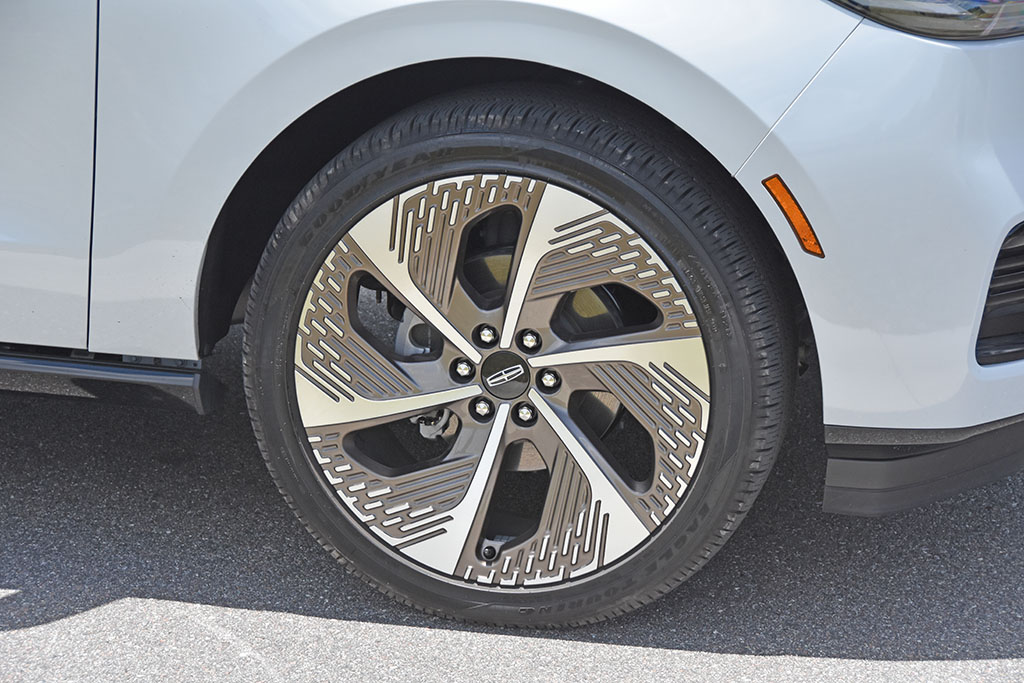
It’s possible that the vibrations and jiggles felt in the cabin and mostly through the steering wheel are partly due to the massive 24-inch wheels, which are rather eye-catching with their directional blades with a chiseled design and bronzish colored accent. They actually look stunning. The 285/40/19-inch-sized Goodyear Eagle Touring tires wrapping the uniquely styled wheels do a respectable job in limiting road noise and feel sure-footed on curvy back roads with the help of placing the drivetrain into the automatic four-wheel-drive setting.
Fuel Economy
Fuel economy in the new Navigator comes in mostly consistent with its EPA estimates of 15 mpg city, 22 mpg highway, and 17 mpg combined. The EcoBoost engine seemingly proves its willingness to keep things economical while providing a decent amount of power, all while burning regular unleaded fuel. The 23.6-gallon tank in the standard wheelbase Navigator offers up a highway cruising range of nearly 520 miles, while the Navigator L, with its longer wheelbase and larger 27.8-gallon tank, gets you about 611 miles of highway range.
Interior and Technology
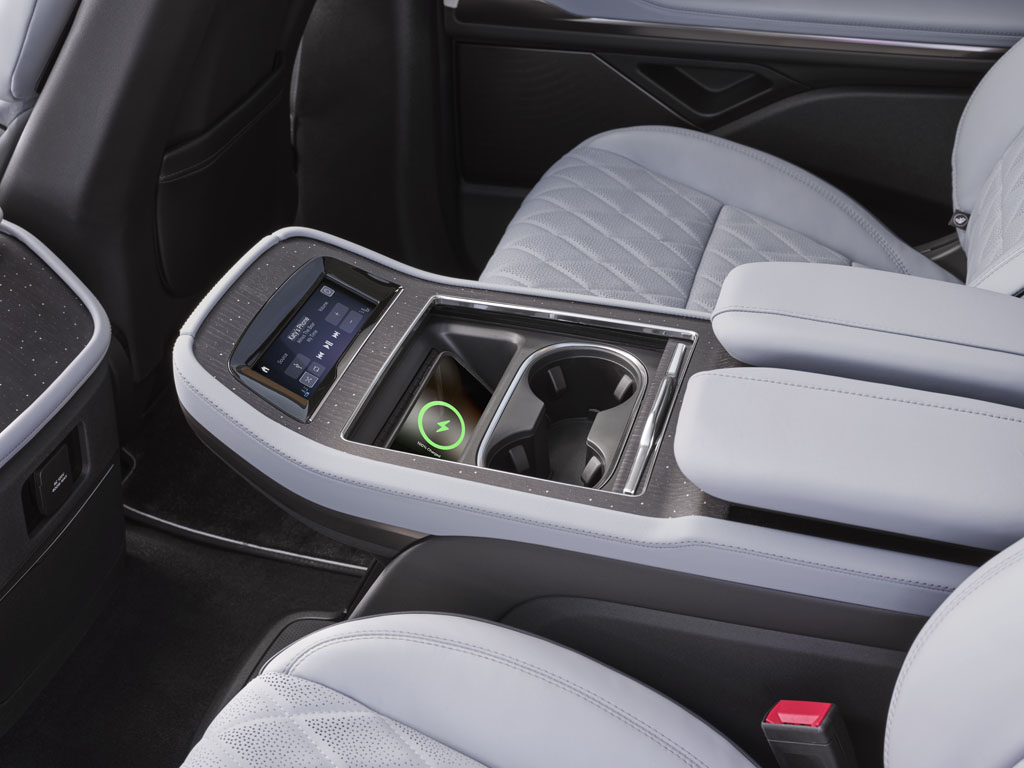
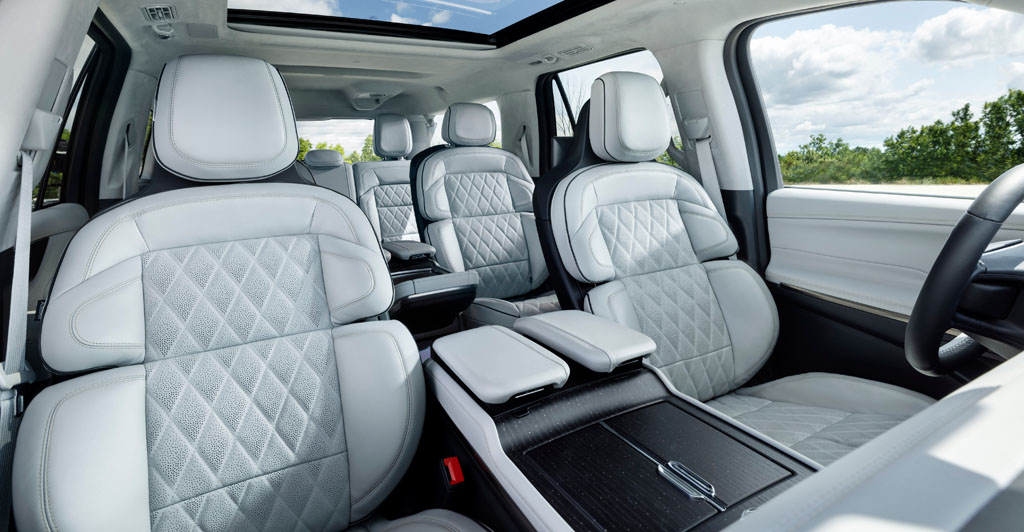
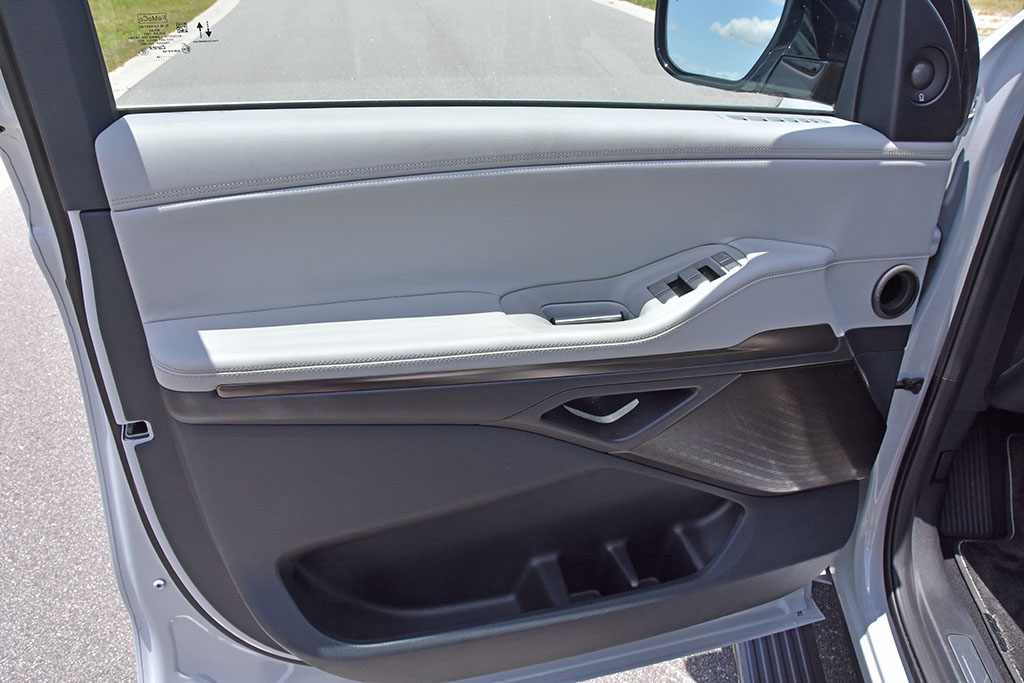
Lincoln sticks with their modern tradition of offering up plentiful trim levels with rather unique appointments and themes that blend in the respected Black Label trim. With such a level of luxury in the Black Label trim, you get to select a specialized theme that has its own patterns, choice of materials, and a delightful color palette. Moreover, Lincoln gives us a myriad of seat adjustments in the ‘perfect position’ massaging, heated, and ventilated seats up front, which brings its own set of issues as far as operation, that’s separated into some physical controls and onscreen controls. Such a mixed theme seems to be one of the few downfalls of the Navigator in making things more complicated than they must be, with so many onscreen setup features that are buried in several setting functions, all manipulated by a central 11.1-inch touchscreen.
Through the center touchscreen is where you also set up portions of the wide-spanning 48-inch panoramic display to load certain information screens, which otherwise cannot be viewed on their own unless you load them on the big screen. Most of the intricacies of the infotainment setup are initially cumbersome and will take time to master, and once you do, the experience improves. Also, here, I believe the Cadillac Escalade did better with the setup of its large panoramic display. Still, the Navigator has an advantage for the shorter reach to its center touchscreen if you are accustomed to using touchscreen interfaces.
The integration of wireless Apple CarPlay and Android Auto only come up on the 11.1-inch touchscreen. However, the navigation mapping in the large 48-inch panoramic display cleverly connects with your smartphone integration for using apps like Waze or Google Maps to view the same navigation destination overlays on streets as it does in the smartphone integration.
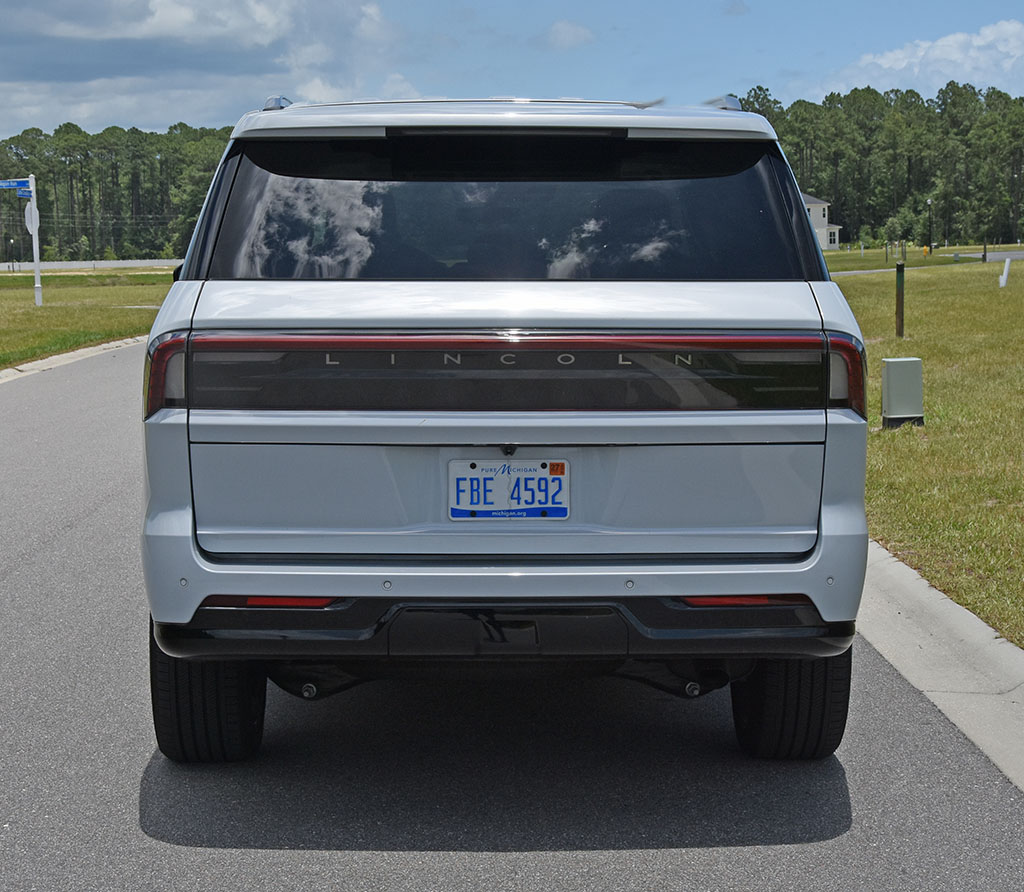
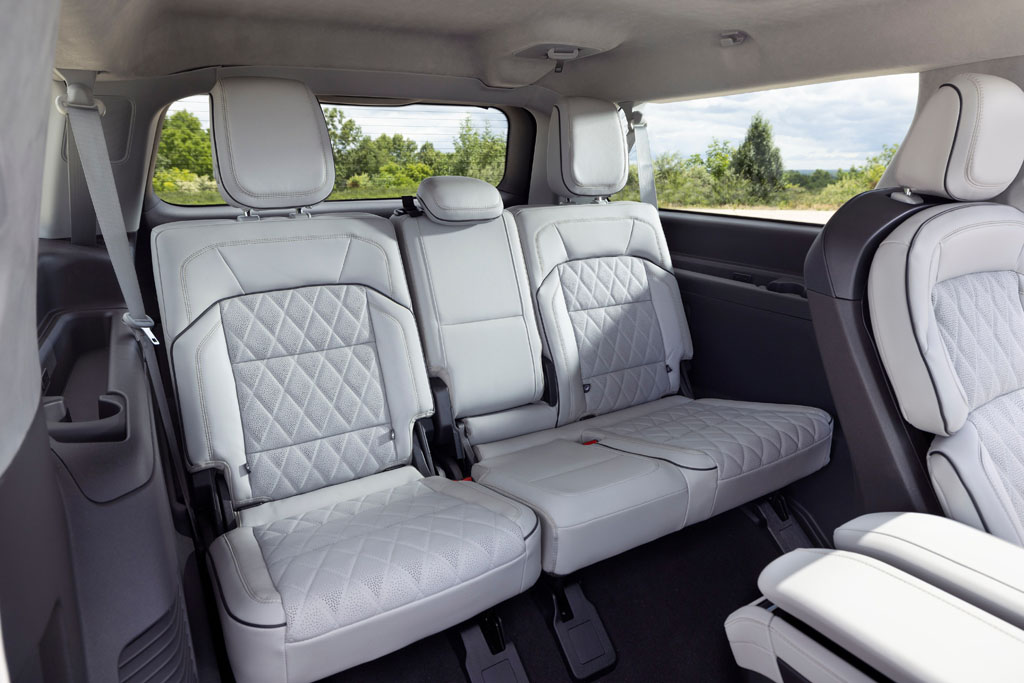
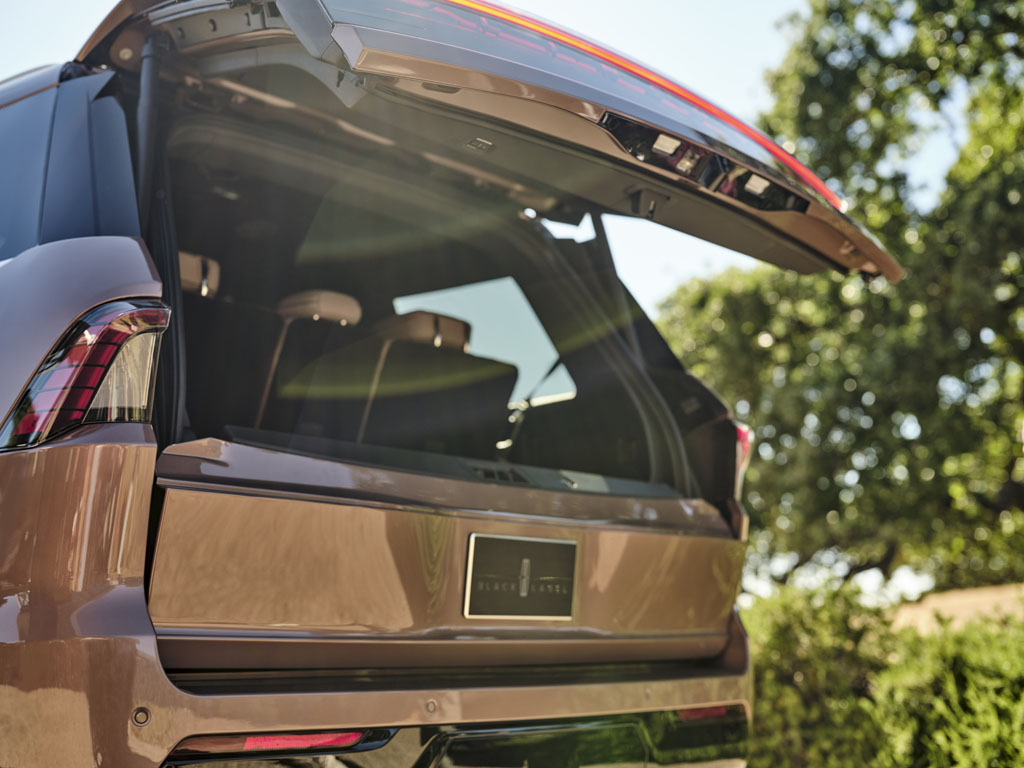
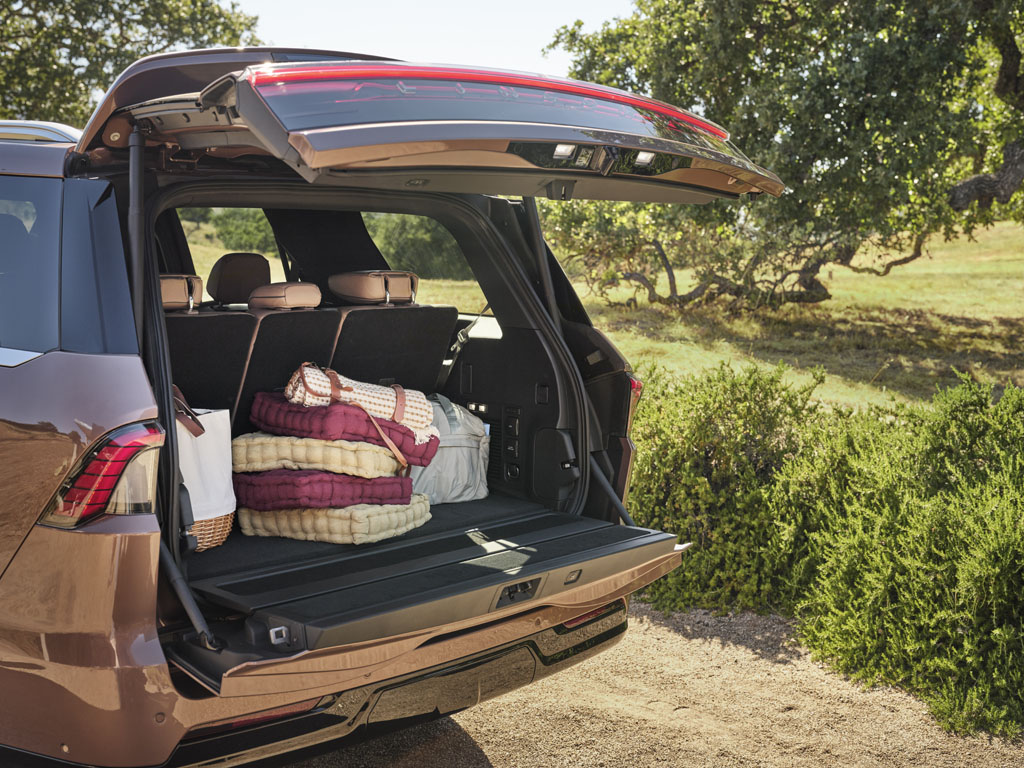
The seating areas, as expected, have plentiful space and adjustability – even power adjustments in the rear rows along with heating, ventilation, and massaging functions for the second row. There’s a respectable level of easy access, either by the power sidesteps, second row power-fold to access the third row, and the power-fold actions to access additional cargo space. Speaking of cargo space, the Navigator offers up decent cargo in the normal wheelbase (just over 21 cubic feet with all seats in place) and even more in the Navigator L long wheelbase, in addition to having a new split power tailgate setup. The new split tailgate takes a long-enjoyed page out of vehicles like the BMW X7 and Range Rover. Moreover, there are convenient setup options for tailgating and covers out back, even a setup to offer a seating area with a slight backrest option for the lower tailgate split.
Safety
As far as safety, Lincoln offers up all of the expected active safety functions in addition to a few bonuses in the area of a new blind spot video view upon signaling, brought up in the panoramic screen on the driver’s side. There’s also the latest iteration of BlueCruise, Lincoln’s hands-free driving system, which proves to be nearly on par with GM’s SuperCruise in most situations.
Pricing
Lincoln keeps the new Navigator competitive in its value proposition with a starting price of $89,995 before any fees or options. Moving all the way through the trim levels to my test vehicle’s Black Label trim, you’ll expect to shell out at least $116,995 before adding in options and fees. My loaded up 4×4 Black Label test vehicle with the Atmospheric Theme comes in at $137,735.

More Stories
Toyota Recalls Nearly 106,000 Land Cruiser SUVs Over Fuel Leak and Potential Fire Risk
Toyota’s legendary Land Cruiser has built its reputation on durability and reliability, but even one of the toughest SUVs on...
Legendary Mercedes-Benz AMG Hammer Could Make a Comeback as HWA Teases Stunning W124 Revival
Some cars earn legendary status through impressive sales figures, while others become icons simply because they were outrageously fast for...
10 Practical Gifts for Truck Owners Who Work Outdoors
Who actually needs another novelty keychain? For someone whose truck doubles as an office, a toolshed, and a lunchroom, the...
Uzbekistan September 2026: Chevrolet falls to 70.2% share, BYD up to 13.4%
The Chazor Champion is BYD’s best-seller in Uzbekistan. The Uzbek new car market is down -5% year-on-year in September to...
2027 GMC Yukon Invoice Price, Dealer Cost, and What You Should Pay Near You
The 2027 GMC Yukon sits at the upper end of the full-size SUV market, with a lineup that runs from...
2027 Honda Civic Invoice Price, Dealer Cost, and What You Should Pay Near You
The Honda Civic has been America’s best-selling compact car for decades, and the 2027 lineup adds meaningful new content with...