
Honda Doubles Down on Hybrids With Sleek New Sedan and Acura SUV Set for 2028

Honda’s electric vehicle ambitions may be taking a different route than many expected, but the company is far from slowing down. Instead of charging ahead exclusively with EVs, Honda is now putting a major spotlight on hybrids, and its latest preview of two upcoming models makes that crystal clear. During a recent business briefing, Honda rolled out a pair of near-production prototypes that hint at the brand’s next chapter: a futuristic Honda-badged sedan and a new Acura SUV, both powered by an advanced hybrid system expected to arrive by 2028.
The timing of this strategic shift comes after several high-profile EV projects quietly disappeared from Honda’s roadmap. Models such as the Honda 0 Sedan, 0 SUV, Acura RSX EV, and even the anticipated Afeela vehicles developed alongside Sony have reportedly been shelved. Rather than continue pouring resources into an uncertain EV market, Honda appears to be recalibrating around what it already does exceptionally well: efficient, reliable hybrid powertrains backed by internal combustion technology that still resonates strongly with buyers, especially in North America.
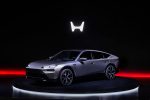
Visually, the new prototypes suggest Honda is not sacrificing design excitement in the process. The low-slung sedan features a dramatic wedge-shaped profile with a sweeping roofline that looks far more daring than today’s Accord or Civic. Meanwhile, the Acura SUV carries an athletic and upscale stance that hints at a premium performance focus. Both vehicles wear amber side markers, an easy clue that these models are intended for the U.S. market. Even though Honda calls them prototypes, the styling appears very close to production ready.
Underneath the bold sheet metal will be Honda’s next-generation hybrid system, which the company claims will improve efficiency by more than 10 percent over its current hybrid setup introduced in 2023. Honda also says it is developing a lighter platform to further boost fuel economy while reducing manufacturing costs by over 30 percent. That combination of lower weight, improved electrification, and refined combustion technology is part of Honda’s larger plan to launch 15 hybrid models globally by March 2030, with the majority aimed squarely at American buyers. SUVs will continue to dominate the lineup, and many models are expected to feature all-wheel-drive systems powered through electric motors.
Perhaps the boldest statement from Honda’s presentation was its claim that future hybrids launching from 2027 onward could feature the “world’s most efficient powertrain.” That is an ambitious target, especially as automakers worldwide race toward full electrification. Still, Honda is backing up the claim with serious investment, reportedly spending nearly $28 billion over the next three years on gasoline and hybrid development while continuing to reserve roughly $5 billion for future EV programs. The message from Honda is becoming increasingly clear: while the EV future may still be coming, hybrids are about to become the company’s most important bridge to get there.

More Stories
A Simple Pre-Winter Check for Your Tires and Battery
The first cold morning of the season has a way of finding the weak spots in a car. A tire...
Porsche Mission S Hypercar Teased with 8,000-RPM Redline Ahead of October 15 Reveal
Porsche is preparing to make a serious statement in the world of high-performance automobiles, and its upcoming Mission S hypercar...
Chinese Automaker Geely Coming to Canada in 2027 as New Import Rules Open the Door to Affordable EVs
The North American automotive landscape could be in for a significant shakeup as Chinese automotive giant Geely Auto has officially...
Rivian Goes Ghostbusters for Halloween with Ecto-1 Inspired EVs and Spooky Software Update
Rivian is getting into the Halloween spirit in a big way this year, and fans of the iconic Ghostbusters movies...
Keeping the Ram You Love, Updating the Part You Use Every Day
A favorite vehicle earns its place through use. There are the trips you planned for months, the quick runs for...
Is Your Car Ready for Colorado’s Traction Law?
A clear forecast in Denver can turn into a whiteout at the Eisenhower Tunnel. When that happens, the Colorado Department...