
AI Is Coming to More New Cars but So Are Physical Buttons and That Might Be the Sweet Spot

The next big shift inside new vehicles may not be another giant screen. It may be the way automakers finally try to make all that technology feel easier to live with. Brands are moving quickly to add more artificial intelligence to the cabin, turning voice assistants into something more conversational and more capable. At the same time, some of those same companies are also backing away from the all-touchscreen experiment by keeping or reintroducing physical controls for key functions. That combination feels important because drivers have made it pretty clear they want smarter cars, but not at the expense of common sense.
You can already see where the industry is heading. General Motors says it is rolling out Google Gemini to about 4 million model year 2022 and newer Cadillac, Chevrolet, Buick, and GMC vehicles with Google built-in, promising more natural back-and-forth conversations and a more capable in-car assistant. Hyundai is pushing in a similar direction with its new Pleos Connect system, which it calls a key step in its software-defined vehicle strategy and says will reach about 20 million Hyundai, Kia, and Genesis vehicles by 2030. Mercedes-Benz is also deepening its AI push, expanding conversational search and navigation in its MBUX Virtual Assistant with Google Cloud technology and bringing that experience first to the new CLA.
On paper, that all sounds exciting, and some of it genuinely is. Better AI in the car could mean fewer rigid voice commands, smoother navigation searches, easier message handling, more personalized route suggestions, and faster answers to vehicle-related questions. In the best-case scenario, it lets drivers keep their hands on the wheel and spend less time stabbing at menus while moving down the road. That is the promise automakers are selling right now, and it is easy to understand why many buyers will find that appealing.
Still, not everyone is going to welcome this future with open arms. Some drivers already feel like modern vehicles know too much, collect too much data, and ask them to trust systems they do not fully understand. Consumer Reports has warned that many newer vehicles may be collecting and sharing driver behavior data, and the AP has highlighted broader privacy concerns around connected cars, citing research that found cars were among the worst product categories reviewed for privacy. So even if the technology becomes more useful, there is going to be a real conversation about how much intelligence people want in their vehicle and how much of themselves they are willing to hand over to get it.
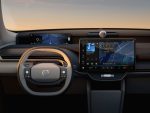
That is exactly why the return of physical buttons matters so much. Hyundai says Pleos Connect was designed around a mix of touch and physical controls to improve ease of use and minimize driver distraction, and the system keeps real buttons on the steering wheel and below the main screen for quick access to important functions. Euro NCAP has also updated its 2026 safety protocols in response to consumer feedback and growing concern over distraction, while Volkswagen has openly reversed course and committed to bringing back physical controls for essential functions in future models after customers pushed back on touch-heavy interiors. In other words, automakers are finally starting to understand that smarter software does not have to mean burying every basic action in a screen.
What this all points to is a more realistic next chapter for automotive technology. The future cabin probably is not going to be fully analog, and it is not going to be a giant tablet on wheels either. It is more likely to be a compromise that blends better AI with better ergonomics. That may not sound revolutionary, but it might be exactly what drivers have been asking for all along. Smarter voice tech can be genuinely helpful, and physical buttons still make a lot of sense when you are trying to adjust something by feel at 70 mph. If the industry finally leans into both ideas at once, new cars may actually become easier to use instead of just more complicated.


More Stories
A Simple Pre-Winter Check for Your Tires and Battery
The first cold morning of the season has a way of finding the weak spots in a car. A tire...
Porsche Mission S Hypercar Teased with 8,000-RPM Redline Ahead of October 15 Reveal
Porsche is preparing to make a serious statement in the world of high-performance automobiles, and its upcoming Mission S hypercar...
Chinese Automaker Geely Coming to Canada in 2027 as New Import Rules Open the Door to Affordable EVs
The North American automotive landscape could be in for a significant shakeup as Chinese automotive giant Geely Auto has officially...
Rivian Goes Ghostbusters for Halloween with Ecto-1 Inspired EVs and Spooky Software Update
Rivian is getting into the Halloween spirit in a big way this year, and fans of the iconic Ghostbusters movies...
Keeping the Ram You Love, Updating the Part You Use Every Day
A favorite vehicle earns its place through use. There are the trips you planned for months, the quick runs for...
Is Your Car Ready for Colorado’s Traction Law?
A clear forecast in Denver can turn into a whiteout at the Eisenhower Tunnel. When that happens, the Colorado Department...