
US Forces Intercept, Turn Back Iran-Linked Tanker in Arabian Sea

By Ryan Morgan
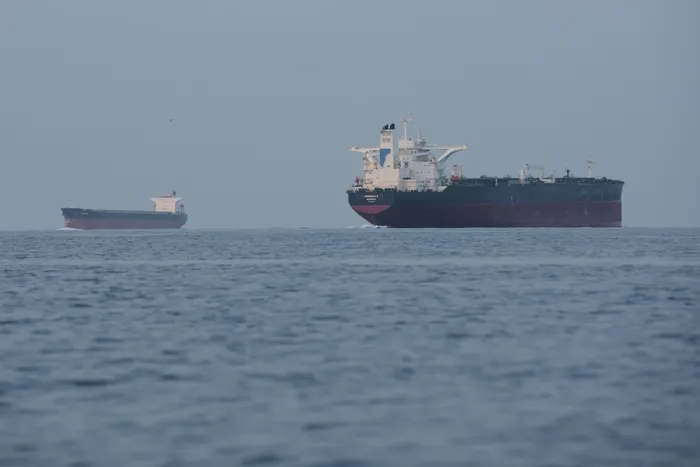
A U.S. Navy helicopter intercepted and turned back toward Iran a sanctioned petrochemical tanker in the Arabian Sea on April 25, the U.S. Central Command (CENTCOM) announced.
CENTCOM, which oversees military operations in the Middle East, said a Navy helicopter from guided-missile destroyer USS Pinckney was dispatched to intercept the tanker M/V Sevan. CENTCOM said the merchant vessel subsequently began “complying with U.S. military direction to turn back to Iran under escort.”
Sevan, a Panama-flagged liquefied petroleum gas tanker, was among 19 vessels that the U.S. Treasury Department sanctioned one day earlier, on April 24, for transporting Iranian petrochemical exports.
U.S. forces have been enforcing a blockade against Iranian ports and Iran-linked vessels since April 13. The blockade is in place during a ceasefire with Iran, as President Donald Trump has called on Tehran to submit terms for a peace agreement after U.S. and Israeli forces commenced attacks against Iran on Feb. 28.
During the ceasefire, the Treasury Department has enacted new sanctions, dubbed “Operation Economic Fury,” to cut off Tehran’s revenue streams.
According to CENTCOM, U.S. forces have directed 37 vessels back to Iranian ports since the start of the blockade.
“U.S. forces continue to enforce U.S. sanctions and fully implement the blockade against ships entering or departing Iranian ports,” CENTCOM said.
Since April 13, U.S. forces have also boarded and seized control over three other Iran-linked vessels: M/V Touska, M/T Tifani, and M/T Majestic X.
This week, Iranian forces reported seizing the Liberia-flagged container ship MSC-Francesca and the Panama-flagged container ship Epaminondas.
In a statement on Saturday, Iran’s armed forces threatened to respond “if the aggressive U.S. military continues its blockade, piracy, and maritime banditry in the region.”
On Friday, the White House announced that U.S. special envoy Steve Witkoff and Trump’s son-in-law, Jared Kushner, would head to Pakistan over the weekend for another round of peace talks with Iranian counterparts.
Trump canceled those travel plans on Saturday, and Iranian Foreign Minister Abbas Araghchi departed Pakistan without the chance to speak directly with the U.S. negotiators.
Explaining his decision-making to reporters, Trump said the Iranian side had relayed a set of terms that he described as insufficient for a deal.
“They gave us a paper that should have been better, and interestingly, immediately when I canceled it, within 10 minutes, we got a new paper that was much better,” Trump told reporters in Florida, before boarding Air Force One on a flight back to Washington.

More Stories
Jessica Biel Bio: Net Worth, Career, and Personal Life
Jessica Biel has built a notable career in Hollywood. She began as a teenage television star and has since moved...
Why the Bakken Remains One of America’s Most Important Oil-Producing Regions
When most Americans think about domestic oil production, Texas probably comes to mind first. But more than a thousand miles...
Is A Different World Season 2 Renewed? Release Date, Episodes & More
Finished watching the first season of A Different World! Now searching for the renewal status and more details about A...
The Gentlemen Season 2 is Airing: Know About the Plot, Episodes, and Cast
Eddie has returned with season 2 of The Gentlemen. This time, his appearance and costumes reflect his new life as...
LEGO ONE PIECE is Live! Where to Watch and Full Cast Updates
Good news for Straw Hats fans who were waiting for the release of LEGO ONE PIECE Season 3. No, its...
Rebel Moon 3: Release Date, Cast Members, and Production Details
Zack Snyder has finally spoken about the release of Rebel Moon 3 after the release of the second sequel in...