
US Retail Sales Jump in March as Higher Gas Prices Lift Spending

By Bill Pan
Americans kept on spending in March amid a sharp rise in gasoline prices, new government data suggest.
Retail sales, an estimate of how much money people spend on goods and services at the retail level, rose 1.7 percent in March from the previous month, the U.S. Census Bureau reported on April 21. Compared with a year earlier, retail sales were up 4 percent.
That marked a significant surge from the Bureau’s upwardly revised 0.7 percent monthly gain recorded in February.
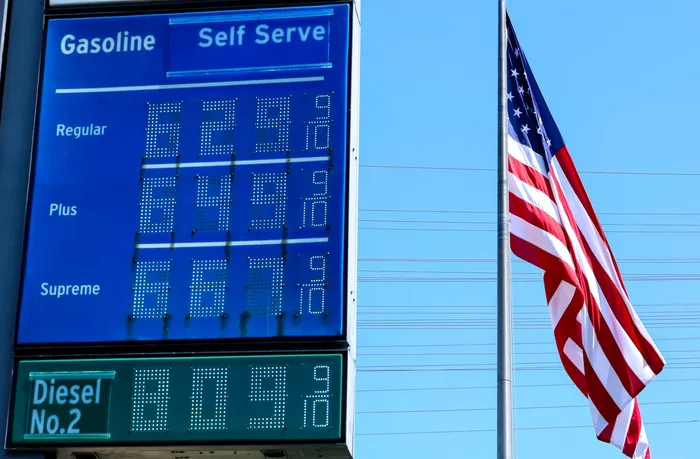
Much of the increase was driven by spending on gasoline, which jumped 15.5 percent month over month in March. Excluding gasoline stations, retail sales rose just 0.6 percent in March from the previous month.
Still, the latest data suggested consumers did not cut back everywhere else just because filling up at the pump became more expensive.
Spending at grocery stores rose 0.7 percent in March after falling 1.2 percent in February, according to the report. Sales at furniture stores climbed 2.2 percent on the month, rebounding from a 0.1 percent decline in February. Spending at electronics and appliance stores, as well as building material and garden suppliers, also increased.
At the same time, sales at clothing stores, health and personal care stores, and auto dealerships showed less momentum in March than in February. Spending at restaurants and bars, often seen as an indicator of consumers’ appetite for discretionary purchases, rose just 0.1 percent in March, following a revised 0.5 percent gain in February.
The consumption data offer some clues for those trying to assess the broader economic effects of the war in the Middle East. The conflict’s most immediate impact has been higher global energy prices, with gasoline prices in the United States up about 28 percent from a year ago, according to AAA.
The latest figures may add to evidence that consumers have not dramatically slowed spending even as higher gas prices put more pressure on household budgets. Chris Zaccarelli, chief investment officer at Northlight Asset Management in Charlotte, North Carolina, noted that the solid retail sales report came despite surveys showing consumer willingness to spend falling to record lows.
“It’s true that people can both be unhappy with higher prices and higher mortgage rates and continue to buy, and that points to a broader truth, which is that as long as people are employed, they are going to keep spending,” Zaccarelli told The Epoch Times. “So the labor market is a much more important indicator in this economy than almost anything else.”
Sandy Batten, senior economist at Haver Analytics in New York, said Americans may also be relying on larger tax refunds to keep spending. The One Big Beautiful Bill Act (OBBBA) increased the standard deduction for the 2025 tax year to account for inflation, allowing millions of Americans to collect bigger tax refunds in early 2026.
“A possible explanation for the recent resilience of sales is larger income tax refunds this year owing to the OBBBA, which reduced taxes during last year while the withholding tables were not adjusted until this year, resulting in more over-withholding last year,” Batten wrote in an April 21 analysis.
Consumer prices rose 3.3 percent in March from a year earlier, the U.S. Department of Labor said earlier in April, up sharply from 2.4 percent in February and marking the biggest annual increase since May 2024. On a monthly basis, prices rose 0.9 percent in March from February, the largest increase in nearly four years.
Excluding volatile food and energy prices, core inflation rose 2.6 percent in March from a year earlier, up from 2.5 percent in February.
A more comprehensive reading on the economy’s health is due next week, when the U.S. Department of Commerce releases its first estimate of U.S. economic growth for the first quarter.


More Stories
Jessica Biel Bio: Net Worth, Career, and Personal Life
Jessica Biel has built a notable career in Hollywood. She began as a teenage television star and has since moved...
Why the Bakken Remains One of America’s Most Important Oil-Producing Regions
When most Americans think about domestic oil production, Texas probably comes to mind first. But more than a thousand miles...
Is A Different World Season 2 Renewed? Release Date, Episodes & More
Finished watching the first season of A Different World! Now searching for the renewal status and more details about A...
The Gentlemen Season 2 is Airing: Know About the Plot, Episodes, and Cast
Eddie has returned with season 2 of The Gentlemen. This time, his appearance and costumes reflect his new life as...
LEGO ONE PIECE is Live! Where to Watch and Full Cast Updates
Good news for Straw Hats fans who were waiting for the release of LEGO ONE PIECE Season 3. No, its...
Rebel Moon 3: Release Date, Cast Members, and Production Details
Zack Snyder has finally spoken about the release of Rebel Moon 3 after the release of the second sequel in...