

2027 Mercedes-Benz C-Class EV Brings 482 HP, 800-Volt Charging, and a High-Tech Luxury Cabin

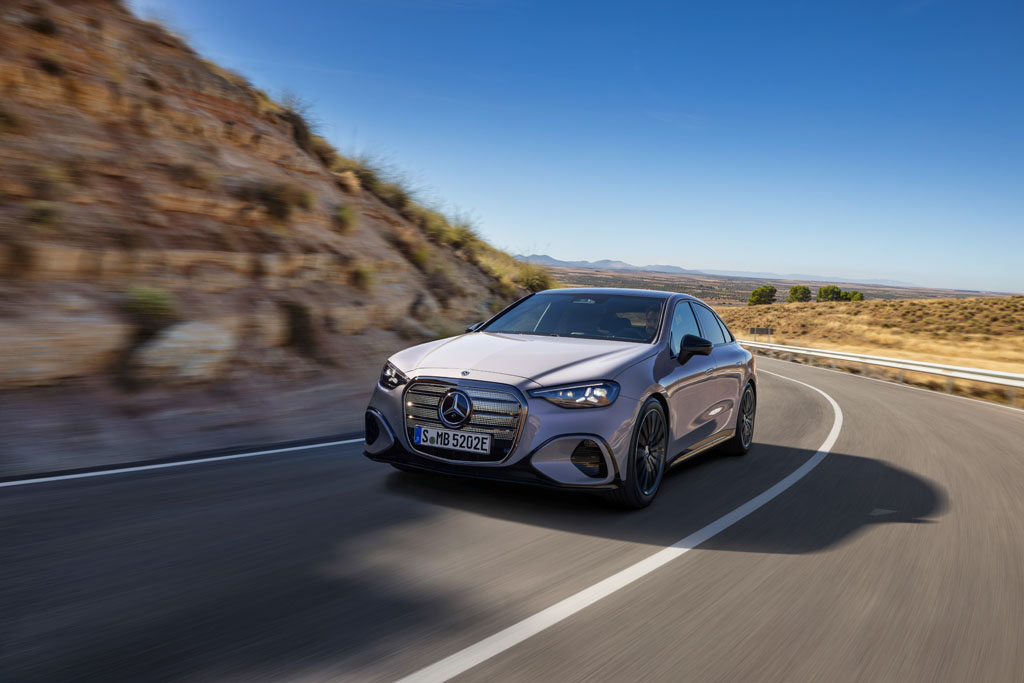
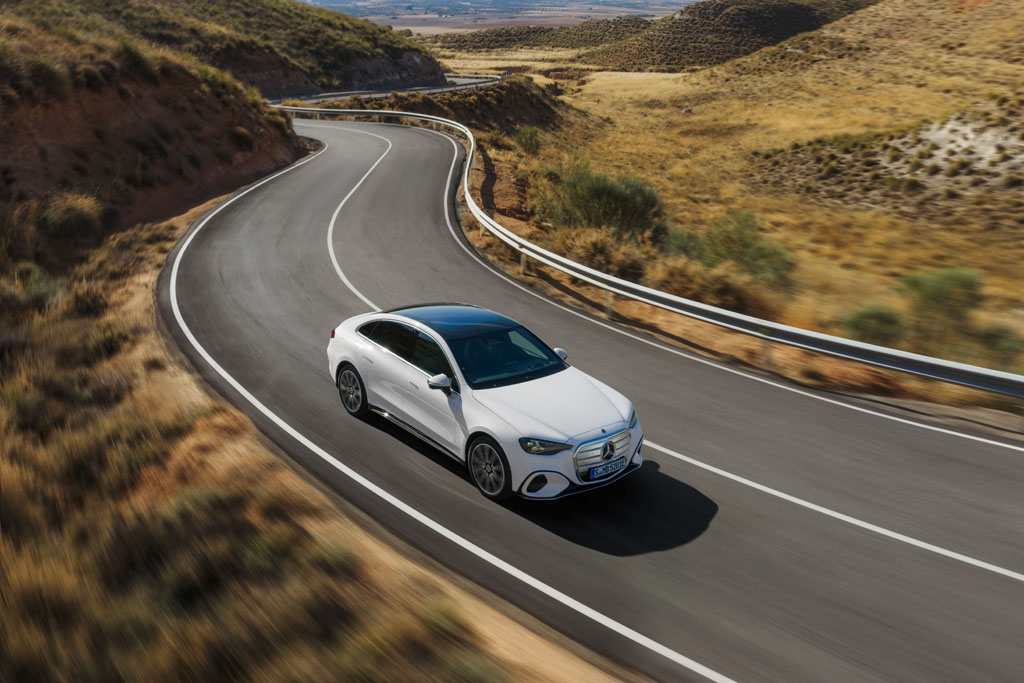
Mercedes-Benz is officially giving the C-Class a full-electric counterpart, and it looks like the brand is not treating this one as some watered-down EV experiment. The new 2027 Mercedes-Benz C-Class EV arrives as a serious compact luxury sedan with real performance credentials, a longer-range battery setup, and the sort of screen-heavy interior that will immediately grab attention. It is also meant to live alongside the gasoline-powered C-Class, which should make this a true expansion of the lineup rather than a replacement.
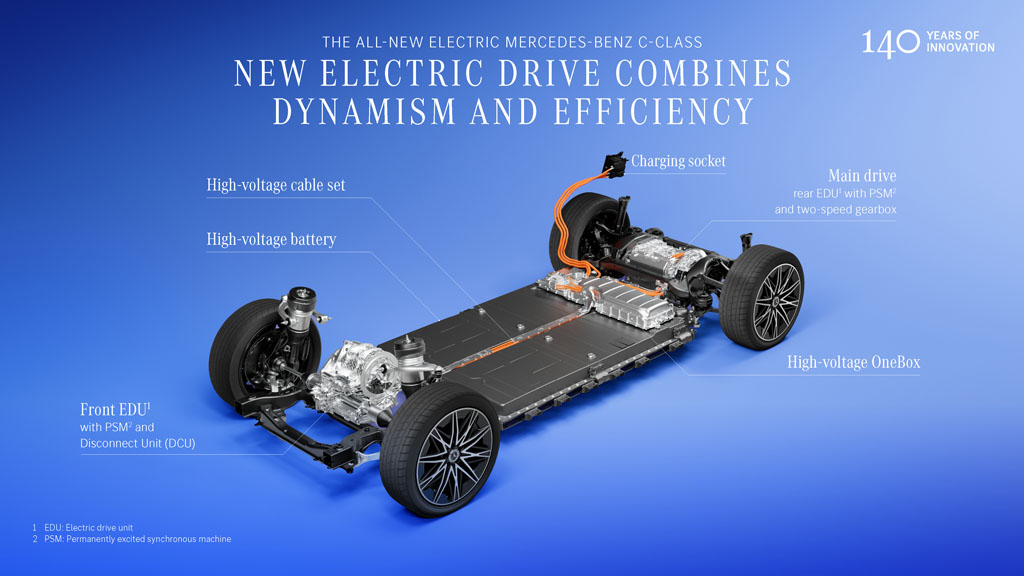
At launch, the new electric C-Class comes in C400 4Matic form, using a dual-motor all-wheel-drive setup that produces 482 horsepower and 590 lb-ft of torque. Mercedes says it will hit 60 mph in just 3.9 seconds, which puts it firmly in quick sport-sedan territory. Top speed is rated at 130 mph. One of the more interesting engineering details is the rear motor’s two-speed transmission, which is designed to help both low-speed punch and highway efficiency. That kind of hardware gives the C-Class EV a more serious technical edge than many rivals in the segment.
Power comes from a 94-kWh battery pack riding on Mercedes-Benz’s new 800-volt architecture. Fast charging peaks at up to 330 kW, and Mercedes says the car can add as much as 202 miles of range in only 10 minutes under the right conditions. Early estimates point to about 400 miles of EPA range, while the more generous WLTP figure lands at 473 miles. Mercedes is also fitting the car with a DC converter so it can use 400-volt chargers, including Tesla Superchargers, which should help make public charging far less of a headache in the real world.
The new C-Class EV is not just about straight-line speed and charging numbers. Mercedes is leaning hard into chassis sophistication here, with available Airmatic air suspension and rear-wheel steering. The rear wheels can turn up to 4.5 degrees opposite the fronts at lower speeds to tighten the turning circle, and up to 2.5 degrees with the fronts at higher speeds to improve stability. Mercedes is even bringing its Car-to-X suspension tech into the mix, allowing the system to anticipate rough road surfaces using shared data from other vehicles. For a compact luxury EV, that is a pretty ambitious feature set.
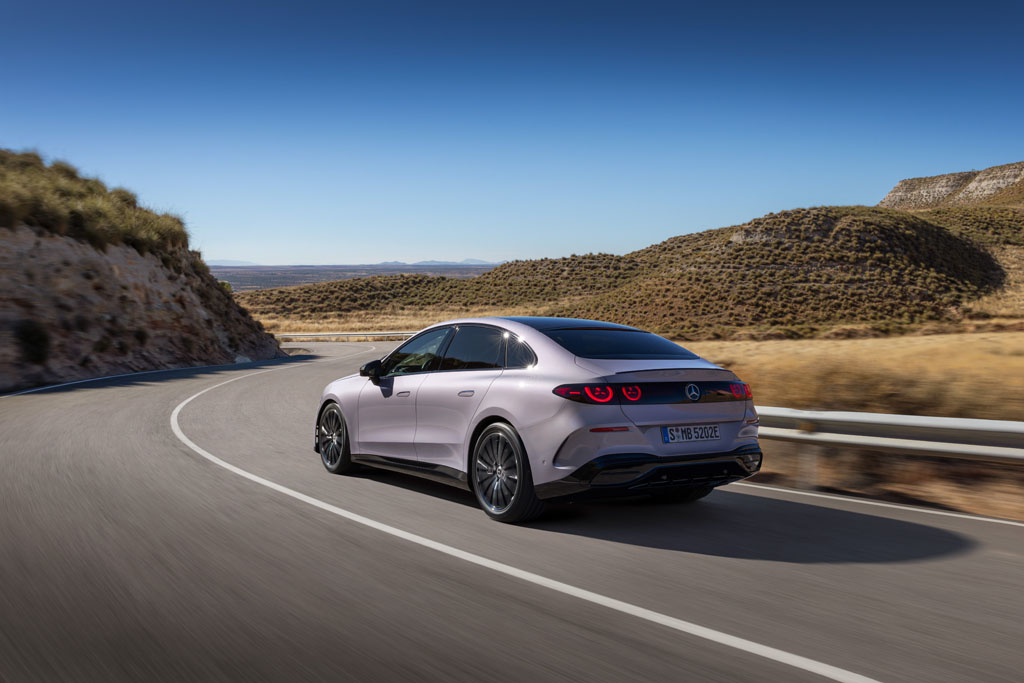
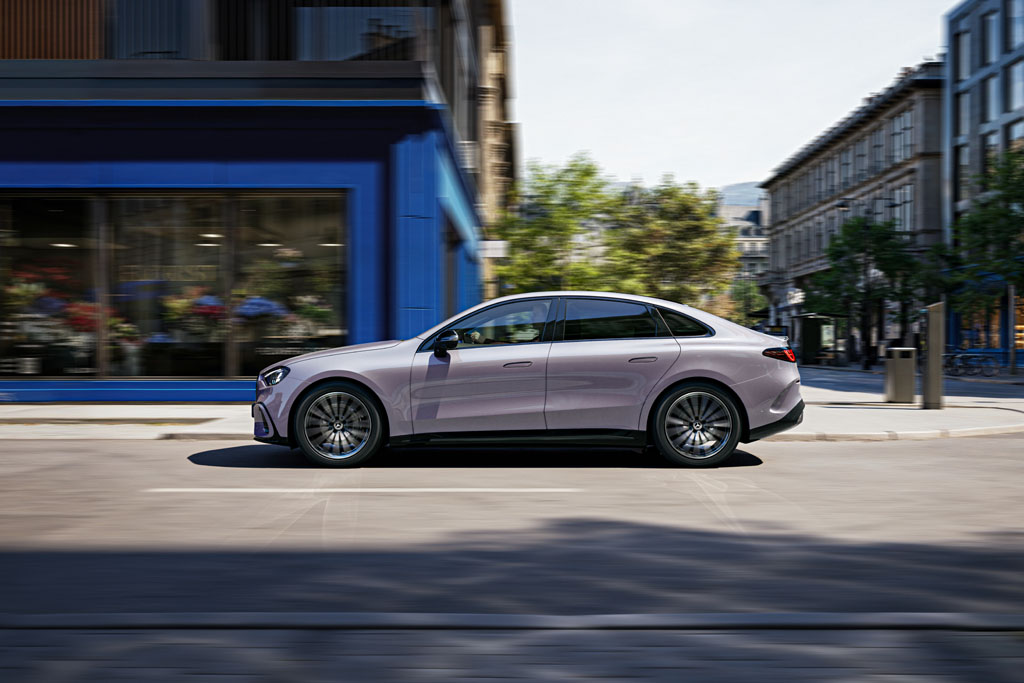
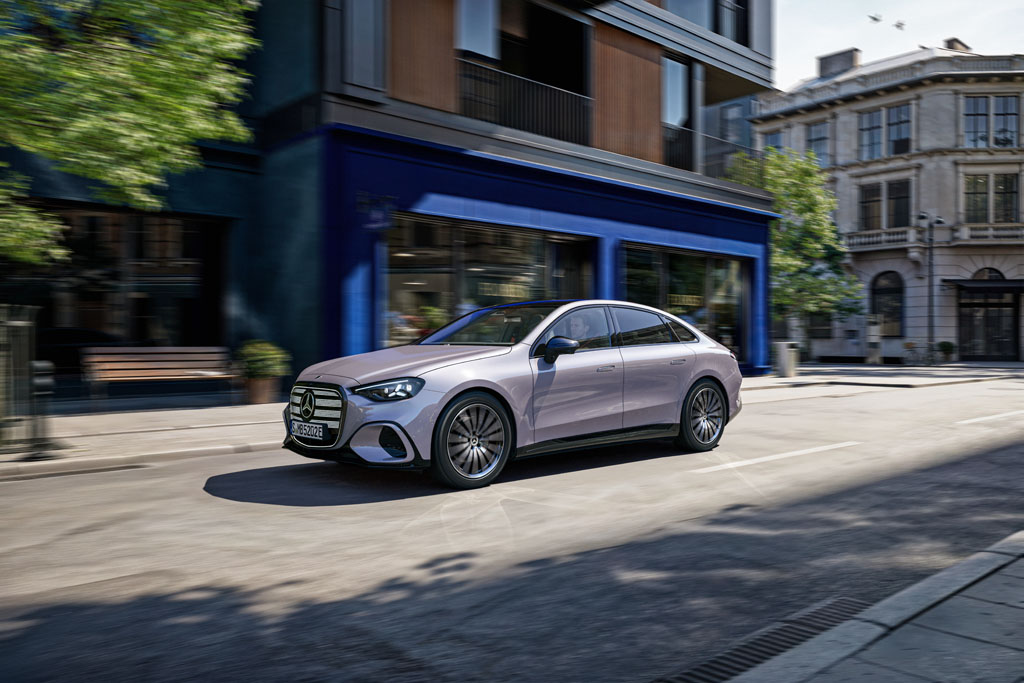
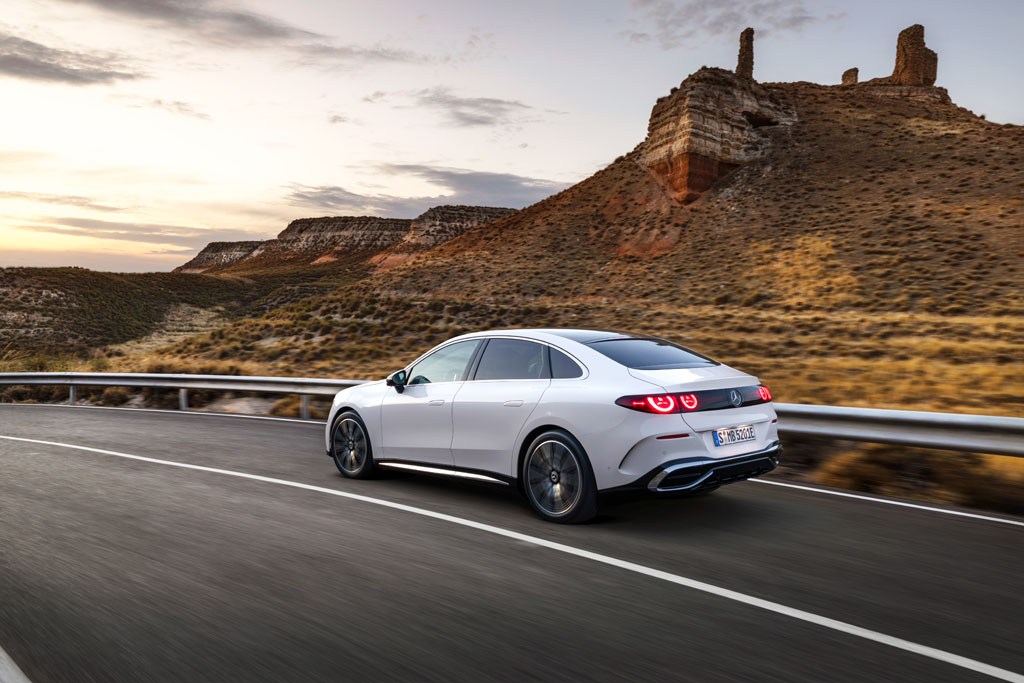
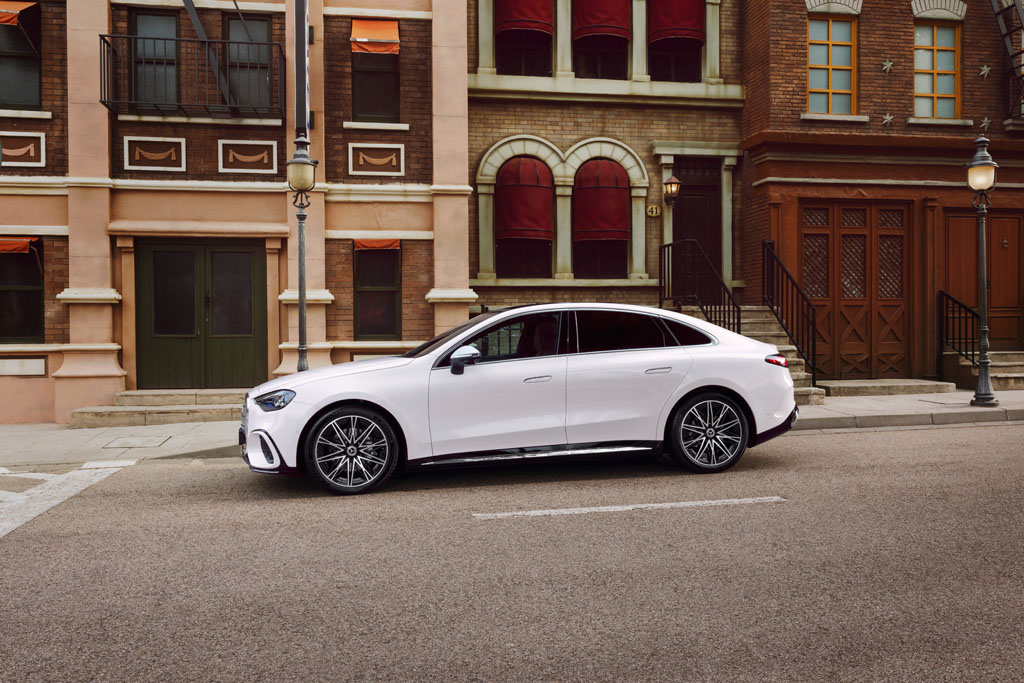
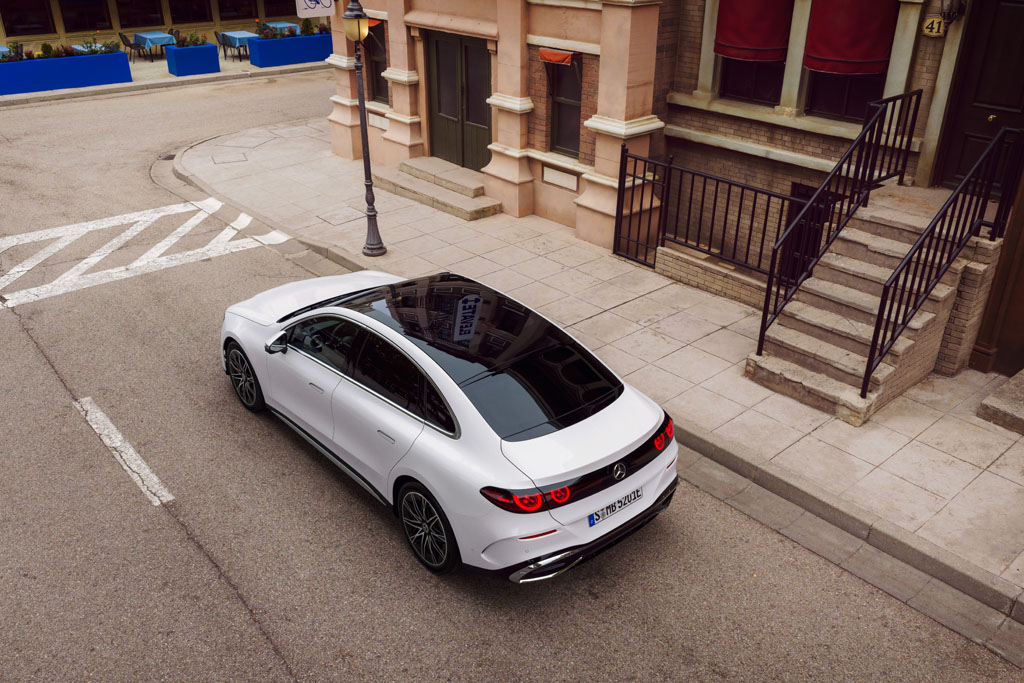
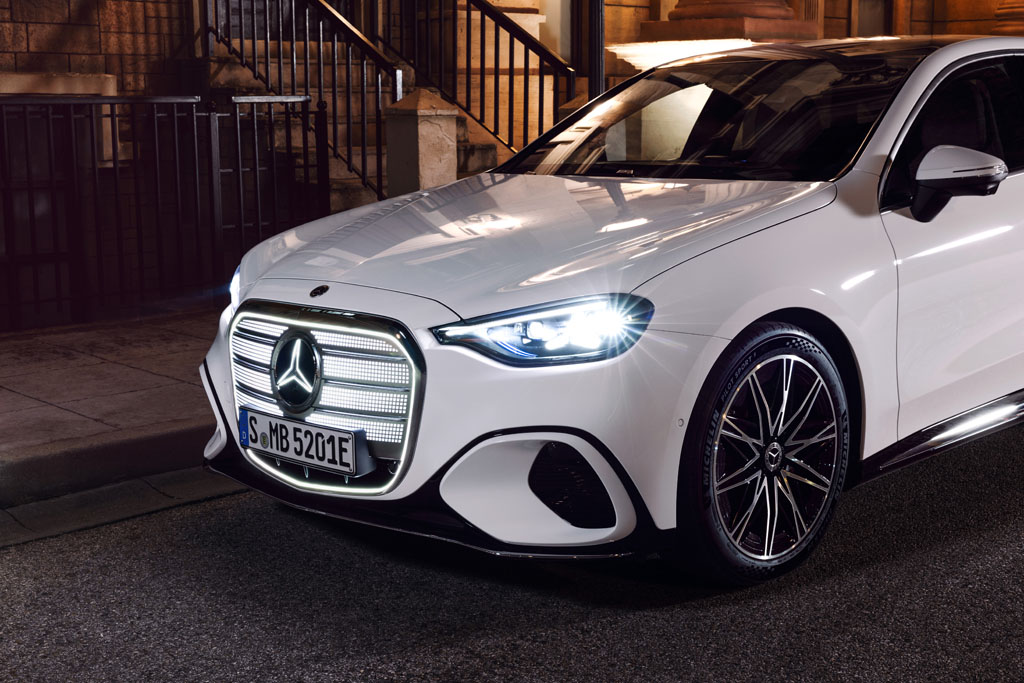
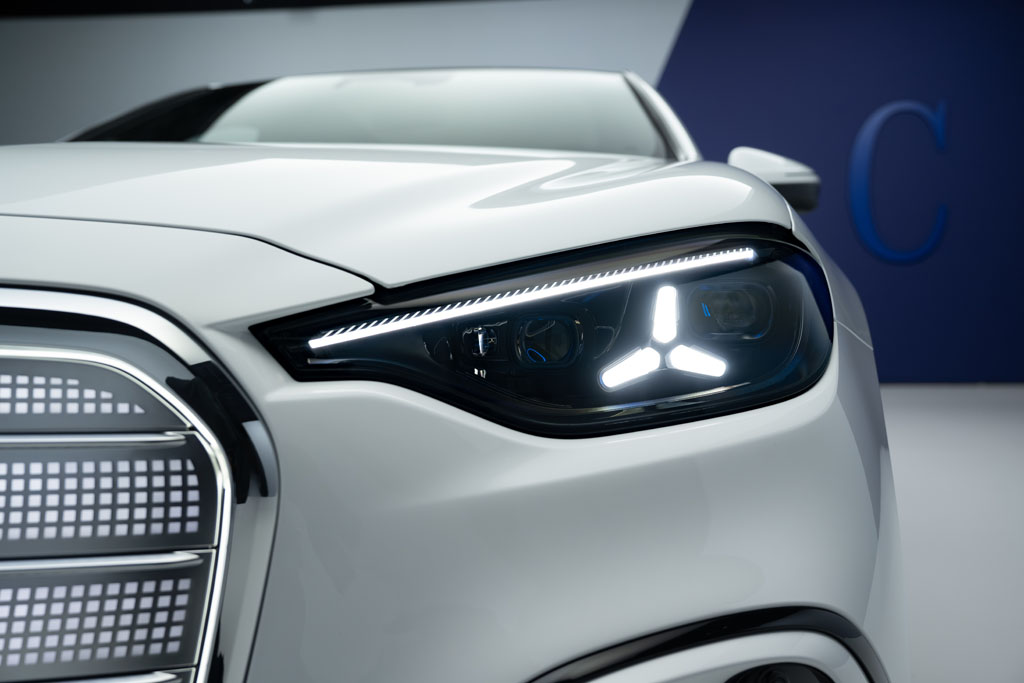
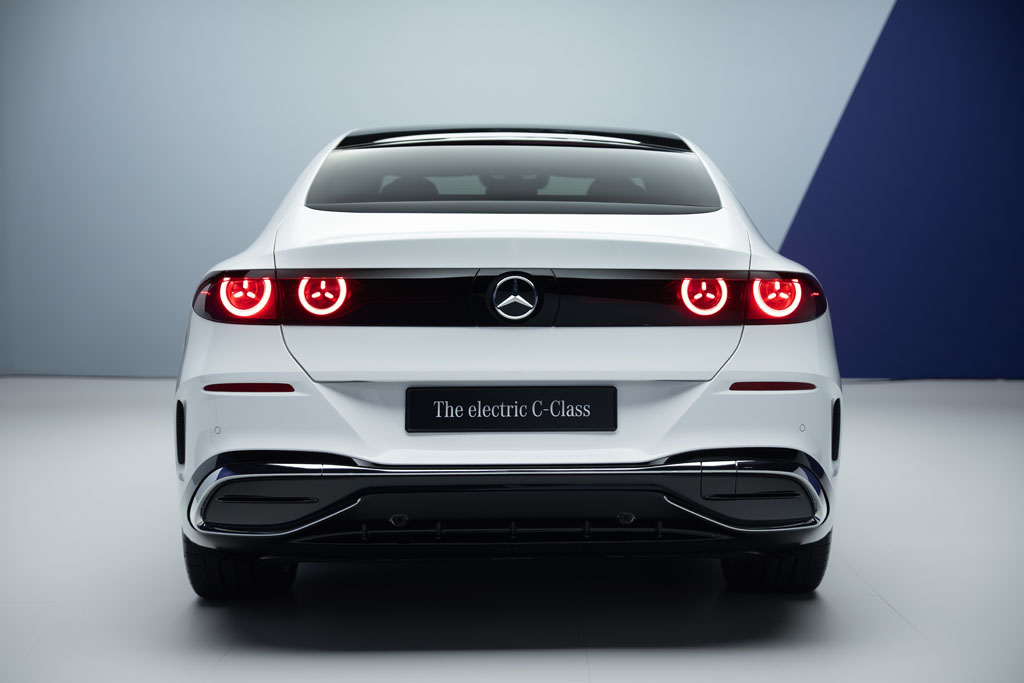
Styling also marks a big shift from the traditional internal-combustion C-Class. The new EV takes on a more slippery, more aerodynamic look with a claimed drag coefficient of 0.22, a large black panel grille, illuminated star graphics, and a smoother overall shape that feels more modern than the current gas sedan. Even so, Mercedes keeps a conventional trunk instead of going full liftback, which should appeal to buyers who still want a classic premium-sedan silhouette. It is a cleaner and more confident design than some of the brand’s earlier EQ efforts.
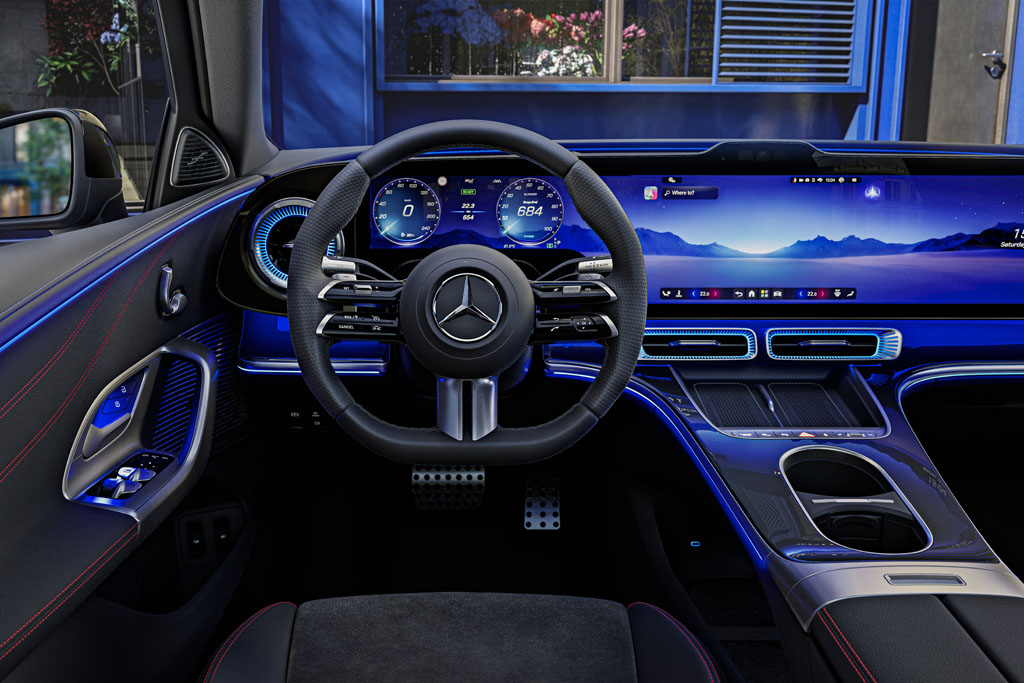
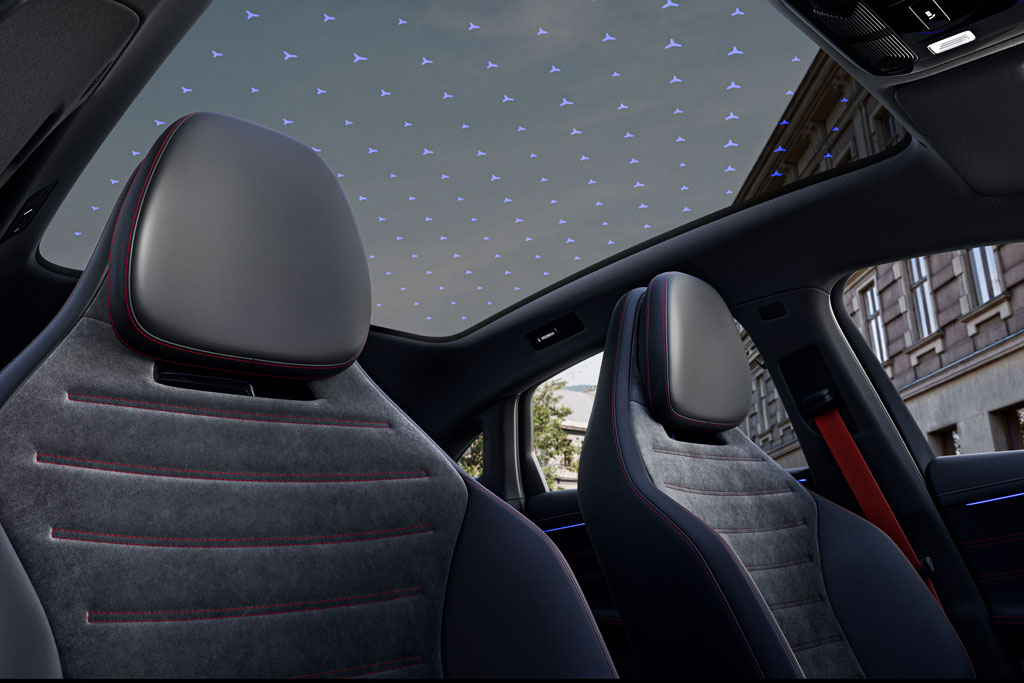
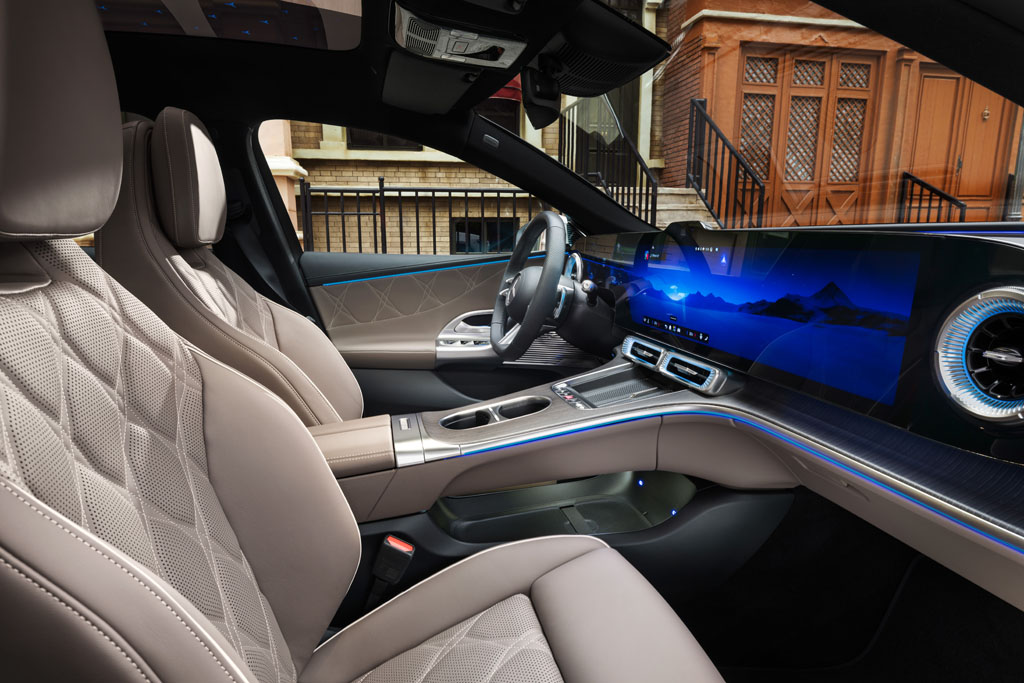
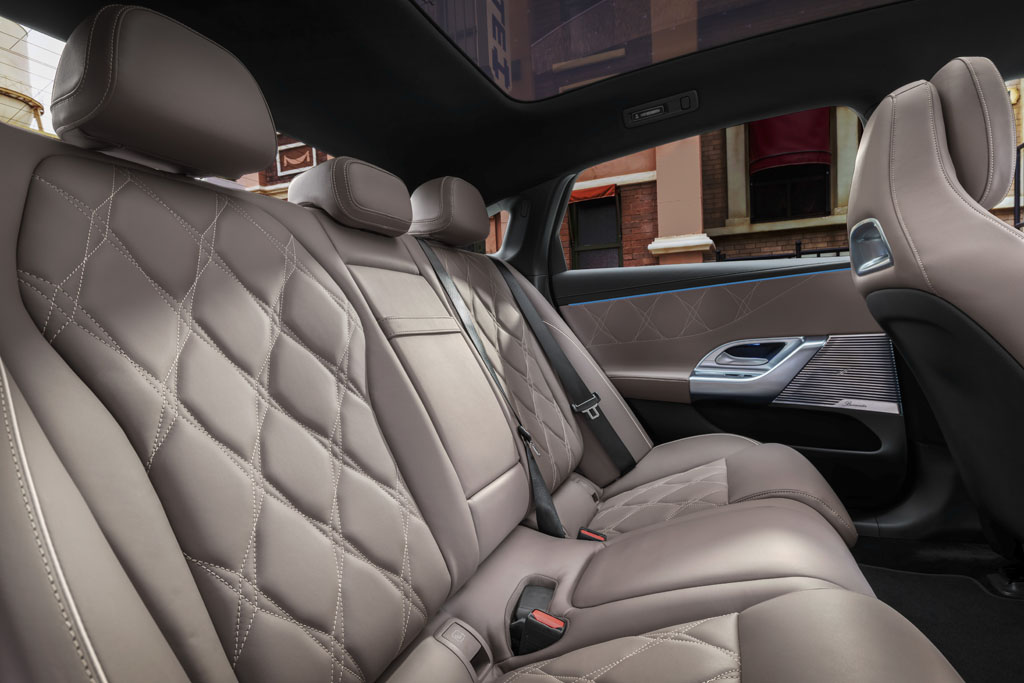
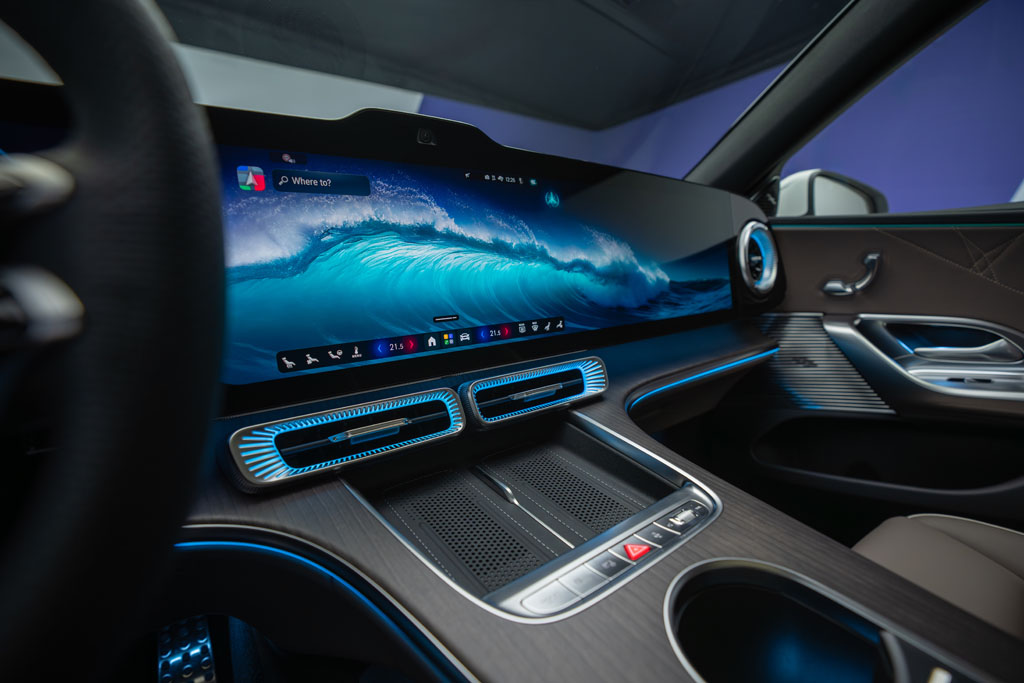
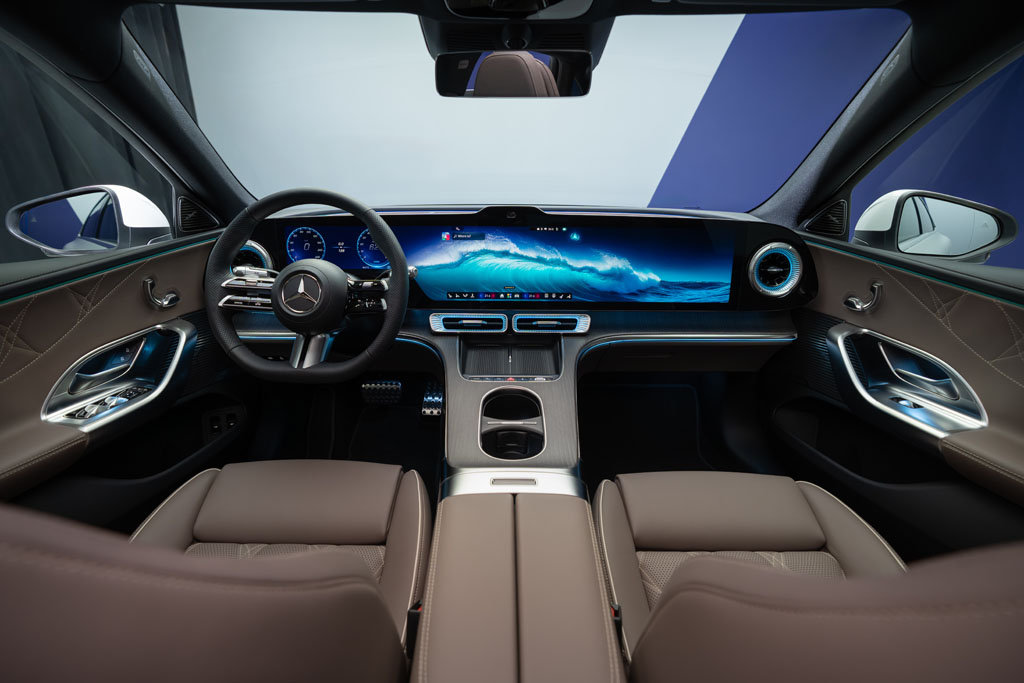
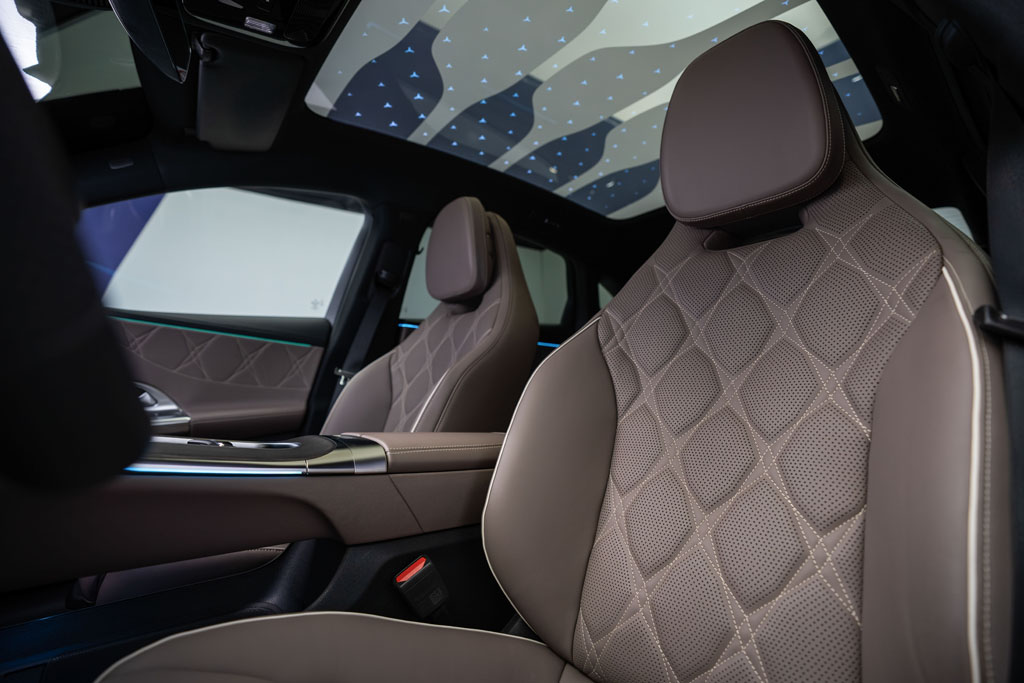
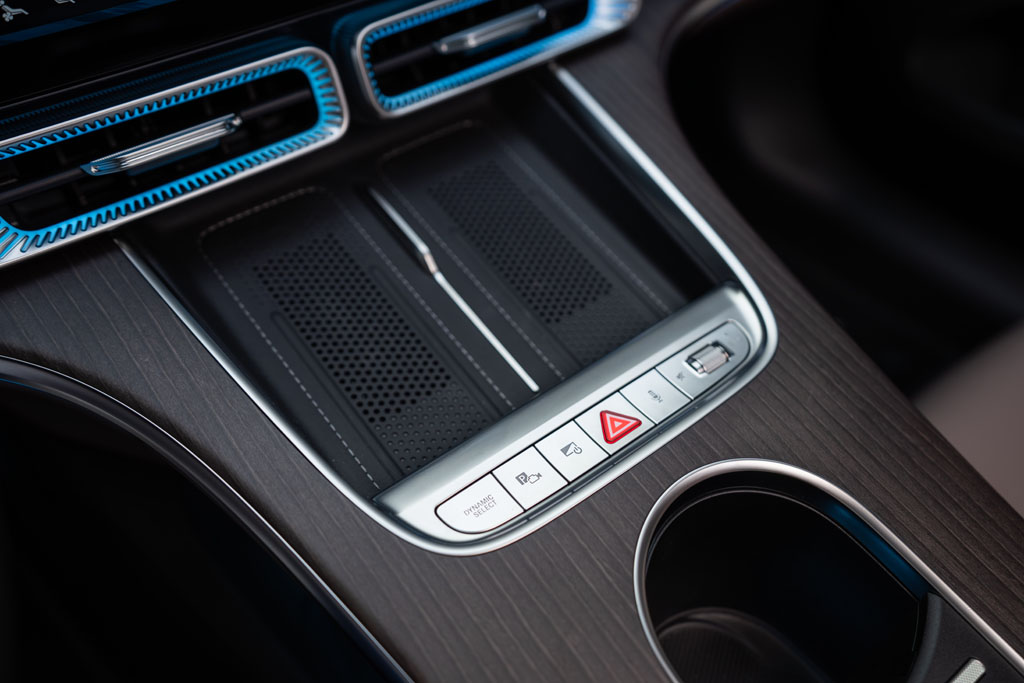
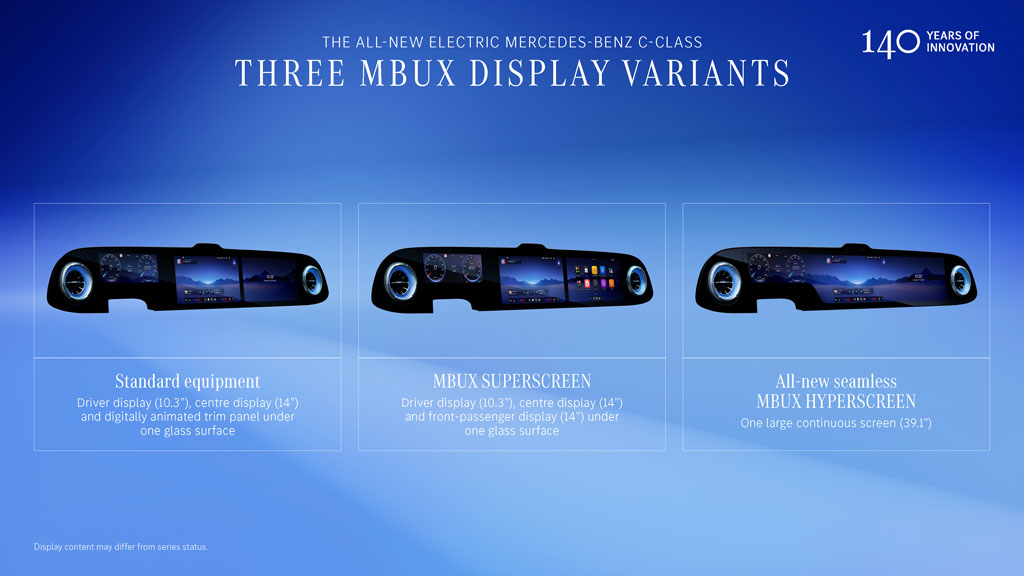
Inside, Mercedes appears to be going all in on visual drama. The cabin can be fitted with the brand’s Hyperscreen-style display setup, while other versions use the Superscreen layout. In top form, the dash houses a 12.3-inch digital gauge cluster, a 17.7-inch central touchscreen, and a 12.3-inch passenger display beneath one glass surface. Beyond the screens, the cabin gets Nappa leather, available natural-fiber and birch wood trims, optional Burmester 3D and 4D audio, and even a panoramic glass roof with 162 illuminated stars embedded in it. It is the sort of interior that feels engineered to impress the moment you open the door.
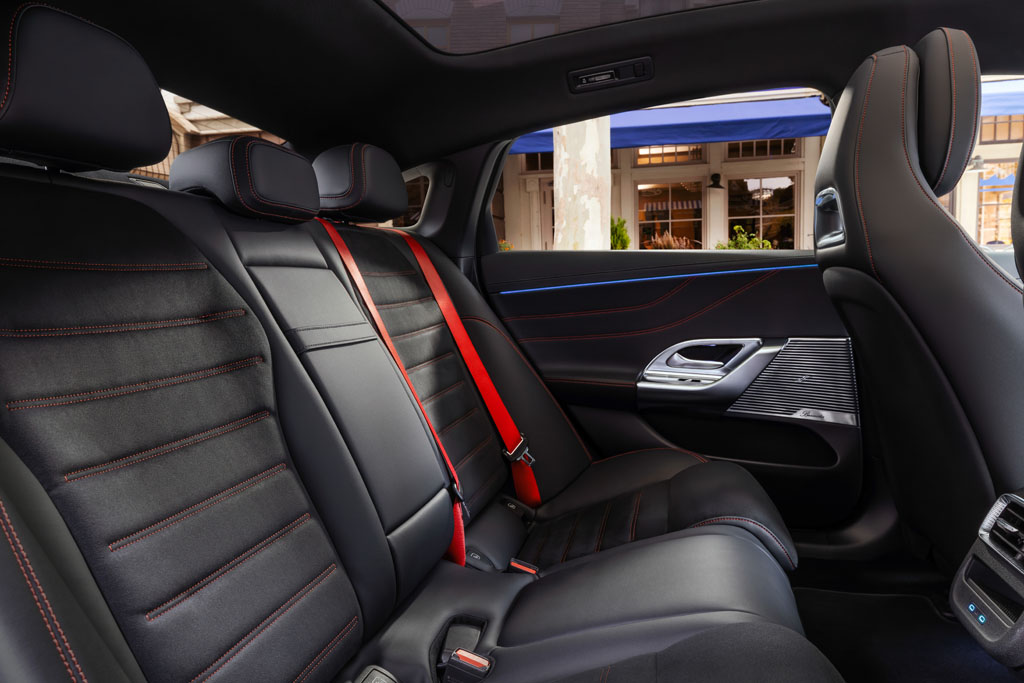
Mercedes also says the EV packaging improves cabin space. The electric platform stretches the wheelbase by 3.8 inches, which helps free up a bit more legroom and headroom, especially for rear passengers. Cargo space grows to 16.6 cubic feet in the trunk, and there is also a small front storage area for extra flexibility. Other comfort-focused touches include ventilated and massaging seats, four-way lumbar support, and a new heat-pump-based climate system that is said to warm the cabin faster while using less energy than the systems in Mercedes’ combustion models.
All of that adds up to a C-Class EV that feels far more thought-out than just another luxury sedan going electric because the market says it has to. Mercedes is clearly aiming this car right at buyers cross-shopping the BMW i3 and Audi A6 e-tron, but it is also trying to preserve the personality that has long made the C-Class such an important model for the brand. If the real-world range comes close to expectations and the driving experience matches the spec sheet, the 2027 Mercedes-Benz C-Class EV could end up being one of the most compelling small luxury EVs on the road.












More Stories
A Simple Pre-Winter Check for Your Tires and Battery
The first cold morning of the season has a way of finding the weak spots in a car. A tire...
Porsche Mission S Hypercar Teased with 8,000-RPM Redline Ahead of October 15 Reveal
Porsche is preparing to make a serious statement in the world of high-performance automobiles, and its upcoming Mission S hypercar...
Chinese Automaker Geely Coming to Canada in 2027 as New Import Rules Open the Door to Affordable EVs
The North American automotive landscape could be in for a significant shakeup as Chinese automotive giant Geely Auto has officially...
Rivian Goes Ghostbusters for Halloween with Ecto-1 Inspired EVs and Spooky Software Update
Rivian is getting into the Halloween spirit in a big way this year, and fans of the iconic Ghostbusters movies...
Keeping the Ram You Love, Updating the Part You Use Every Day
A favorite vehicle earns its place through use. There are the trips you planned for months, the quick runs for...
Is Your Car Ready for Colorado’s Traction Law?
A clear forecast in Denver can turn into a whiteout at the Eisenhower Tunnel. When that happens, the Colorado Department...