
Ford and GM Could Be Drawn Into U.S. Military Production in a Major Industrial Shift

Ford and General Motors may soon be part of a conversation that reaches far beyond pickups, SUVs, and EV strategy. According to a Wall Street Journal report, senior U.S. defense officials have approached executives at both automakers about potentially helping expand domestic military production, a move that immediately calls to mind the way Detroit once became a key manufacturing force during World War II. Reuters separately reported on the talks and said the outreach is part of a broader effort to strengthen America’s defense industrial base as global conflicts continue to strain munitions supply and readiness planning.
What makes this so interesting is that it is not just about asking big companies for help. It is about asking the biggest manufacturers in the country whether their scale, engineering depth, and production discipline can be redirected toward national defense needs if required. The Wall Street Journal report, as echoed by Reuters, says the discussions included Ford, GM, GE Aerospace, and Oshkosh, with officials also trying to understand what stands in the way of greater participation, including complex contracting rules and a defense bidding process that can be difficult for outside manufacturers to navigate.
There is real historical weight behind the idea. During World War II, Ford and GM were not just automakers. They were industrial powerhouses that helped build trucks, aircraft, engines, and other critical equipment at a pace that became part of American manufacturing legend. That is why the Wall Street Journal framing resonates so strongly here. This is not just another policy discussion about supply chains. It taps into a deeply familiar image of Detroit as an emergency production engine when the country needs it most.
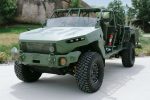
Of the Detroit companies involved, GM looks like the most natural fit to play a larger role quickly because it already has an active defense business. GM Defense currently produces the Infantry Squad Vehicle, which is based on the Chevrolet Colorado ZR2 platform and uses a high percentage of commercial off-the-shelf parts. The company has also highlighted portable power solutions tied to its broader battery expertise, showing that its military footprint already extends beyond simply building rugged transport vehicles.
Ford’s position is a little different. It does not currently have the same kind of dedicated, visible defense arm as GM, but that does not mean it lacks the manufacturing credibility or supplier relationships to matter in a push like this. In fact, that is part of what makes the reported talks so compelling. The Pentagon does not appear to be looking only at current defense specialists. It seems to be evaluating whether large-scale American manufacturers can serve as a strategic backup system if conventional contractors alone cannot move fast enough. Reuters said the effort comes as the administration seeks more urgency and more capacity in response to pressures tied to Ukraine, Iran, and an aging stockpile of critical military supplies.
From an automotive perspective, this story is a reminder that companies like Ford and GM are still much more than consumer brands. They remain massive industrial organizations with the kind of tooling knowledge, logistics capability, and workforce scale that can attract federal attention in moments of national urgency. Whether these talks turn into formal contracts or remain contingency planning is still unclear, but the fact that the Wall Street Journal says the conversations are happening at all says plenty. Detroit may be heading toward another moment where its value is measured not just by what it sells in showrooms, but by what it can build when the stakes are much higher.

More Stories
A Simple Pre-Winter Check for Your Tires and Battery
The first cold morning of the season has a way of finding the weak spots in a car. A tire...
Porsche Mission S Hypercar Teased with 8,000-RPM Redline Ahead of October 15 Reveal
Porsche is preparing to make a serious statement in the world of high-performance automobiles, and its upcoming Mission S hypercar...
Chinese Automaker Geely Coming to Canada in 2027 as New Import Rules Open the Door to Affordable EVs
The North American automotive landscape could be in for a significant shakeup as Chinese automotive giant Geely Auto has officially...
Rivian Goes Ghostbusters for Halloween with Ecto-1 Inspired EVs and Spooky Software Update
Rivian is getting into the Halloween spirit in a big way this year, and fans of the iconic Ghostbusters movies...
Keeping the Ram You Love, Updating the Part You Use Every Day
A favorite vehicle earns its place through use. There are the trips you planned for months, the quick runs for...
Is Your Car Ready for Colorado’s Traction Law?
A clear forecast in Denver can turn into a whiteout at the Eisenhower Tunnel. When that happens, the Colorado Department...