
2026 Subaru Trailseeker Limited Review & Test Drive

It’s apparent at this point that electric vehicles (EVs) aren’t going anywhere, and brands like Subaru appear to be doubling down on bringing additional EV models to the table with the help of Toyota. Through such help, Subaru has managed to inject new EV models into the ecosystem that surprisingly fit well with the theme of Subaru’s vehicle ecosystem in being off-road capable vehicles, all with all-wheel-drive. As such, Subaru has brought us the new Solterra, which we were able to review the revised version just a few months ago, the new Uncharted, and the new Trailseeker that we get to experience in the Limited trim this week.
Based on Toyota’s bZ variations, these new Subaru EVs are quite intriguing, touting dual motor setups for all-wheel-drive and rather impressive performance in the Trailseeker that gets a slight edge in power output from its two motors to total 375 horsepower and 396 lb-ft of torque. The motor’s power output is provided by a 74.7-kWh battery pack and is charged up through the new Tesla-style NACS charging port. In case you are wondering, the Trailseeker is the counterpart of the Toyota bZ Woodland.
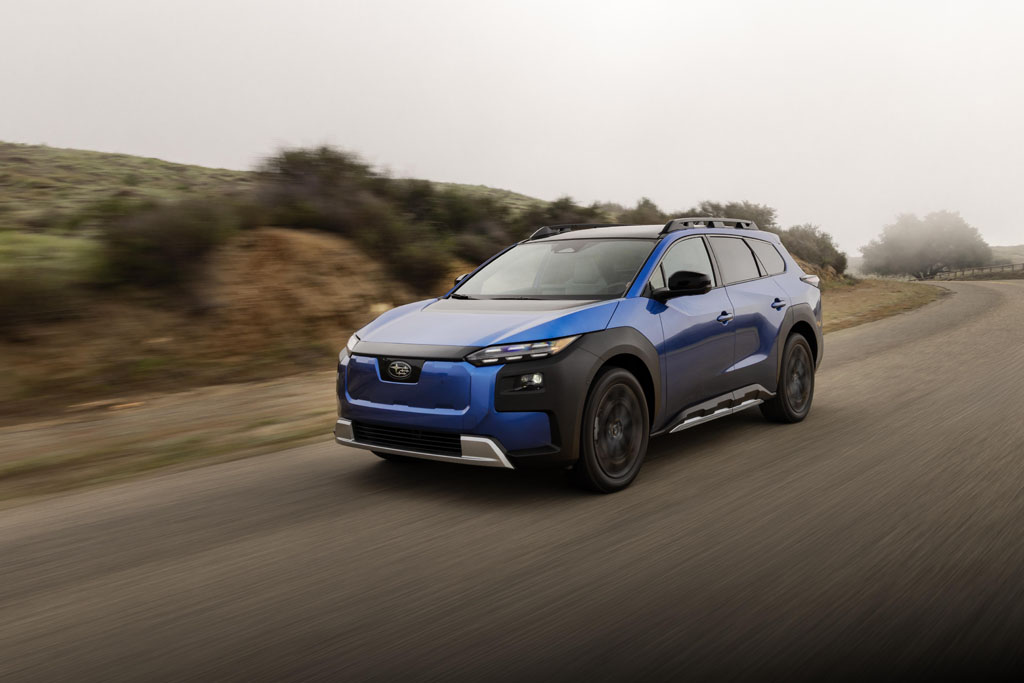
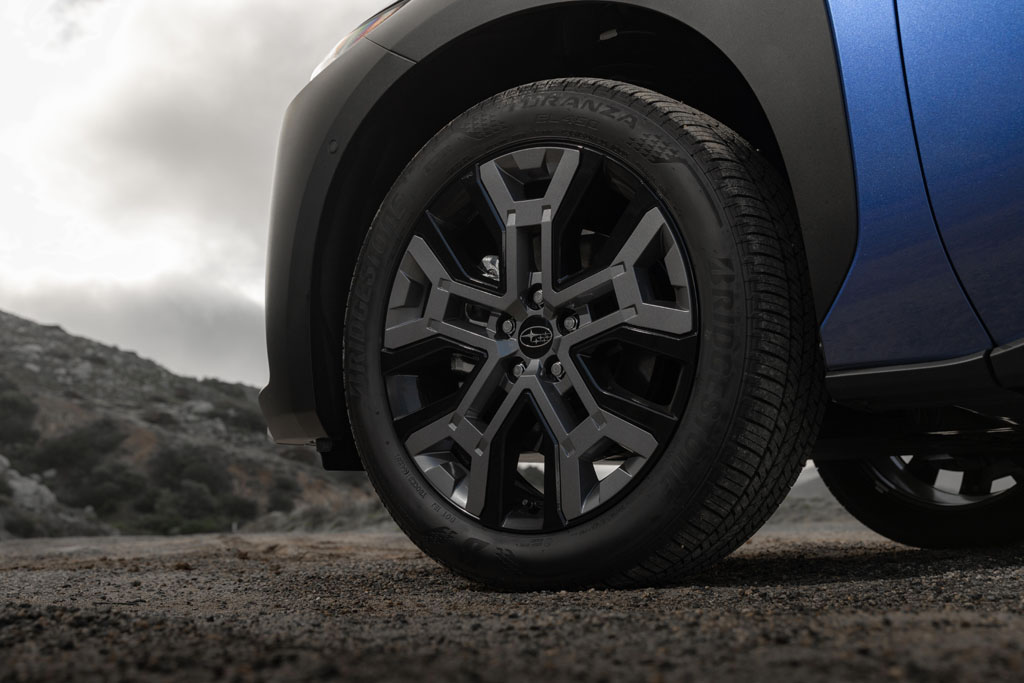
Out on the road, the Subaru Trailseeker is fundamentally a better Outback in that it has much more power and seemingly feels well-planted, thanks to the large 20-inch wheels and tires, partly. The Trailseeker places itself ahead of any other Subaru, for that matter, in terms of power output and performance, something that many enthusiastic Outback fans would enjoy. That enjoyment allows you to hit 60 mph in about 4.4 seconds, which is quite exciting in the realm of the Subaru brand.
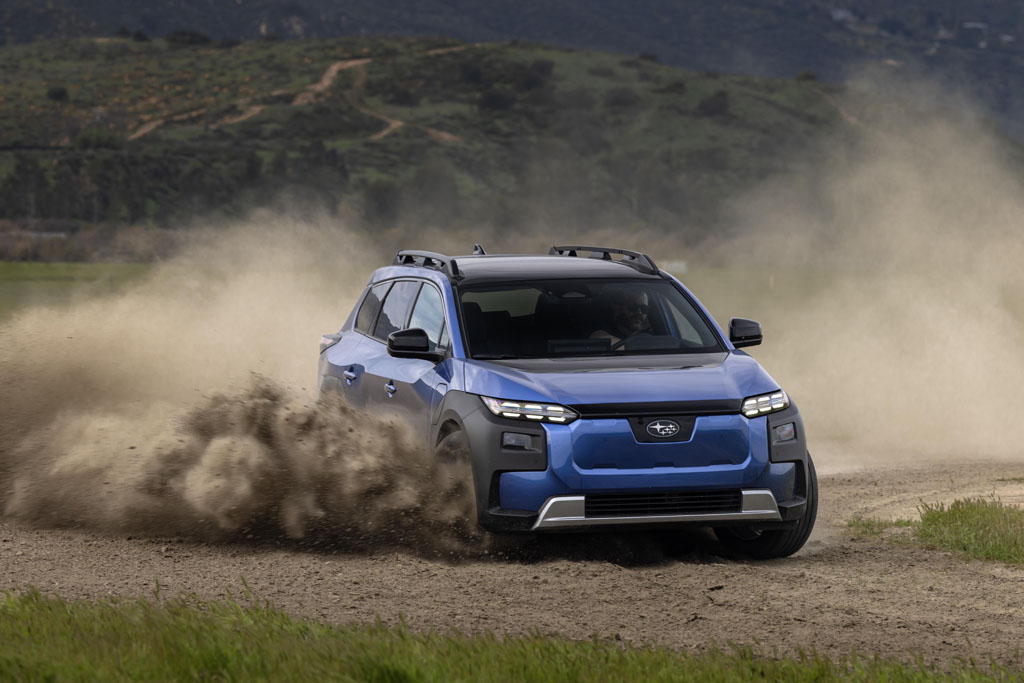
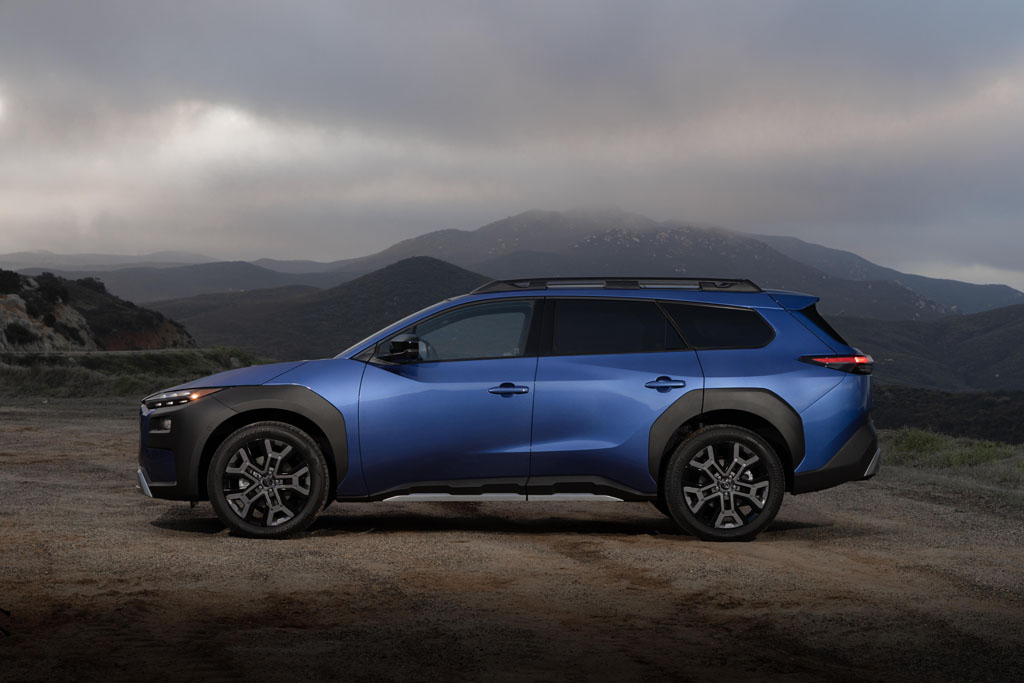
The Trailseeker utilizes much of what you find in the Solterra, but has a slightly stretched body. Fundamentally, you can conclude that the Trailseeker is the electric sibling to the Outback, and thinking such is spot on when you start to dig into its dimensions and overall stature, only having a slightly lower ground clearance at 8.5 inches, but enough to not be too concerning for off-roading adventures. Such adventures can be had with the confidence of the dual-function X-MODE drive mode that brings up the 360-degree camera system with different viewing angles to see where the vehicle is pointed and what terrain you are running over, thanks to Toyota’s inspired camera system that displays out what will be underneath the vehicle. The X-MODE seems to put the electric motors into a specialized traction mode with added deceleration and a careful throttle tip-in so as not to overexcite the ample and instant torque from the motors. There’s also the typical hill descent control that eases your worries of crawling down steep hills. It all works wonderfully as it does to play the part of being exactly what you expect out of a Subaru Outback, but with electric power.
The EV parts of the Trailseeker are good, but come with a slight disappointment in its range, having the ability to travel about 280 miles on a full charge, which is a number I could never reach on my tests throughout the week. In fact, I came away with a range of about 245 miles out of a full charge. Mind you, a lot of that driving was highway, with about 40% being city driving. Here, Subaru could use some improvement to reach that 300-mile mark and beyond – because who wants to ‘seek trails’ in knowing that range anxiety will set in and cut off-roading trail trips short, literally?
Charging up the Trailseeker utilizing the NACS port at a DC fast charger (using a CCS adaptor) or Tesla Supercharger station will only ramp up to just below 150 kW, which is rather slow when compared to a lot of other EVs on the current market. That means charging from a 10% state of charge up to 80% will take around 30 minutes or more, and only leaves you with just under 200 miles of range at 80% for my driving style. Charging up using a Level 2 charger at home, the charging rate comes in around 7 kW, and an overnight case is ideal to get a full charge. Fortunately, the Trailseeker, overall, is an efficient vehicle out on the road, matching its EPA estimates in the real world of 126 MPGe (3.74 miles per kWh) city and 107 MPGe (3.17 miles per kWh) highway.
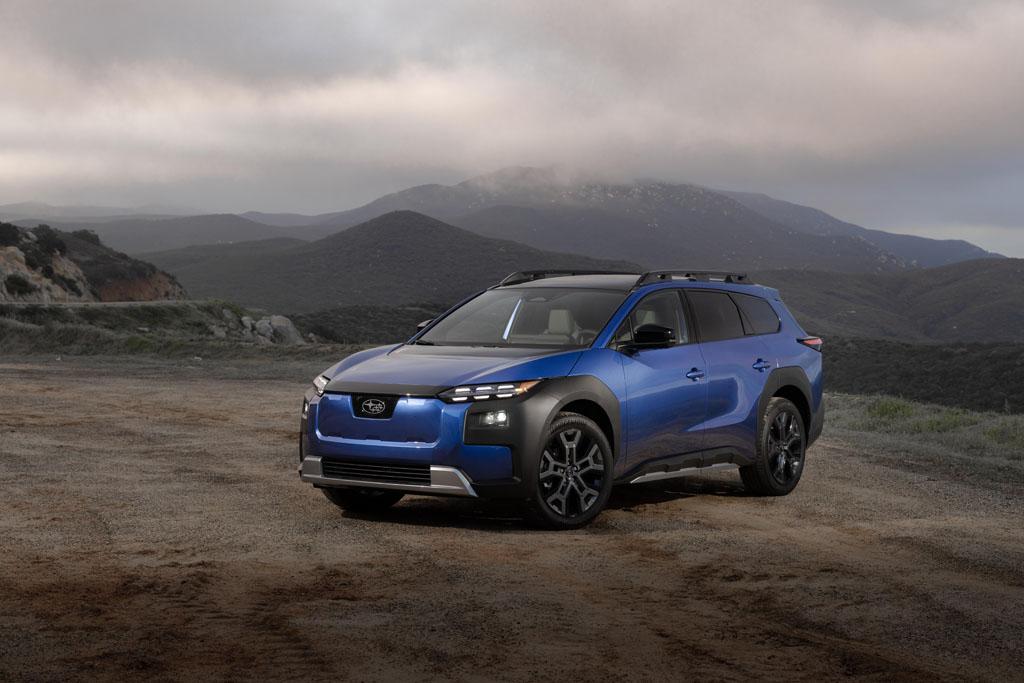
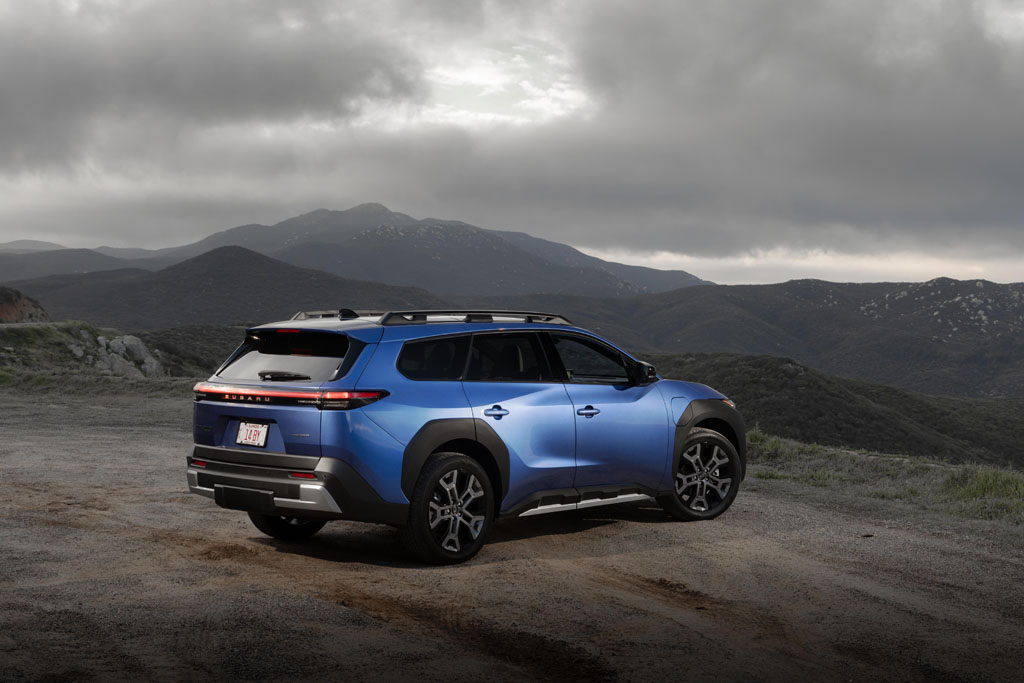
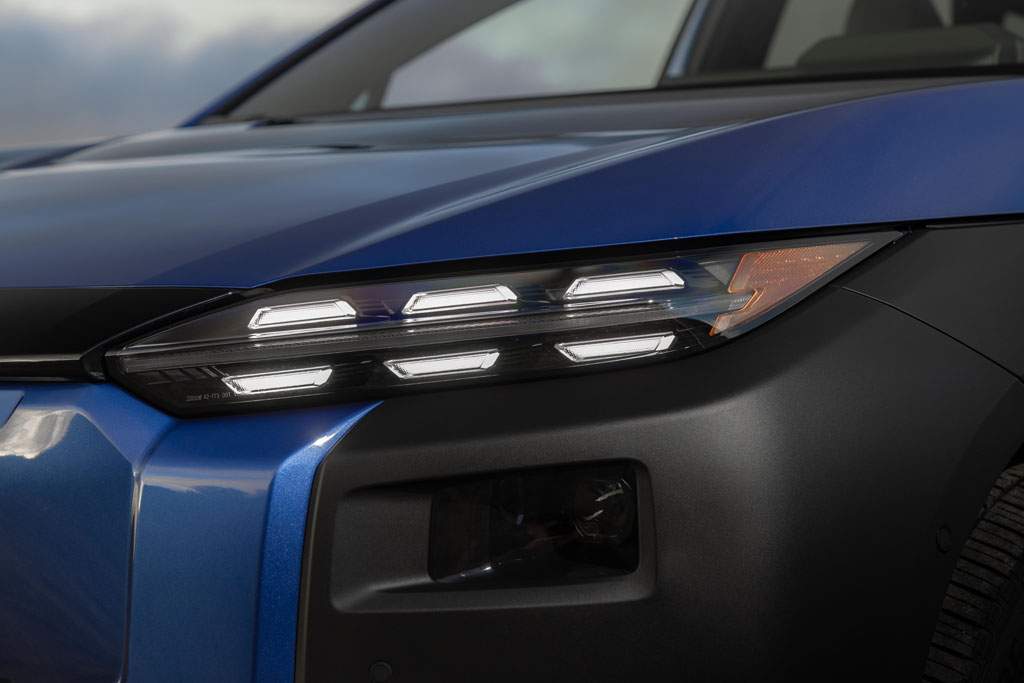
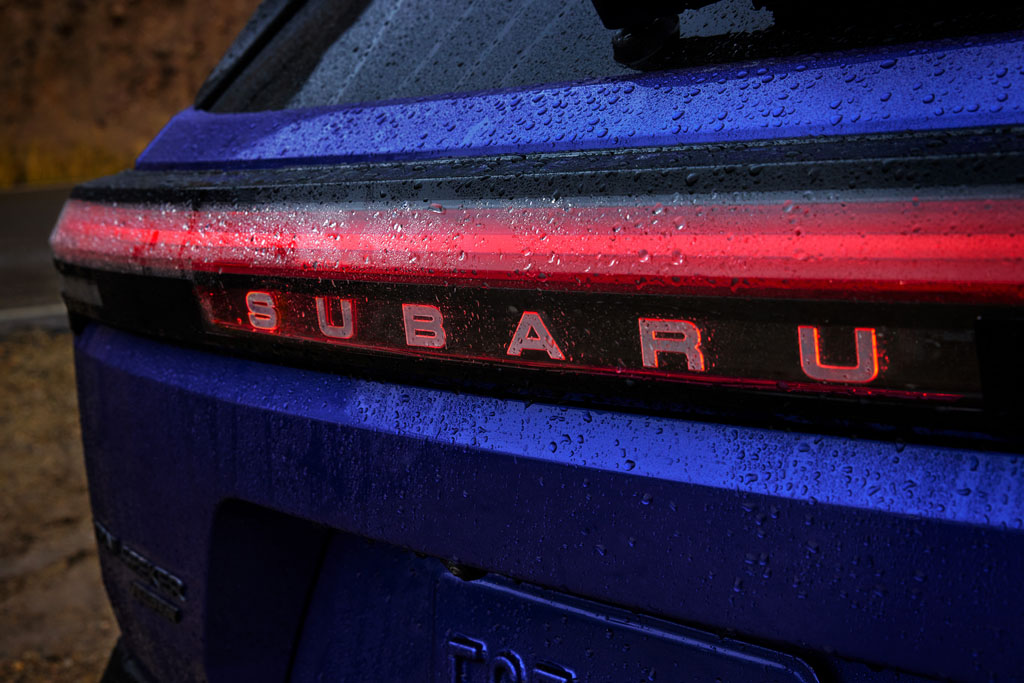
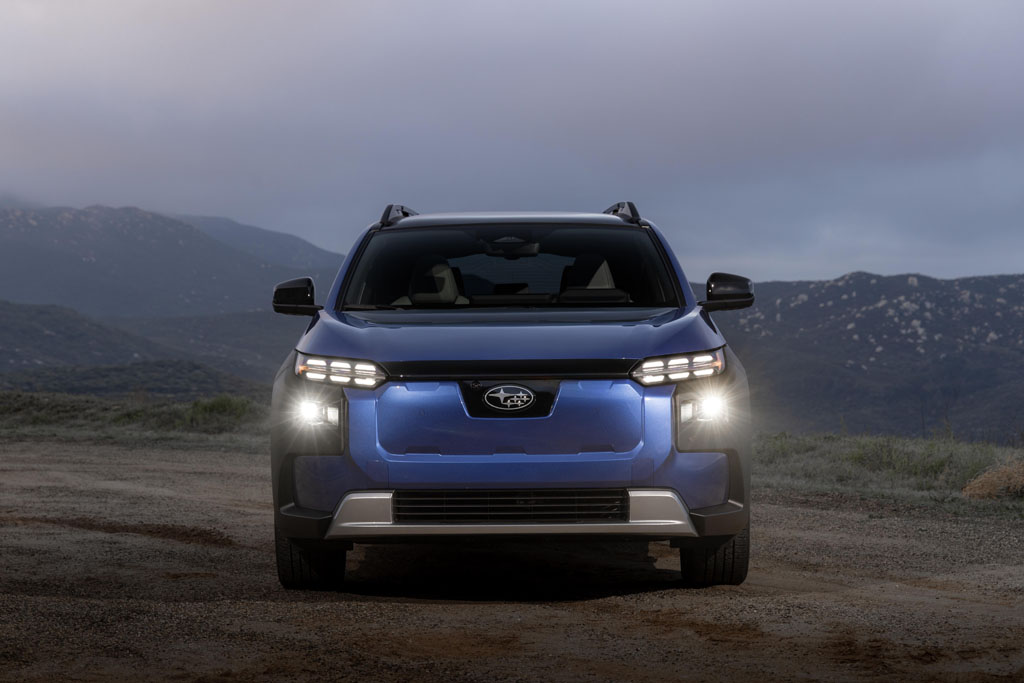
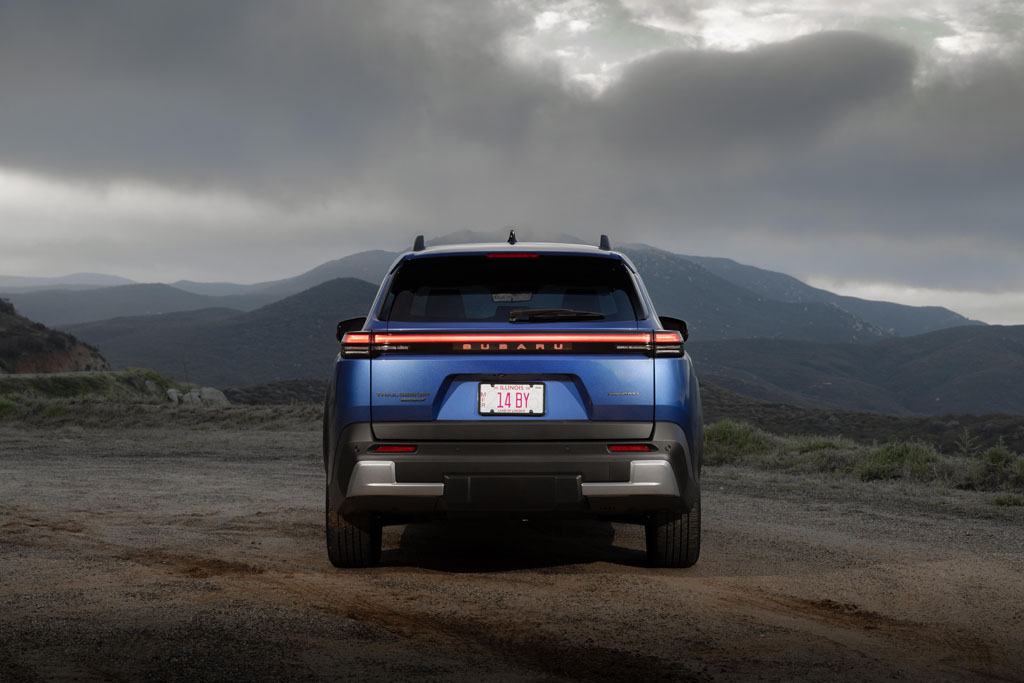
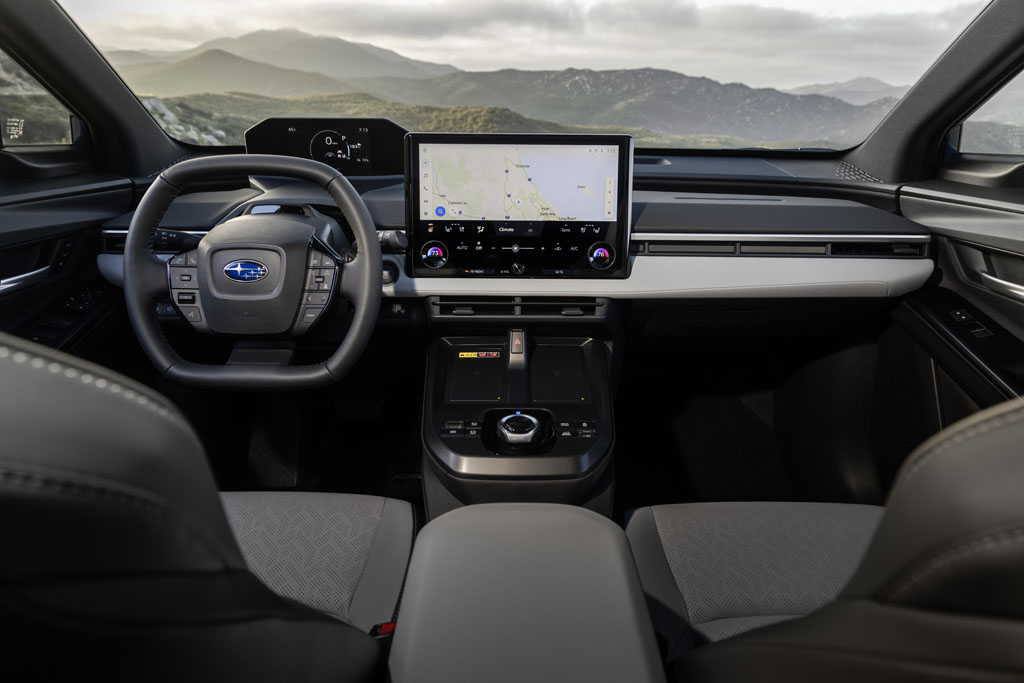
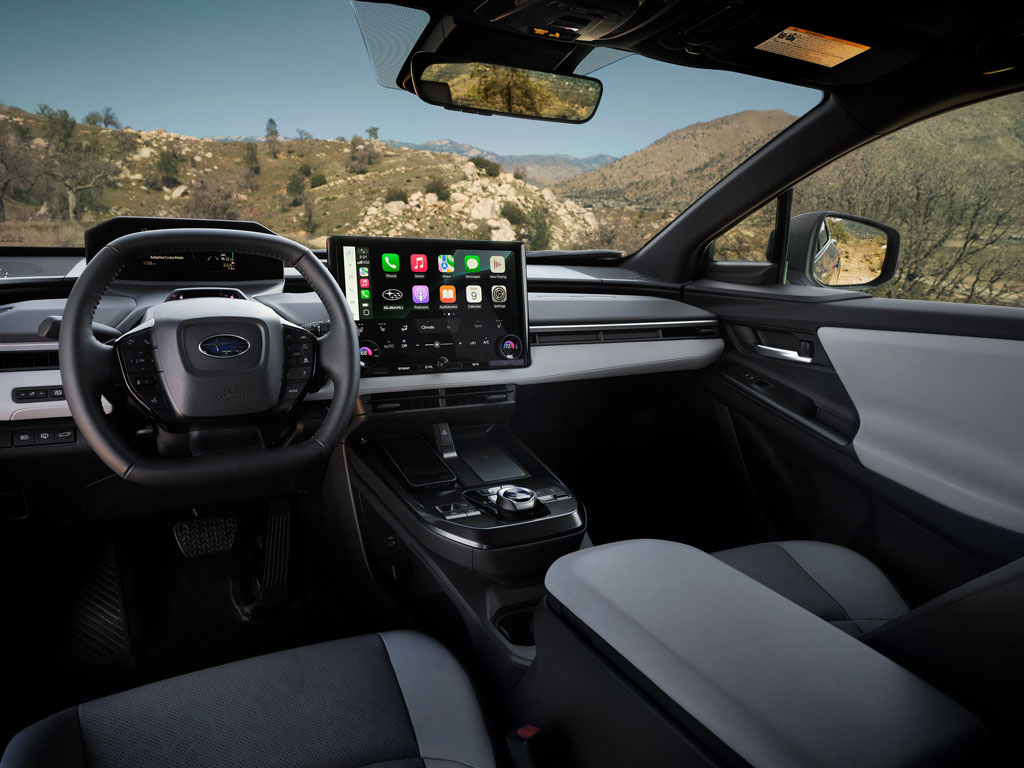
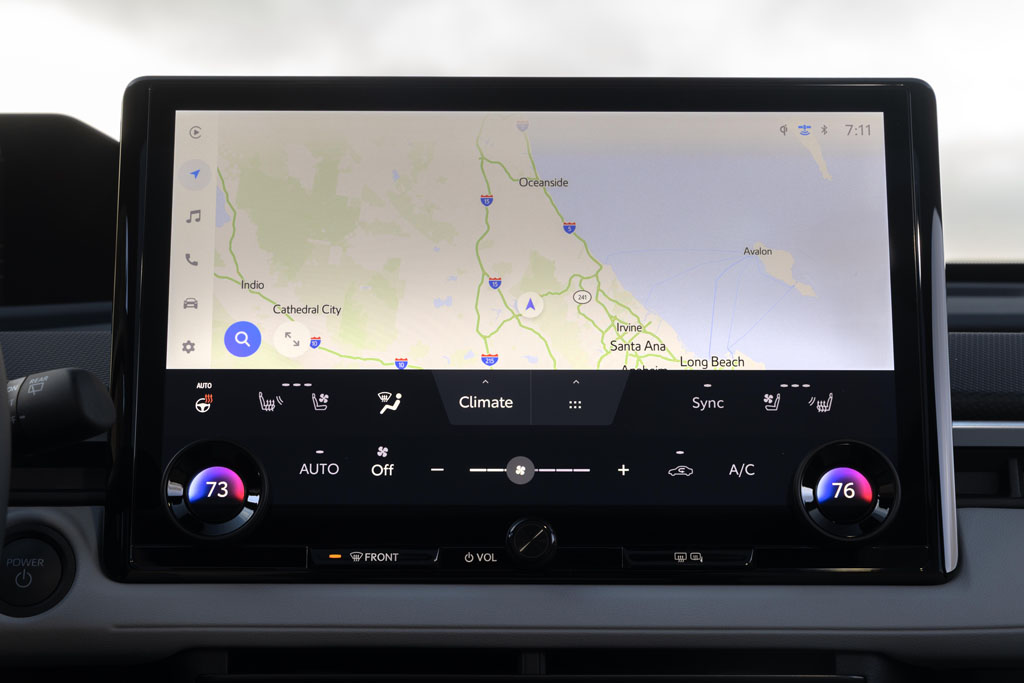
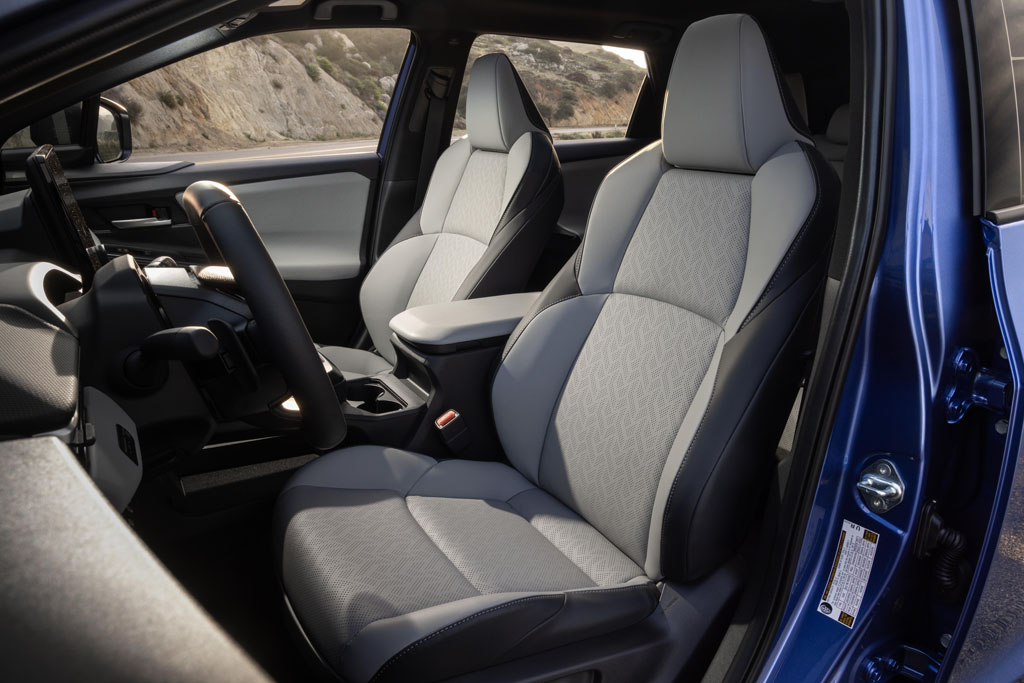
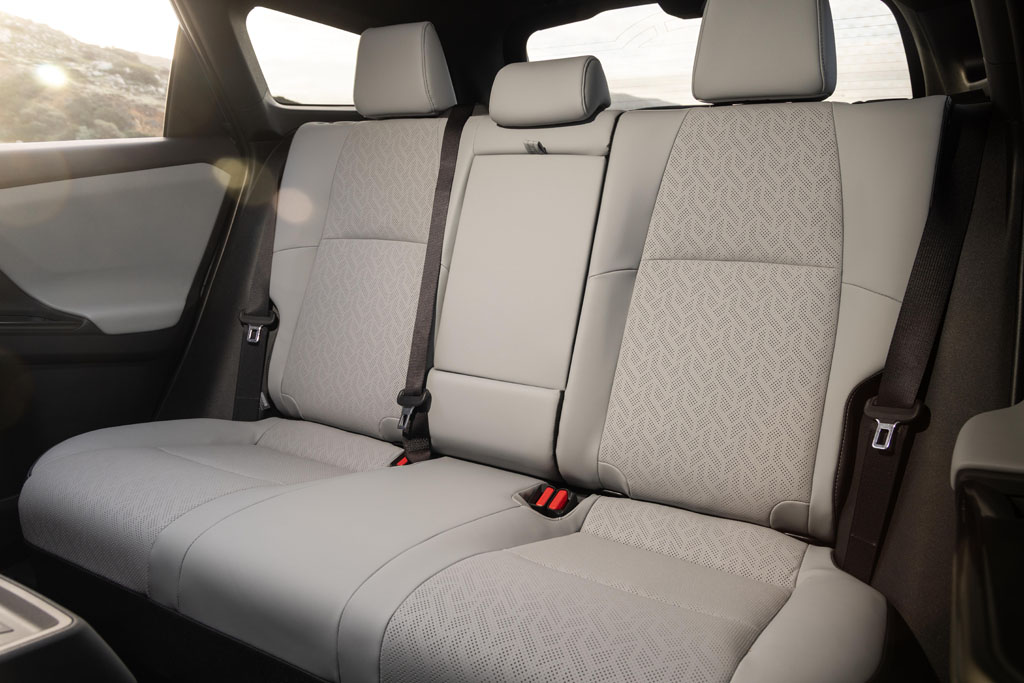
For being an EV, the Trailseeker exhibits a lot of traditional flair in its design, having its rugged-looking chunky non-painted body fenders but a somewhat smooth-edge design language, distinguished LED running lights up front, and even an LED backlit rear Subaru lettering that all set it apart from its gas-powered siblings. Inside, the seating areas are spacious and quite accommodating for 5 people. Most of the layout is agreeable, with the one exception of the dashboard setup being obstructed in some viewing situations from the driver’s seat. The unique 7-inch digital driver’s display is mounted far and high above the ‘squircle’ squared-off steering wheel, which takes a little while to get used to, but eventually becomes agreeable despite the screen having a rather low-resolution display quality. The 14-inch infotainment touchscreen, the same unit you’ll find in new comparable Toyota vehicles, does well for its user-friendliness and simplistic approach. There’s also the typical integration of wireless, or USB-C connected Apple CarPlay and Android Auto, and dual smartphone wireless charging pads. The cargo room, at just over 30 cubic feet behind the rear seat backs, is spacious and can open up to about 74 cubic feet when folding down the rear seats.
The Limited trim ‘limits’ you to front and rear outboard heated seats, while higher trim levels add in ventilation up front, as well as real leather seating appointments in the top trim, along with a panoramic glass roof with a power sunshade. Surprisingly, the Limited trim still has several desirable features, such as adaptive cruise control and a bevy of active safety features, all to add to its value in its pricing of around $44,000 before any additional options or fees. At the base level, the Trailseeker starts at just 39,995, and you still get that powerful all-wheel-drive electric powertrain.


More Stories
A Simple Pre-Winter Check for Your Tires and Battery
The first cold morning of the season has a way of finding the weak spots in a car. A tire...
Porsche Mission S Hypercar Teased with 8,000-RPM Redline Ahead of October 15 Reveal
Porsche is preparing to make a serious statement in the world of high-performance automobiles, and its upcoming Mission S hypercar...
Chinese Automaker Geely Coming to Canada in 2027 as New Import Rules Open the Door to Affordable EVs
The North American automotive landscape could be in for a significant shakeup as Chinese automotive giant Geely Auto has officially...
Rivian Goes Ghostbusters for Halloween with Ecto-1 Inspired EVs and Spooky Software Update
Rivian is getting into the Halloween spirit in a big way this year, and fans of the iconic Ghostbusters movies...
Keeping the Ram You Love, Updating the Part You Use Every Day
A favorite vehicle earns its place through use. There are the trips you planned for months, the quick runs for...
Is Your Car Ready for Colorado’s Traction Law?
A clear forecast in Denver can turn into a whiteout at the Eisenhower Tunnel. When that happens, the Colorado Department...