
US applications for jobless benefits fall last week despite elevated uncertainty over Trump tariffs
By MATT OTT, Associated Press Business Writer
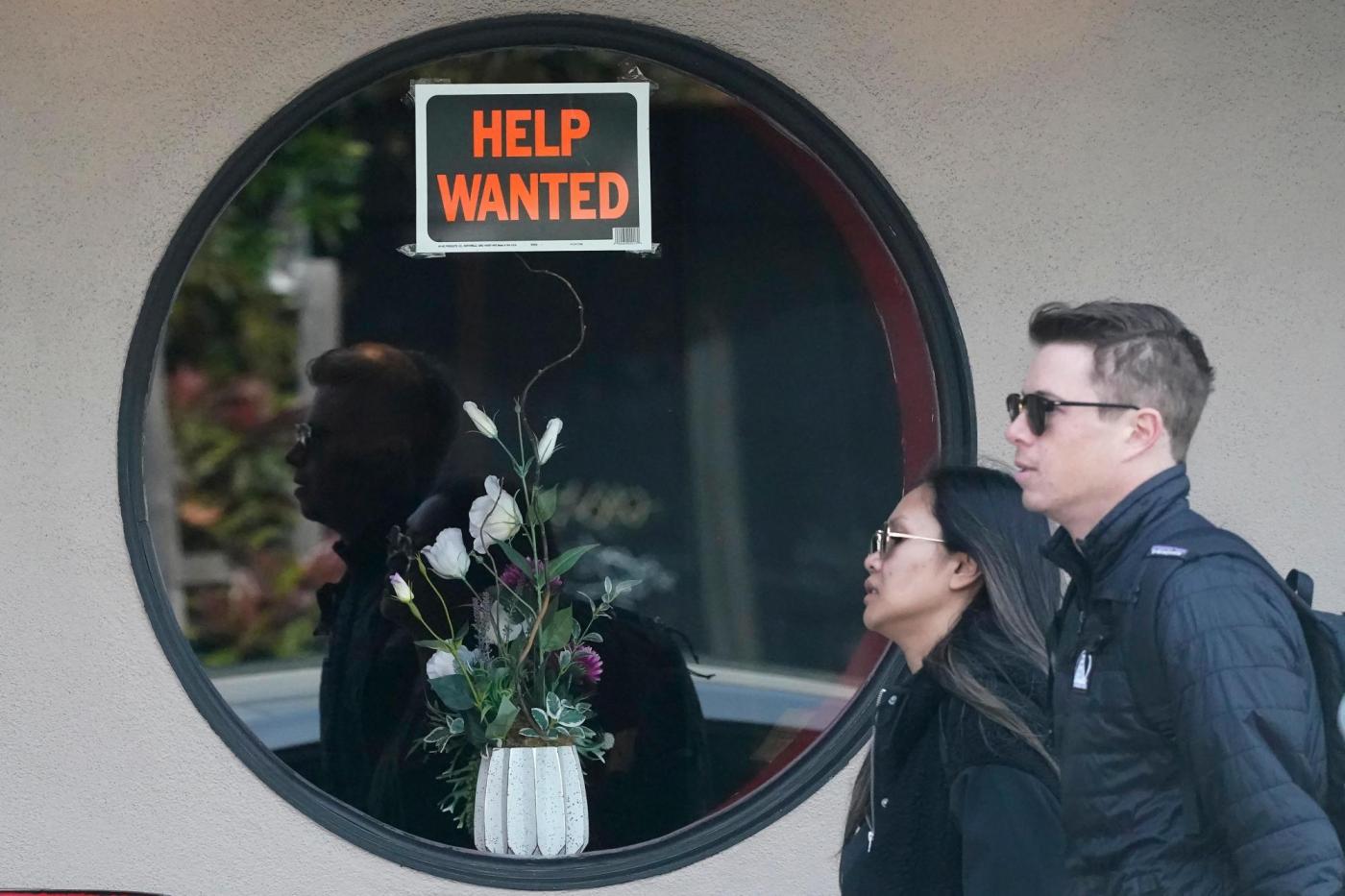
WASHINGTON (AP) — The number of Americans applying for unemployment benefits fell last week despite heightened uncertainty about how President Donald Trump’s tariffs will impact the U.S. and global economies.
Jobless claim applications fell by 13,000 to 228,000 for the week ending May 3, the Labor Department said Thursday. That’s in line with the 229,000 new applications analysts forecast.
Related Articles
Bill Gates pledges his remaining fortune to the Gates Foundation, which will close in 20 years
What to know about the air traffic controller shortage
Ex-model takes the stand in Harvey Weinstein’s retrial. The prior jury never heard about her
Judge at Sean ‘Diddy’ Combs trial scolds lawyer for calling prosecutors ‘six pack of white women’
Lawsuit accuses former Los Angeles Lakers star Byron Scott of sexually assaulting teen girl in 1987

Weekly applications for jobless benefits are considered a proxy for layoffs, and have mostly bounced around a healthy range between 200,000 and 250,000 since COVID-19 decimated the economy and wiped out millions of jobs.
Even though Trump has paused or pulled back on many of his tariff threats, concerns remain about a global economic slowdown that could upend the U.S. labor market, which has been a pillar of the American economy for years.
On Wednesday, the Federal Reserve held its benchmark lending rate at 4.3% for the third straight meeting, after cutting it three times in a row at the end of last year.
Fed chair Jerome Powell said the risks of both higher unemployment and inflation have risen, an unusual combination that complicates the central bank’s dual mandate of controlling prices and keeping unemployment low.
Powell said that tariffs have dampened consumer and business sentiment but that data has not yet shown significant harm to the economy.
There have been trade developments this week, with the U.S. and Britain expected to announce the framework for trade deal later Thursday.
No new deals have been reached with America’s largest trading partners, including Canada, Mexico and China. Trump has left the highest tariffs in place on China, heightening tensions between the world’s two largest economies. Washington and Beijing are sending officials to Switzerland this weekend for an initial round of trade talks.
Trump is attempting to reshape the global economy by dramatically increasing import taxes to rejuvenate the U.S. manufacturing sector.
A contraction has already begun in the U.S., where the economy shrank at a 0.3% annual pace from January through March as Trump’s trade wars disrupted business. First-quarter growth was slowed by a surge in imports as companies in the United States tried to bring in foreign goods before Trump’s massive tariffs went into effect.
It was the first quarterly GDP decline in three years.
Like his pledge to institute tariffs, Trump’s promise to drastically downsize the federal government workforce has occupied much of the early weeks of his presidency and is still in motion.
It’s not clear when the job cuts ordered by the Department of Government Efficiency — or “DOGE,” spearheaded by Elon Musk — will surface in the weekly layoffs data. However, the federal government staff reductions are already being felt, even outside of the Washington, D.C. area.
Despite showing some signs of weakening during the past year, the labor market remains robust with plentiful jobs and relatively few layoffs.
Last week the government reported that U.S. employers added a surprisingly strong 177,000 jobs in April. The unemployment rate held at a historically healthy 4.2%, however, many economists anticipate that a negative impact from trade wars will materialize this year for American workers.
Companies that have announced job cuts this year include Workday, Dow, CNN, Starbucks, Southwest Airlines and Facebook parent company Meta.
The Labor Department reported that the four-week average of claims, which evens out some of the week-to-week gyrations, inched up by 1,000 to 227,000.
The total number of Americans receiving unemployment benefits for the week of April 26 fell to 1.88 million, a decrease of 29,000.
More Stories
Ministers shelve plan for small companies to file profit and loss accounts
The government has paused plans to require Britain’s two million small companies to file profit and loss accounts at Companies...
Made-to-Order vs Ready-to-Ship: How Small Luxury Brands Balance Cash Flow and Customer Choice
A $5,000 product, be it a ring, handbag, watch, or piece of furniture, that stays unsold for six months is...
Beyond Chatbots: Why Voice AI Is Becoming the Next Frontier in Customer Experience
Traditional text chatbots solved some basic routing problems, but they completely missed the fundamental human preference for natural speech. Users...
Has the arrival of e-scooters finally ended the war between cyclists and drivers?
Every road user has a nemesis. Ask a driver about cyclists, and you may hear stories about red lights, lycra...
Reducing Waste and Lubricant Runoff in Heavy Equipment Operations
Across agricultural projects, forestry operations, and municipal water utilities, keeping heavy equipment running efficiently requires continuous maintenance. However, conventional mechanical...
Alex Depledge quits Treasury and tells Healey founders are no sideshow
Alex Depledge, the Treasury’s entrepreneurship adviser, will leave the role on Thursday, warning ministers that the government treats entrepreneurship and...