
Cambridge bike lane construction deadline could be delayed by 18 months to protect businesses

Some city councilors are looking to tap the brakes on construction of 25 miles of separated bike lanes across Cambridge by 2026 in order to fully understand whether businesses will thrive or falter.
In a city report released in February, officials said results from a survey on how the lanes will impact businesses were inconclusive as it lacked data relating to local sales taxes and other essential economic aspects.
Councilor Paul Toner is leading a push to delay the construction deadline along some of the city’s busiest roadways — Cambridge and Main streets and Broadway — to November 2027.
As it stands now, officials have until May 2026 to complete the robust network under the cycling safety ordinance. In commercial corridors where construction has already occurred, Toner highlighted this week, businesses have seen metered parking be removed at a 40 to 50% clip.
In a qualitative survey of 300 local businesses, about half with bike lanes installed near their establishments reported a decrease in overall revenue, the Harvard Crimson reported.
“What I do hear from the businesses that have had bike lanes put in is that they have lost business,” Toner said during a council meeting. “I go based on what the people who actually run the stores and restaurants and the bars are telling me. I want to make sure our folks are safe and that we can keep these businesses.”
In most cities and towns across Greater Boston, bike lanes continue to grow as a divisive issue. Construction has sparked tension in Boston, particularly in Back Bay and West Roxbury, and it has caused feuds in the suburbs, such as Malden.
Advocates argue bike lanes are needed to ensure the safety of cyclists and pedestrians and to better protect the environment against pollutants. Opponents counter that construction is a detriment to business as parking spaces are removed and traffic congestion runs rampant as vehicle lanes are often taken away, as well.
The Cambridge City Council received more than an hour and a half worth of public comment during its meeting this week and dozens of emails from residents in advance around Toner’s request to pause installation until the later half of 2027.
Councilors in 2019 approved the cycling safety ordinance which binds the city to provide protected bike infrastructure for streets included in a master plan except in “rare” circumstances, which officials are required to justify, StreetsBlog USA reported at the time of passage.
A year later, the council amended the ordinance by increasing the network of separated bike lanes from 20 miles to 25.
Harvard University student Clyve Lawrence, in an email to the council, highlighted the death of a 4-year-old girl, Gracie Gancheva, who was struck and killed by a truck driver at an intersection in the Fort Point neighborhood of South Boston near Boston Children’s Museum in late March.
That came before Fernando R. Pizzaro, a 57-year-old man in a wheelchair, was struck and killed by a cement truck driver in the area of Frontage Road and Traveler Street in South Boston last week, Lawrence pointed out.
Those incidents have spurred the Boston City Council to consider exploring a citywide reduction of the speed limit from 25 to 20 mph to enhance street safety.
“In Cambridge, several crashes occur weekly between vehicles and cyclists or pedestrians,” Lawrence wrote in his email to the Cambridge City Council. “These aren’t just accidents, but policy failures harming innocent people.”
“It is difficult to comprehend a discussion around bike lane projects without mentioning the severe safety risk a delay would impose” Lawrence added. “The City is complicit in every excess tragedy by pushing back needed bike lane projects.”
Some Cambridge residents and officials believe otherwise, that the lanes create safety risks themselves.
Nell Breyer, a mother of three children, is calling on the council to do a “proper overview of the impact of these changes in the street design” and how it “negatively … and dangerously” impacts residents.
“We have witnessed a horrendous increase in traffic,” Breyer said. “I have personally witnessed about 15 unintended accidents due to the very poor design of bike lanes.”
Last November’s election results have led to a murky forecast of bike lanes in Cambridge, WGBH reported. Councilor Joan Pickett, co-sponsoring Toner’s request, is in her first term and was a plaintiff in an unsuccessful lawsuit to overturn the cycling safety ordinance, according to the radio station.
Middlesex County Superior Court Judge Maureen Hogan dismissed the lawsuit in March 2023, ruling that the ordinance “does not prohibit individuals from visiting any businesses or residences, and the Plaintiffs have not plausibly suggested facts to the contrary.”
A 2022 project that installed bike lanes along a small strip around Porter Square and eliminated most metered parking spaces in the process, sparked tensions between the city’s business owners, bikers, local officials and concerned citizens.
Officials built a separated bike lane and reduced travel lanes on Massachusetts Avenue on the curve between the Harvard Square Kiosk and Harvard Yard after a bicyclist was killed by a tractor-trailer driver in August 2020.
Mayor E. Denise Simmons said she believes the council has “skirted around concerns” over bike lanes, arguing more time is needed to look at all facets of implementation and mitigation strategies.
“We created hardship, we enfranchised one group and disenfranchised the other group,” she said. “If we just move forward on the trajectory that we are now, I think we will do damage that we cannot repair.”
A potential mitigation strategy, Toner suggested, is a zoning amendment that would allow businesses to consider renting out some of their parking spaces to the public.
Vice Mayor Marc McGovern is against delaying construction, saying safety of pedestrians and cyclists must be the top priority.
“Build the mitigation into the current planning cycle and do what you have to do to mitigate,” he said, “but let’s not pretend that a delay doesn’t cause risks to people.”

Matt Stone/Boston Herald
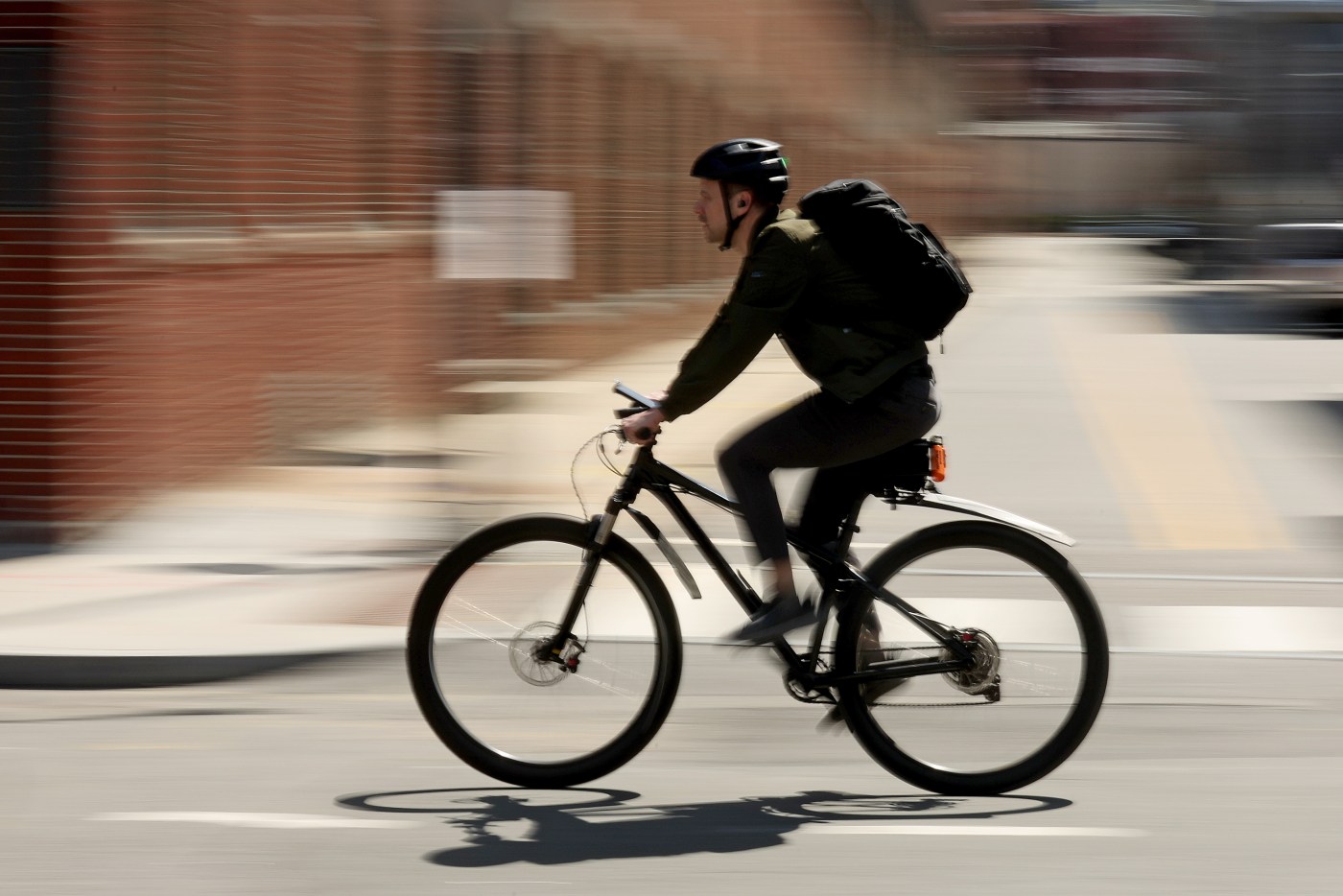
A bicyclist makes their way down Main Street where the city wants to delay installation of separated lanes in the area. (Matt Stone/Boston Herald)
More Stories
Starling founder Anne Boden sells final stake at £1.7bn valuation
Anne Boden, the founder of Starling, has sold her remaining 2.7 per cent stake in the digital bank at a...
Haldane urges Chancellor to “do no further harm” to business at Budget
Andy Haldane, president of the British Chambers of Commerce (BCC), has called on the Chancellor to use next week’s Budget...
Photon Bridge raises €10m to scale laser supply for AI chips
Photon Bridge, a photonics start-up based in Eindhoven, has raised €10m to develop laser sources for the optical connections that...
Google Cloud outage in London hits Revolut, Lloyds and DPD
A power failure at a Google data centre in London disrupted Google Cloud services across the company’s London region this...
British firms set to win £330m of contracts in Guinea and Benin
British companies are set to win more than £330m of export contracts on nine infrastructure projects in Guinea and Benin,...
Unemployment falls to 4.7 per cent, lifting bets on November rate rise
The UK unemployment rate fell to 4.7 per cent in the three months to August, the Office for National Statistics...