
Global Trade Could Accelerate the Green Economy, but Countries Need Stronger Cooperation

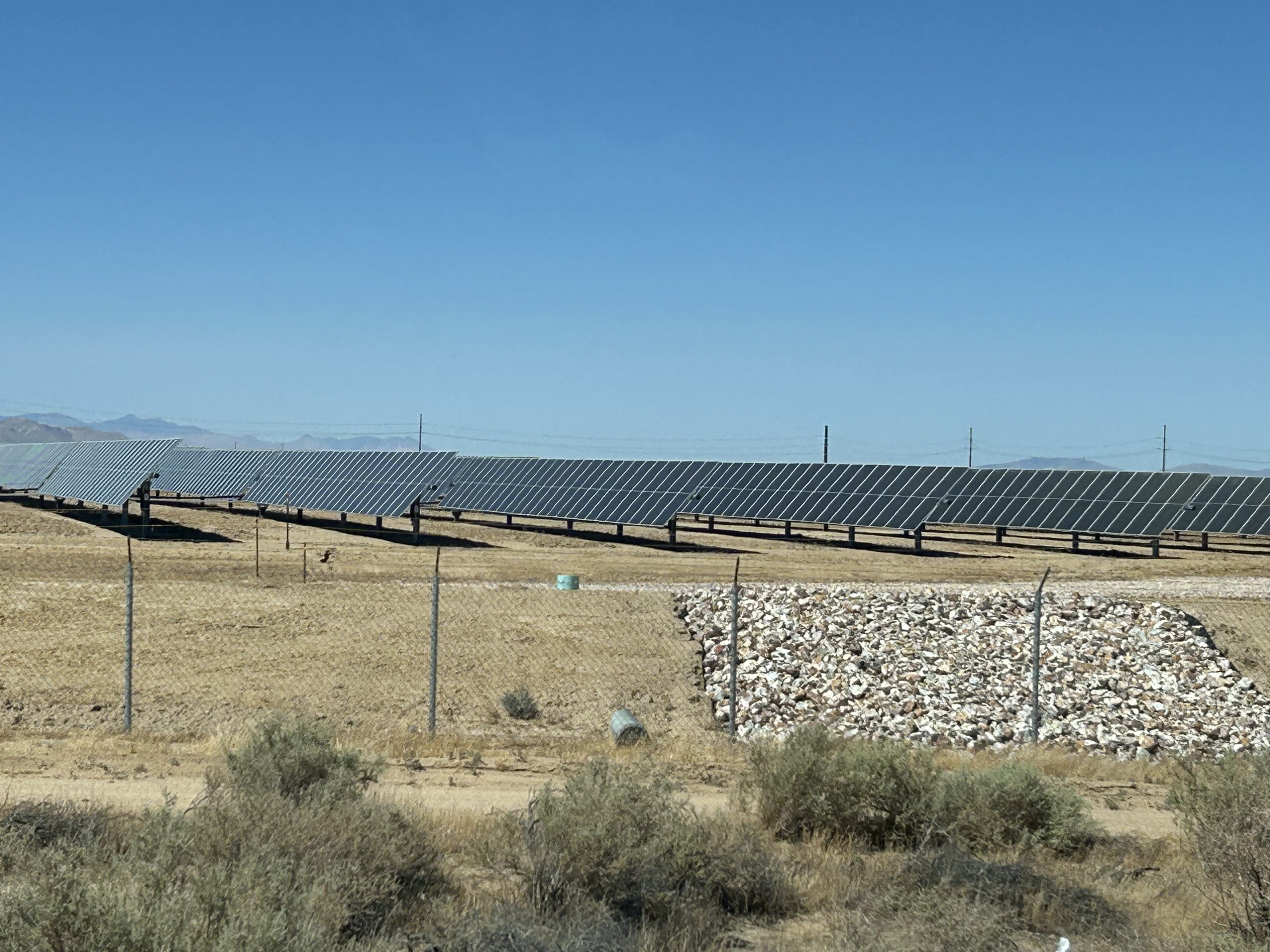
Solar energy is becoming an increasingly important part of global trade,
investment and the transition towards a low-carbon economy. Image: TheUltimateGrass / Wikimedia Commons (CC0 1.0)
Source
investment and the transition towards a low-carbon economy. Image: TheUltimateGrass / Wikimedia Commons (CC0 1.0)
Source
International trade is becoming an increasingly important factor in the global transition towards cleaner energy, sustainable industries and climate-resilient economies. From solar panels and wind turbines to electric vehicles and energy-storage systems, the technologies needed to address climate change increasingly depend on international supply chains.
However, a new report from the United Nations Conference on Trade and Development (UNCTAD) warns that the benefits of green trade will not be shared equally unless governments strengthen international cooperation and improve access to climate-related technologies.
UNCTAD’s November 2026 Global Trade Update argues that trade policy can play a much greater role in supporting climate action. The report highlights the growing economic importance of sustainable industries while identifying weaknesses in existing international trade agreements.
Green industries are becoming a major global trade opportunity
The expansion of renewable energy and other low-carbon technologies is creating new opportunities for international businesses and developing economies.
According to UNCTAD, global exports linked to solar and wind energy value chains exceeded $1.8 trillion in 2025. This demonstrates how the energy transition is becoming a significant part of international commerce.
The opportunities extend beyond electricity generation. International demand is also growing for batteries, electric transport, energy-efficient equipment, water-management technologies and climate-resilient agricultural solutions.
For developing countries, these industries could provide opportunities to diversify exports, attract foreign investment and create skilled employment.
Nevertheless, participation in these markets requires more than access to natural resources. Countries also need reliable infrastructure, technical expertise, competitive financing and the capacity to develop domestic industries.
Trade agreements need to deliver practical climate benefits
International trade agreements increasingly include provisions related to environmental protection and climate action.
UNCTAD reports that more than half of trade agreements signed between 2016 and 2021 contained climate-related provisions, compared with only 18% of agreements concluded between 1990 and 2015.
Despite this progress, the implementation gap remains significant.
Only 7% of the climate-related provisions identified in recent trade agreements address the reduction of tariff and non-tariff barriers.
This matters because tariffs, technical requirements and complicated regulatory procedures can increase the cost of importing renewable energy equipment and other climate technologies.
For countries with limited financial resources, expensive imports can slow the adoption of cleaner technologies and make the energy transition more difficult.
Governments therefore face an important challenge: turning environmental commitments into practical measures that make sustainable technologies more affordable and accessible.
Developing economies need a stronger position in green supply chains
The transition to a low-carbon economy could create significant opportunities for developing countries, but these opportunities will depend on their ability to capture more value from international production.
Many developing economies possess important natural resources and renewable energy potential. However, exporting raw materials alone does not necessarily generate the maximum economic benefits.
Countries need to develop local processing, manufacturing, technical services and supporting industries.
For example, an economy with access to minerals used in battery production could seek to attract investment in mineral processing, component manufacturing, engineering and related services.
Such a strategy could create additional employment, strengthen industrial capabilities and increase the domestic value generated from exports.
UNCTAD also emphasizes the importance of building skills and productive capacity so that developing countries can participate more effectively in climate-related global value chains.
Climate change is also an economic and trade risk
The economic consequences of climate change are becoming increasingly difficult to ignore.
Extreme weather, water shortages, agricultural disruption and damage to infrastructure can affect production, transportation and international supply chains.
UNCTAD cites estimates suggesting that economic losses could reach the equivalent of 10% of global GDP under a scenario of 3°C warming.
For developing countries, particularly those with limited financial resources and high exposure to climate risks, these consequences could be especially serious.
International trade can help countries obtain essential technologies, equipment and services needed for climate adaptation. However, trade alone cannot solve the problem.
Investment in infrastructure, education, technology and domestic production capacity remains essential.
International cooperation will shape the next phase of global trade
The green transition is not simply an environmental issue. It is also a question of competitiveness, industrial development and international economic cooperation.
Countries that successfully combine trade policy, investment and technological development may be better positioned to benefit from expanding sustainable industries.
For governments, this means improving access to climate technologies, coordinating technical standards, reducing unnecessary trade barriers and encouraging investment that supports local suppliers.
For businesses, it creates opportunities to develop new products, enter emerging markets and participate in increasingly important sustainable supply chains.
The central challenge is ensuring that the economic benefits of the green transition extend beyond a small group of advanced economies and major technology producers.
As climate risks increase, stronger international trade cooperation could become an important instrument for building a more resilient and sustainable global economy.
Looking Times perspective: The future of global trade will not be determined only by how much countries export, but also by what they produce, how much value they retain and how effectively they cooperate to address shared economic and environmental challenges.
Sources and further reading
UNCTAD, Global Trade Update (November 2026): Accelerating climate action requires trade cooperation, 9 November 2026.
https://unctad.org/publication/global-trade-update-november-2026
UNCTAD, Trade and Development Report 2026: The Geoeconomics of Development.
https://unctad.org/publication/trade-and-development-report-2026

More Stories
AI’s Growing Energy Appetite Is Creating a New Global Infrastructure Challenge
Data centres are becoming essential infrastructure for artificial intelligence, cloud computing and the global digital economy. Photo: Carl Lender, via...
How AI Can Help Businesses Reduce Website Development Costs
In 2023, McKinsey set up a lab and timed more than 40 of its own software developers on routine tasks,...
iPhone Overheating? Common Causes and Fixes
Apple designs its phones to work in different environments, including high air pressure, humidity, and hot and cold weather. When...
Global Trade’s New Geography: Developing Economies Face a Choice
By Looking Times | 14 November 2026 Photo: Igor Ovsyannykov, “Shipping containers in a port” (Port of Barcelona), via Wikimedia...
The AI Investment Boom: Can Record Spending Deliver Real Productivity?
Global Trade in 2026: AI Investment Is Rewriting the Map of World Commerce By Looking Times | November 13, 2026...
The AI Investment Boom: Can Record Spending Deliver Real Productivity?
The AI Investment Boom: Can Record Spending Deliver Real Productivity? By Looking Times | November 13, 2026 Image: Derrick Coetzee,...