
AI’s Growing Energy Appetite Is Creating a New Global Infrastructure Challenge

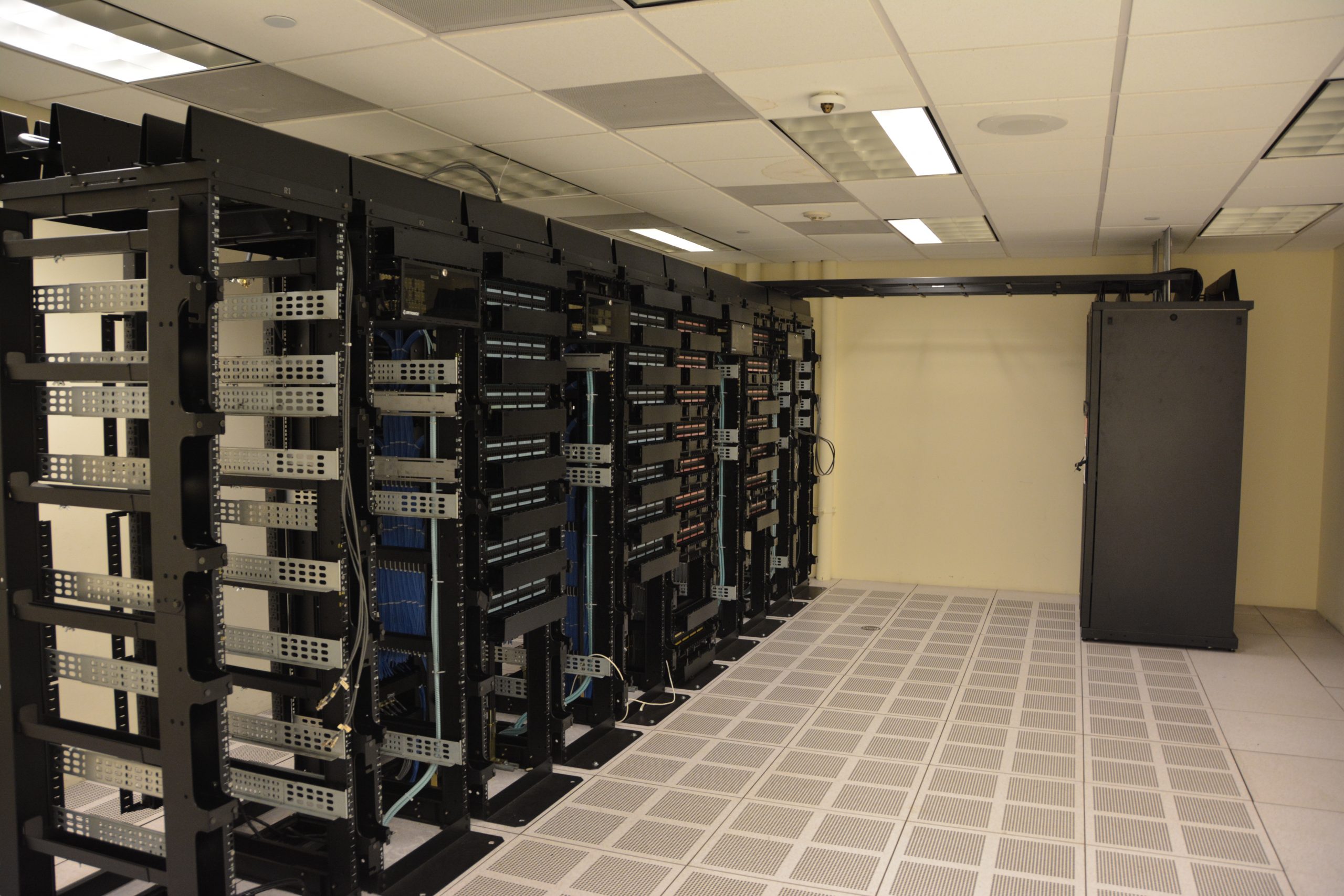
Data centres are becoming essential infrastructure for artificial intelligence,
cloud computing and the global digital economy.
Photo: Carl Lender, via Wikimedia Commons —
Original image |
CC BY 2.0.
Artificial intelligence is becoming more than a technology story. The rapid expansion of data centres is creating new demands for electricity, investment and infrastructure, forcing governments and businesses to rethink how the digital economy will be powered.
Artificial intelligence is transforming the way companies work, governments deliver services and consumers access information. Behind this digital revolution, however, is a physical infrastructure that requires enormous amounts of electricity: the data centre.
These facilities contain the computer servers and networking equipment that store information, operate cloud services and train or run AI systems. As demand for advanced AI applications grows, technology companies are investing heavily in new data centre capacity. The expansion is creating opportunities for energy producers, equipment manufacturers and construction businesses, but it is also raising questions about electricity supply, costs and environmental sustainability.
A rapid increase in electricity demand
The International Energy Agency (IEA) reported in April 2026 that global data centre electricity consumption increased by 17% in 2025. Electricity use at AI-focused data centres grew even faster, rising by 50% over the same period.
The IEA estimates that total electricity consumption by data centres could rise from approximately 485 terawatt-hours in 2025 to around 950 terawatt-hours by 2030. That would represent almost a doubling in only five years.
These figures illustrate how digital services are becoming an increasingly important part of national energy planning. Although individual AI applications may become more efficient, wider adoption and more demanding uses of AI could continue to increase total electricity consumption.
For more details, see the IEA report Key Questions on Energy and AI.
Investment opportunities across the economy
The growth of AI infrastructure is creating business opportunities well beyond the technology sector. Data centres require advanced semiconductors, servers, cooling systems, transformers, backup power equipment, construction services and reliable electricity networks.
Energy companies may benefit from new demand, while manufacturers of electrical equipment could see increased orders. Engineering and construction firms may also gain from the development of large data centre campuses and the power infrastructure needed to operate them.
The investment cycle is global. Countries that can provide reliable electricity, suitable sites, skilled workers and predictable regulations may become more attractive destinations for data centre projects. This could strengthen their position in cloud computing, digital services and the wider AI economy.
However, large projects also involve substantial financial risks. Developers must consider construction costs, financing conditions, future demand and whether expected revenues will justify the investment. Not every announced project will necessarily be completed.
Electricity networks are becoming a strategic issue
One of the biggest challenges is not simply producing more electricity. It is delivering power to the right locations at the right time.
Data centres often concentrate large amounts of electricity demand in specific areas. Local grids may need new transmission lines, substations and transformers before additional facilities can connect. Delays in permits, equipment supply and grid connections can slow construction even when investors are ready to proceed.
This creates a challenge for policymakers. Governments must balance the economic benefits of attracting technology investment with the costs of expanding electricity infrastructure. They must also consider how new demand could affect electricity bills for households and other businesses.
Can renewable energy meet the demand?
Renewable energy will be an important part of the response, but it is not a complete solution on its own. The IEA’s 2025 analysis of energy and AI estimated that renewables could meet nearly half of the additional electricity demand from data centres between 2024 and 2030.
Natural gas and coal are also expected to supply a significant share of additional demand in that period. Nuclear power could become more important later in the decade and beyond, depending on investment, regulation and project delivery.
Technology companies are increasingly exploring long-term electricity purchase agreements and direct partnerships with energy developers. Battery storage can also help manage fluctuations in electricity demand and improve the flexibility of data centre operations.
The challenge is to ensure that new digital infrastructure does not increase pressure on electricity systems or undermine efforts to reduce emissions.
Efficiency must keep pace with AI adoption
Improving the energy efficiency of chips, servers and cooling systems will be essential. More efficient hardware can reduce the electricity required for a given computing task. Better software and data centre management can also help operators use their equipment more effectively.
Yet efficiency gains do not automatically guarantee lower total energy consumption. If AI becomes cheaper and more widely used, the number and complexity of computing tasks may rise. The overall impact will depend on the balance between efficiency improvements and growing demand.
Businesses should therefore evaluate AI not only in terms of computing performance, but also in terms of energy costs, infrastructure requirements and long-term sustainability.
A new test for governments and businesses
The expansion of AI data centres is becoming an important test of economic competitiveness. Countries need digital infrastructure to support innovation, productivity and investment. At the same time, they need reliable and affordable electricity, modern power networks and clear environmental standards.
For businesses, the next phase of the AI economy will depend not only on developing more powerful models, but also on securing the energy and infrastructure needed to operate them. For governments, the challenge is to attract investment while protecting consumers and maintaining a sustainable energy transition.
AI may be a digital revolution, but its future will also be shaped by power stations, electricity grids, batteries and industrial supply chains. The countries that connect these elements effectively could gain an important advantage in the global economy.
Sources and further reading
International Energy Agency: Data centre electricity use surged in 2025 (16 April 2026)
International Energy Agency: Key Questions on Energy and AI (2026)
International Energy Agency: Energy supply for AI (2025)
About Looking Times: Independent perspectives on global trade, business, economics, technology and world affairs.

More Stories
Global Trade Could Accelerate the Green Economy, but Countries Need Stronger Cooperation
Solar energy is becoming an increasingly important part of global trade, investment and the transition towards a low-carbon economy. Image: TheUltimateGrass...
How AI Can Help Businesses Reduce Website Development Costs
In 2023, McKinsey set up a lab and timed more than 40 of its own software developers on routine tasks,...
iPhone Overheating? Common Causes and Fixes
Apple designs its phones to work in different environments, including high air pressure, humidity, and hot and cold weather. When...
Global Trade’s New Geography: Developing Economies Face a Choice
By Looking Times | 14 November 2026 Photo: Igor Ovsyannykov, “Shipping containers in a port” (Port of Barcelona), via Wikimedia...
The AI Investment Boom: Can Record Spending Deliver Real Productivity?
Global Trade in 2026: AI Investment Is Rewriting the Map of World Commerce By Looking Times | November 13, 2026...
The AI Investment Boom: Can Record Spending Deliver Real Productivity?
The AI Investment Boom: Can Record Spending Deliver Real Productivity? By Looking Times | November 13, 2026 Image: Derrick Coetzee,...