
BMW Bets on Touchscreens and Voice Controls but Not Every Driver Will Be Ready to Give Up Buttons

BMW has spent decades building some of the most driver-focused cabins in the business, where a driver could reach for a knob or button and know exactly what it would do without taking much attention away from the road. That philosophy is changing as BMW rolls out its Neue Klasse generation of vehicles, starting with the new iX3. Speaking with CarExpert, BMW Group Australia CEO Vikram Pawah explained that the automaker sees touch and voice controls becoming an increasingly normal part of everyday life, particularly among younger consumers. From BMW’s perspective, the car needs to evolve with those habits rather than exist as a separate technology ecosystem.
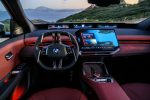
We can certainly see where BMW is coming from. Drivers who have grown up with smartphones, tablets, voice assistants and connected devices may find tapping a screen or simply asking the car to perform a task completely natural. BMW points to buyers roughly 45 and younger as being quicker to embrace these technologies, and the new iX3 leans heavily into that thinking. Its more advanced Intelligent Personal Assistant is designed to understand conversational requests, while BMW Panoramic iDrive spreads information across the lower portion of the windshield and supplements it with a central touchscreen and an available head-up display. Instead of surrounding occupants with rows of switches, BMW is trying to make the cabin feel more like the digital products many people already use every day.
At Automotive Addicts, though, we think this is one of those cases where different generations of drivers may want very different things from the same car. A younger owner might be perfectly comfortable saying a command to adjust airflow or navigating through a touchscreen menu. Another driver may simply want to reach over, turn a temperature dial and get on with driving. Neither approach is necessarily wrong. The problem comes when an automaker assumes that because a function can be moved to a screen, every customer will consider that an improvement. Physical controls still have a major advantage in muscle memory and tactile feedback, particularly for functions that might need to be changed quickly while the vehicle is moving.
Fortunately, BMW has not gone as far down the minimalist path as some automakers. The new Panoramic iDrive system still retains physical controls for important functions including the turn signals, windshield wipers, exterior mirrors, volume, gear selection and defrosting. The steering wheel also uses BMW’s new ShyTech approach, with controls that illuminate when they are relevant and provide haptic feedback. Climate functions, however, have largely migrated to the central display. BMW believes that a combination of touch, voice, haptic feedback and strategically retained physical controls can preserve its traditional driver-first philosophy while modernizing how owners interact with their cars.
There is also an interesting industry-wide reality beginning to emerge. Automakers have spent years racing toward increasingly screen-heavy interiors, but regulators and consumers are starting to question how far that trend should go. China, one of the world’s largest and most influential automotive markets, is moving toward requirements that would keep several essential vehicle functions accessible through physical controls rather than burying them entirely inside displays. BMW’s decision to retain stalks and certain tactile controls could prove to be a smart middle ground, allowing the company to pursue a futuristic cabin without completely eliminating the reassuring simplicity of a button you can locate by feel.
BMW may ultimately be onto something with younger buyers, especially as voice assistants become more capable and conversational instead of requiring drivers to memorize stiff commands. We just hope the company remembers that technological progress does not always mean removing something that already works well. The best BMW interior of the future might not be the one with the fewest buttons. It could be the one that gives each function the interface that makes the most sense, whether that happens to be a touchscreen, a voice command or a good old-fashioned knob.


More Stories
Toyota Recalls Nearly 106,000 Land Cruiser SUVs Over Fuel Leak and Potential Fire Risk
Toyota’s legendary Land Cruiser has built its reputation on durability and reliability, but even one of the toughest SUVs on...
Legendary Mercedes-Benz AMG Hammer Could Make a Comeback as HWA Teases Stunning W124 Revival
Some cars earn legendary status through impressive sales figures, while others become icons simply because they were outrageously fast for...
10 Practical Gifts for Truck Owners Who Work Outdoors
Who actually needs another novelty keychain? For someone whose truck doubles as an office, a toolshed, and a lunchroom, the...
Uzbekistan September 2026: Chevrolet falls to 70.2% share, BYD up to 13.4%
The Chazor Champion is BYD’s best-seller in Uzbekistan. The Uzbek new car market is down -5% year-on-year in September to...
2027 GMC Yukon Invoice Price, Dealer Cost, and What You Should Pay Near You
The 2027 GMC Yukon sits at the upper end of the full-size SUV market, with a lineup that runs from...
2027 Honda Civic Invoice Price, Dealer Cost, and What You Should Pay Near You
The Honda Civic has been America’s best-selling compact car for decades, and the 2027 lineup adds meaningful new content with...