

Porsche and Ford Lead 2026 J.D. Power Initial Quality Study as Infotainment Issues Remain a Major Pain Point

New-vehicle quality is finally moving in the right direction, and not by a small margin. J.D. Power’s 2026 U.S. Initial Quality Study shows the industry making its strongest year-over-year improvement since 1997, with overall problems dropping to 175 problems per 100 vehicles, better known as PP100, compared to 192 PP100 last year. That is a meaningful gain in a market where buyers are dealing with more screens, more software, more driver-assist features, and more tech packed into nearly every new vehicle.
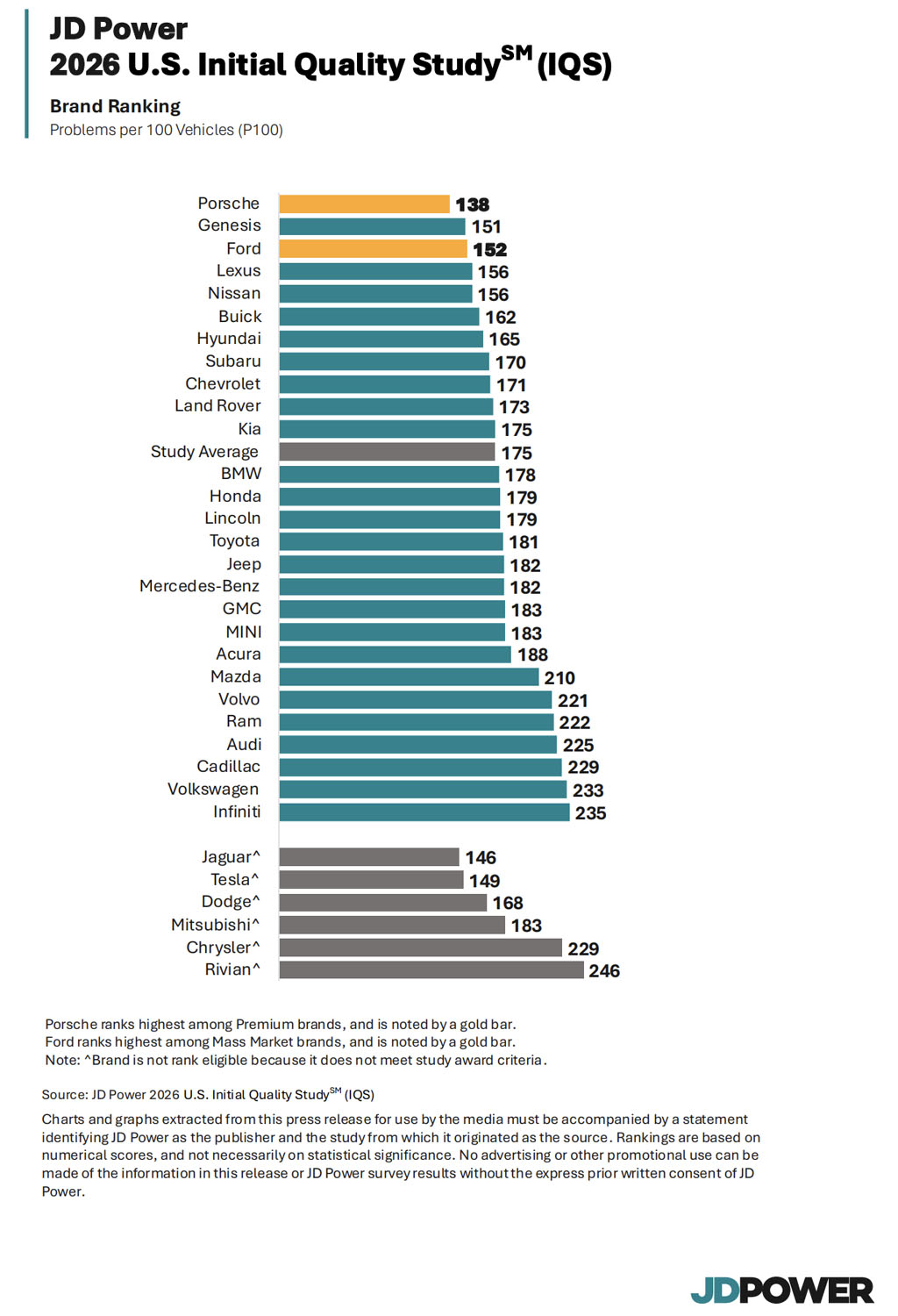
At the top of the list this year is Porsche, which ranks highest overall in initial quality with a score of 138 PP100. That result gives Porsche a strong spotlight moment, especially as premium brands continue to balance luxury expectations with increasingly complex technology. Genesis follows in second among premium brands with 151 PP100, while Lexus lands third with 156 PP100, keeping Toyota’s luxury brand firmly in the quality conversation.
The bigger shakeup comes on the mass-market side, where Ford ranks highest with 152 PP100. That is a notable turnaround for a brand that has been under heavy scrutiny in recent years over recalls and quality concerns. Ford’s rise to the top of the mass-market list is especially significant because it shows that the company’s recent push to improve engineering, manufacturing coordination, and software quality may be starting to show up where customers notice it most, in the first 90 days of ownership.
Nissan takes second among mass-market brands with 156 PP100, while Buick ranks third with 162 PP100. Buick’s placement is not surprising considering the brand’s recent strength in dependability studies, but Nissan’s strong showing is worth noting as the company works to sharpen its product lineup and rebuild momentum. Together, Ford, Nissan, and Buick give the mass-market rankings a fresh look this year, with Ford’s jump standing out as one of the biggest stories of the study.
J.D. Power found improvements in nine of the 10 categories measured, which is a strong sign that automakers are making progress in areas that directly affect daily use. Interior quality and driving assistance features were among the standouts, while improvements in road noise, electric vehicle range, body panel fit and finish, and even cupholder placement helped drive the overall score in the right direction. That last one may sound minor, but owners notice when a vehicle’s everyday details work better, especially in a cabin where convenience matters.
The lone trouble spot remains infotainment. In fact, it was the only category that got worse this year. J.D. Power says infotainment problems reached 44.4 PP100 among mass-market vehicles and 38.3 PP100 among premium vehicles, with Android Auto and Apple CarPlay connectivity issues being the largest single contributor to the decline. That lines up with what many owners already know from real life: a vehicle can drive beautifully, but if the phone will not connect, the screen freezes, or the system behaves unpredictably, the ownership experience takes an immediate hit.
Touchscreens are also becoming a distraction problem. Among owners who reported a distracted-driving-related issue with their vehicle, 46% said the source was the infotainment system or touchscreen, while 18% pointed to driver assistance alerts. That highlights a challenge automakers still have not fully solved. Buyers want modern interfaces, big displays, and seamless smartphone integration, but they also want controls that are simple, predictable, and not buried under layers of menus.
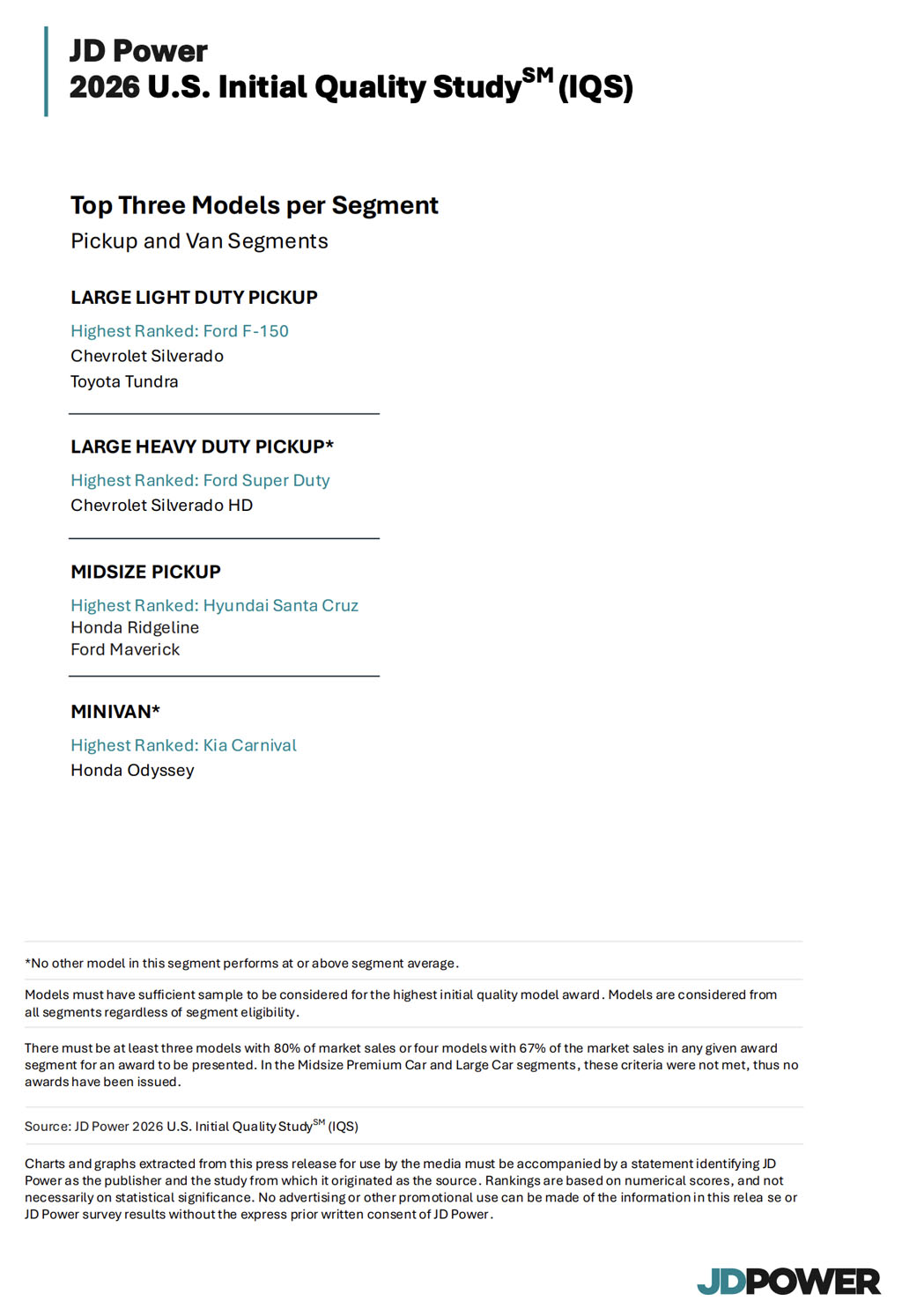
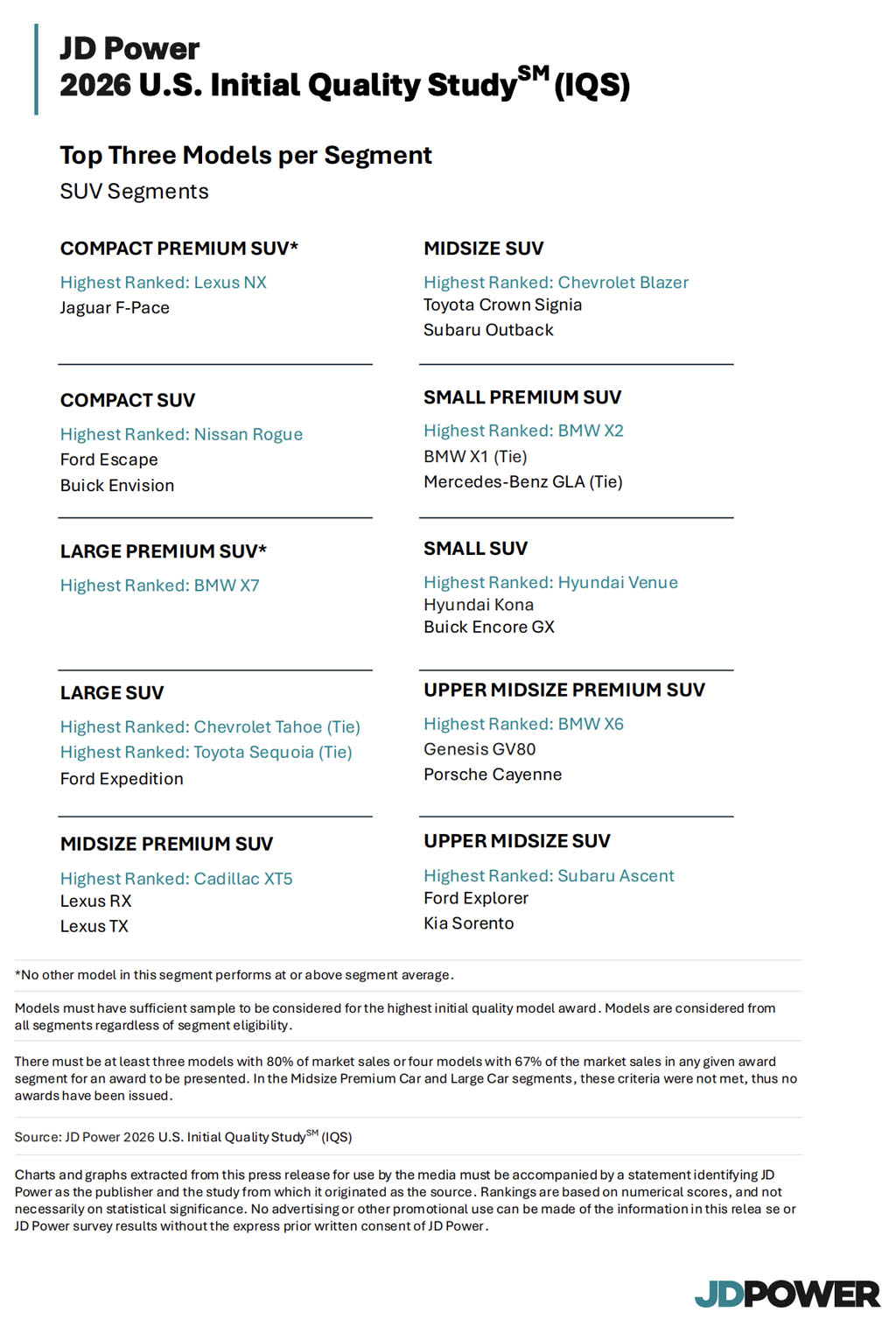
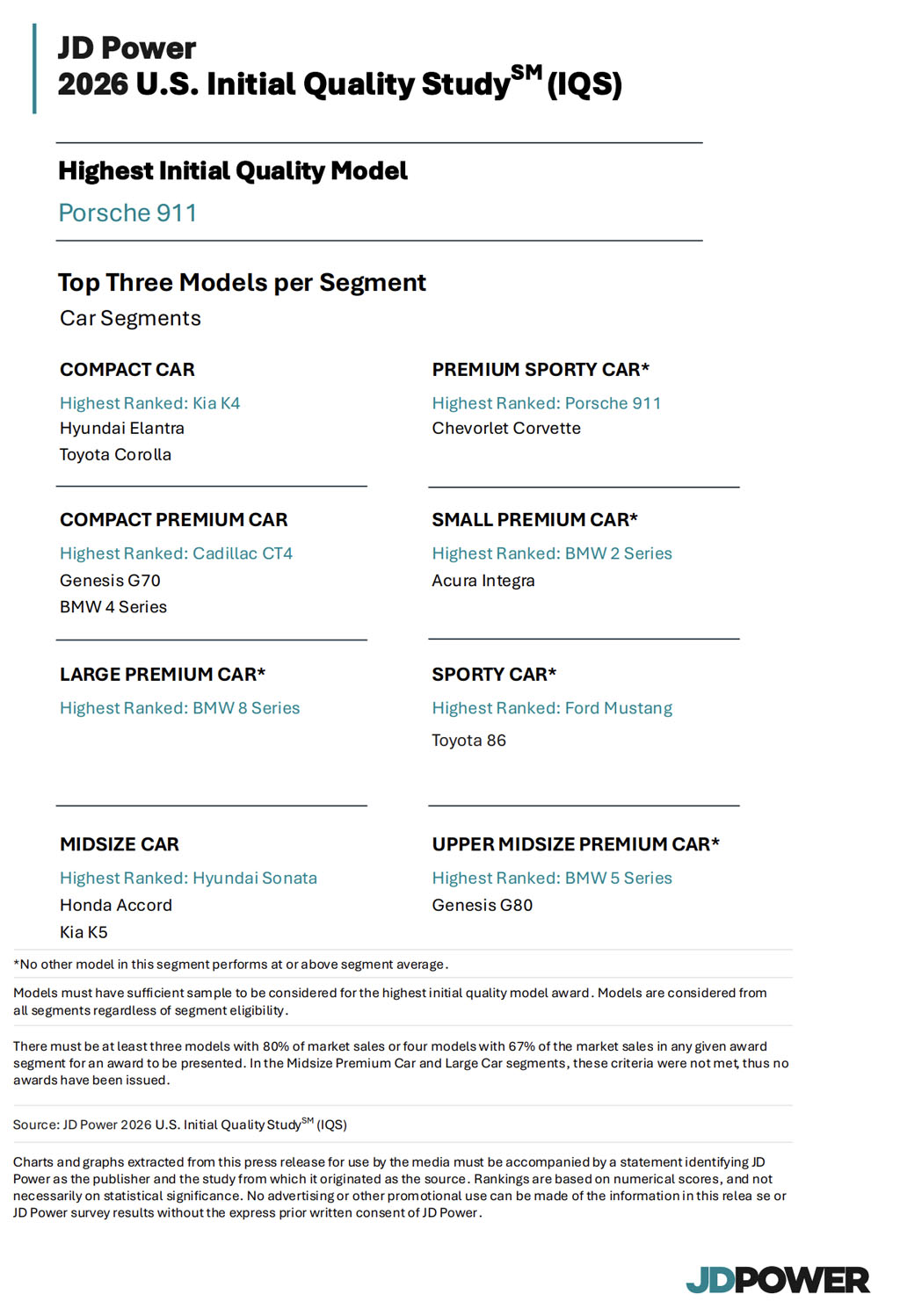
At the model level, BMW had a standout year, earning the most segment awards with six wins for the 2 Series, 5 Series, 8 Series, X2, X6, and X7. Hyundai Motor Group followed with five model-level awards, led by the Hyundai Santa Cruz, Sonata, Venue, Kia Carnival, and Kia K4. General Motors took four model-level awards with the Cadillac CT4, Cadillac XT5, Chevrolet Blazer, and Chevrolet Tahoe, while Ford added wins for the F-150, Mustang, and Super Duty. The highest-ranking individual model overall was the Porsche 911, scoring an impressive 110 PP100.
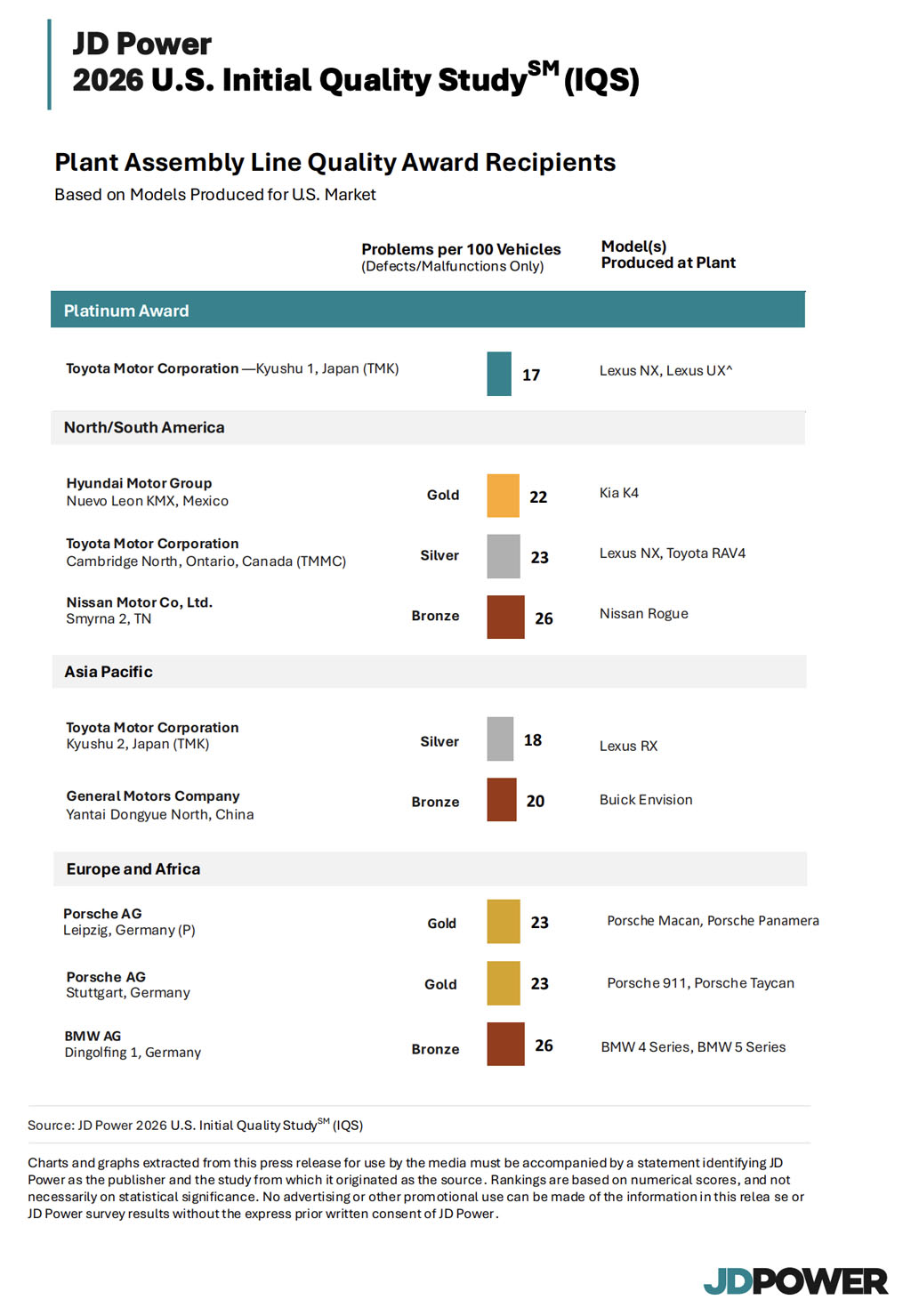
Plant quality honors also brought some familiar names to the front. Toyota Motor Corporation’s Kyushu 1 plant in Japan, which builds the Lexus NX and UX, earned the Platinum Plant Quality Award. Hyundai Motor Group’s Nuevo Leon KMX plant in Mexico received the Gold Plant Quality Award for North and South America for production of the Kia K4. In Europe and Africa, Porsche’s Leipzig and Stuttgart plants tied for Gold honors, reinforcing Porsche’s strong showing across both brand and factory quality performance. The larger takeaway is simple: automakers are getting better at the basics again, but the race to make vehicles smarter still needs to be matched by a stronger focus on making that technology easier to live with.


More Stories
Switzerland September 2026: Tesla Model Y breaks records at 7.7% share
The Telsa Model Y holds a record 7.7% of the Swiss market in September. The Swiss new car market is...
Bulgaria September 2026: Geely Starray up to #2
The Geely Starray is the 2nd best-selling vehicle in Bulgaria in September. New light vehicle sales in Bulgaria advance 10.4%...
Norway September 2026: BEVs at record 98.8% share, Tesla at 26.3% share, Mercedes GLC shoots up
The Mercedes GLC is up to #3 in Norway in September. 18,733 new cars found a buyer in Norway in...
Netherlands September 2026: Tesla manages 1-2, BYD Top 10 brand
The Tesla Model Y is the best-selling vehicle in the Netherlands in September. The Dutch new car market advances by...
Why Certified Pre-Owned Is Often the Smartest Way to Buy
New cars get the spotlight, but for value-minded shoppers, a certified pre-owned vehicle is frequently the smarter choice. You get...
Tesla Model 3 Gets Bigger Screen, More Power and Quicker Acceleration
Tesla is giving the Model 3 another round of updates, and in typical Tesla fashion, the changes are arriving without...