
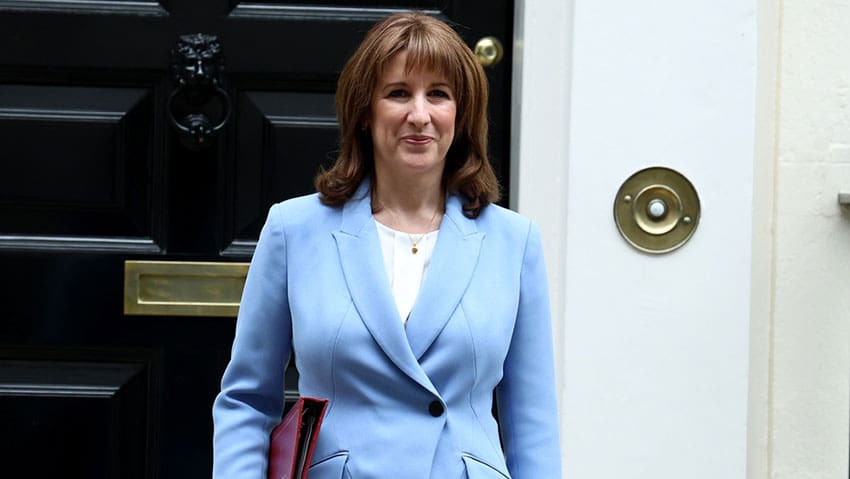
Reeves cannot ‘act surprised’ as a million pensioners are pulled into the tax net

Rachel Reeves has been told that ministers cannot “act surprised” when pensioners start asking why retirement now comes with a larger tax bill.
The warning lands as fresh forecasts show an additional one million pensioners will be drawn into the income tax system by 2030-31, with frozen thresholds doing the quiet work that a headline rate rise would do in plain sight.
The Chancellor has faced sustained criticism over the decision to hold income tax thresholds at their current levels until 2031, a policy that opponents have repeatedly branded a “stealth tax” on older people. For a generation of savers who assumed the worst of the tax man was behind them, the effect is the same as a rate increase, just without the politics of announcing one.
Projections from the Office for Budget Responsibility, published alongside the Spring Statement, suggest the threshold freeze will pull an extra one million pensioners into paying income tax over the next four years. The OBR estimates that 600,000 additional state pension recipients will become liable by 2026-27, climbing to one million by 2030-31. It is a textbook case of fiscal drag: the personal allowance stays put at £12,570 while the state pension keeps rising under the triple lock, and the gap between the two slowly closes until it disappears.
The mechanics matter because they are so easily missed. As Business Matters has reported, 420,000 more pensioners were dragged into the income tax net this financial year alone as the freeze bit harder, taking the total well past eight million. The direction of travel is clear, and it is one way.
The issue reached the Commons on Monday following a public petition that gathered 119,206 signatures before closing on 1 April. It called for a new tax code that would double the £12,570 personal allowance for state pensioners, on the grounds that more retirees are being caught by the tax system precisely because their pension is going up.
During the debate, Conservative MP Alison Griffiths argued that pensioners could see the effect of the policy perfectly well without any help from the Treasury.
“The Government regularly tell people that they have not increased income tax rates,” she told MPs. “However, pensioners, who are a savvy bunch, can see exactly what is happening. They do not need a Treasury briefing to understand where more of their income is being taxed each year.”
She added: “The Chancellor chose to extend the freeze in the personal allowance until 2031. That was a political choice. It means that more pensioners will continue to be drawn into the tax system year after year. Ministers cannot make that decision and then act surprised when pensioners ask questions about fairness.”
Ms Griffiths reserved particular concern for the uncertainty still hanging over the system. Last year’s Budget promised that pensioners relying solely on the state pension would be spared the hassle of small tax bills through Simple Assessment from 2027, but she said her constituents remain unclear about who qualifies and how the process will actually work.
Liberal Democrat MP Charlie Maynard went further, condemning the freeze as “both wrong and unfair” and accusing the government of running a stealth tax that falls hardest on the lowest paid and most vulnerable. “An estimated 600,000 people were dragged into paying income tax for the first time this April and a further 580,000 were pulled into the higher 40p rate,” he said, describing such measures as “dishonest with voters”. He urged ministers to drop stealth tax policies at a time when cost of living pressures are squeezing households at every stage of life.
Conservative MP John Lamont, meanwhile, challenged the comfortable assumption that pensioners are uniformly well off, telling the House that while it may be true of a small minority, it does not reflect the reality for most.
The Treasury defended its position. “Anyone whose only income is the full new or basic State Pension without any increments will not pay income tax and we are committed to that over this Parliament,” a spokesperson said. The department pointed out that 12 million pensioners would see their income rise by up to £470 this year through the triple lock, while still benefiting from the highest personal allowance in the G7.
The government has also pledged to ease the administrative burden for pensioners whose sole income is the basic or new state pension, promising they will not face small tax demands through Simple Assessment from 2027-28 should the state pension tip over the personal allowance threshold. Ministers say they are still working out how best to deliver that change and will set out more detail next year.
For now, the awkward arithmetic remains. The triple lock pushes the state pension up, the personal allowance stays frozen, and the space between them narrows each year. As analysis from the Institute for Fiscal Studies and others has shown, freezing thresholds is one of the most lucrative levers a Chancellor can pull, which is precisely why it is so hard to give up. Business Matters has previously examined how this stealth tax raid is reshaping the finances of older households, and the political cost of taxing state pensions despite repeated pledges not to is only growing.
The message from Monday’s debate was blunt. The freeze is a choice, the consequences are predictable, and ministers should not expect retirees to be fooled by the absence of a number on a manifesto.


More Stories
Lidl to open more than 50 stores after sales rise to £13bn
Lidl GB increased turnover by 10.8 per cent to £13bn in the financial year ended 28 February 2026, with operating...
Nandy intervenes in BT’s TalkTalk deal, citing risk to life
The government has intervened in BT Group’s acquisition of TalkTalk, with Lisa Nandy, the Secretary of State for Digital, Culture,...
Getting to know you: Professor David Keene MBE, CEO, Aurrigo
Professor David Keene MBE is the founder and chief executive of Aurrigo International plc, the AIM-listed Coventry company that builds...
Getting to know you: Malcolm Seagrave, CEO, Hedgehog Lab
Malcolm Seagrave is chief executive of Hedgehog Lab, the Newcastle upon Tyne digital product studio that designs and builds software...
Tax experts call for inflation relief if capital gains tax rises
Any rise in capital gains tax (CGT) at the budget on 28 October must be accompanied by “inflation relief” on...
Tesco considers offer for 210-store Majestic Wine chain
Tesco is considering an offer for Majestic Wine Group, the UK’s largest wine retailer, which was put up for sale...