
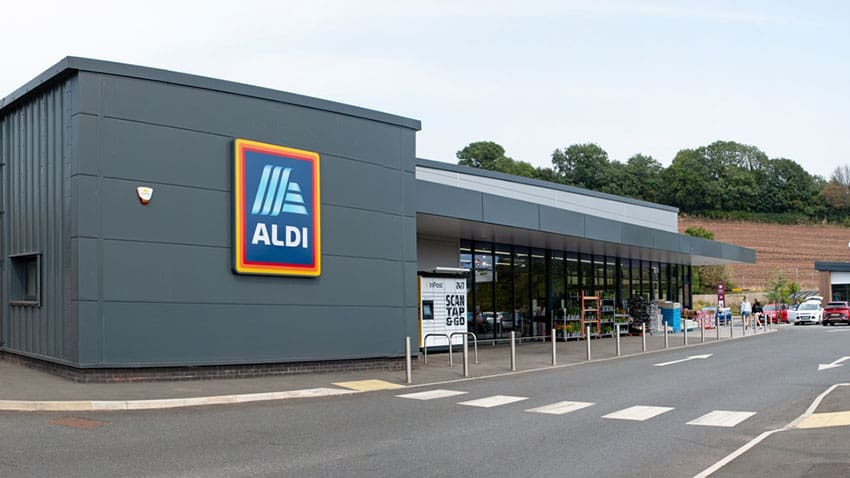
Aldi banks on £370m store splurge as discounters keep eating the big four’s lunch

Aldi is to open 16 new stores across Britain over the coming months, the latest move in a £370 million push to widen its UK footprint and chip away further at the dominance of the established supermarket chains.
Shoppers in Watford, Hoxton in east London, Hattersley in Greater Manchester and Balsall Common in the West Midlands are among those set to gain a local branch as the German-owned discounter presses on with a growth plan that has already reshaped the country’s grocery landscape.
The retailer currently runs more than 1,080 stores in the UK and has set out a long-term ambition to reach 1,500. This year’s investment, first signalled as part of a wider 40-store programme for 2026, is aimed squarely at towns and suburbs that do not yet have an Aldi within easy reach.
Jonathan Neale, managing director of national real estate at Aldi UK, said: “At Aldi, we’re committed to making high-quality, affordable food accessible to everyone, which is why we continue to invest in expanding our store network across the UK.
“Our £370 million investment in new stores this year will help us bring Aldi’s unbeatable value to even more communities, supporting local economies through our industry-leading pay for colleagues.”
The latest wave spans England and Wales, with Greater Manchester picking up branches in both Hattersley and Wigan. The Isle of Wight is due a store in Newport, with a second Newport opening in south Wales.
London accounts for a cluster of the openings, including Hoxton, Orpington and Marble Arch, alongside a new branch in Watford in neighbouring Hertfordshire. Ashford in Kent and Rayleigh in Essex also feature, as do Bishops Cleeve near Cheltenham, Malton in North Yorkshire, Port Talbot in south Wales, Sutton Coldfield in the West Midlands and Sudbury in Suffolk.
The full list of confirmed openings is:
Hattersley, Greater Manchester
Newport, Isle of Wight
Bishops Cleeve, Cheltenham
Newport, south Wales
Orpington, London
Hoxton, London
Ashford, Kent
Watford, Hertfordshire
Rayleigh, Essex
Balsall Common, West Midlands
Marble Arch, London
Malton, North Yorkshire
Port Talbot, Wales
Sutton Coldfield, West Midlands
Wigan, Greater Manchester
Sudbury, Suffolk
The new branches are only part of the spend. Aldi is also refurbishing 25 existing stores this summer, adding shopping space and energy-saving features such as fridge doors to improve efficiency. Selected sites will get refreshed bakery, health and beauty, and fresh food sections, which Neale said would create “even more convenient and efficient stores for both customers and colleagues” while supporting the chain’s sustainability goals.
On price, the retailer says it has invested more than £200 million in reductions so far this year, including £60 million of cuts introduced this week across fresh and frozen food and household essentials. The pay claim is not idle marketing either: Aldi has repeatedly positioned itself as Britain’s best-paying supermarket, a point it leans on heavily when courting new communities and recruits.
For all the talk of value, the expansion is really a story about momentum. The discounters have spent the past decade rewriting the rules of British grocery, and the latest Kantar grocery market share figures show Aldi and Lidl continuing to grow ahead of the wider market while the traditional players scrap over promotions.
The pace, though, is not entirely in Aldi’s hands. The chain has publicly pressed the government to speed up planning permission for new supermarkets, arguing that delays in the system are holding back openings and, with them, the jobs and investment that follow. Sixteen new stores is a confident statement, but the gap between 1,080 and the 1,500 target will be closed in council planning offices as much as on the shop floor.


More Stories
Burnham hands EV targets decision to Haigh over wife’s industry links
Andy Burnham has stepped aside from a decision on Britain’s electric car sales targets because of a potential conflict of...
Roobet Philippines Open Pool Championship Kicks Off in Quezon City
The venue is part of what makes this such a special event. Hosted in the atrium of the massive Gateway...
Europe’s Late Effort To Save Its Industry
Openness caused a demand for global supply chains and a shift of production to lower-cost countries as well. Europe wasn’t...
6 Best Sites to Buy LinkedIn Followers, Likes and Connections in UK
Even with valuable content, getting noticed can be difficult when your follower count is low and your posts receive little...
6 Best Sites to Buy YouTube Views, Subscribers and Likes in UK
That is why some creators and businesses choose to buy YouTube views, subscribers and likes. These services increase visible engagement,...
How much development capacity is sitting in your deposit?
New research from property finance platform Brickflow, published in full in its report “The UK’s Most Expensive Mistake”, suggests the...