
How to Buy a JDM Car in the US: The Complete Guide

Most enthusiasts know the feeling. You’re deep in a late-night YouTube hole, watching an R34 GT-R launch up a mountain pass or a bone-stock EK9 Type R hang on at a track day, and the thought lands: you want one in your driveway.
Owning a real JDM car in the US is more doable than it used to be. The market has matured, more import-legal cars arrive every year, and the whole process is manageable once you understand it.
Here’s what JDM actually means, how the 25-year rule works, what to check before you buy, and where to find a good one.
What “JDM” Actually Means (And Why It Matters)
JDM stands for Japanese Domestic Market. It refers to vehicles built and sold for the Japanese home market, not the Japanese-built cars that Toyota, Honda, and Nissan exported to the US. JDM spec usually means different tuning, more aggressive factory options, different emissions equipment, and in most cases, right-hand drive.
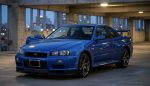
The Nissan Skyline GT-R, the Honda NSX-R, the early Lancer Evolutions, the Mazda RX-7 FD: none of them were officially sold here. They were Japan-only cars. That’s the appeal. You get something that was never available in the US, the kind of car a lot of Americans only ever drove in Gran Turismo.
The trade-off is that buying one takes more work than picking up a used Camry. Start with the legal side.
The 25-Year Import Rule: What You Need to Know
Federal law won’t let you import a foreign-market car that doesn’t meet US safety standards (FMVSS) for road use. The exception is age. NHTSA exempts any vehicle 25 years or older from FMVSS compliance and treats it as an antique. The EPA runs a separate 21-year exemption for cars in original, unmodified configuration, so 25 years is the mark that clears both.
In practice, a 1999 car became legal to import in 2024, and a 2000 opens up in 2025. That’s why so much late-’90s and early-2000s JDM metal is hitting the US market right now. The good stuff unlocks a little more every year.
A few things worth knowing:
The 25-year clock runs from the manufacture date, not the model year. A car built in January 1999 and titled as a 1999 became eligible a little earlier than one built that November.
California has its own rules. The state enforces separate emissions standards, and some cars that are legal federally still face restrictions there. Confirm before you ship to a California address.
Canada’s rule is 15 years. That’s why Canadian buyers have had mid-2000s JDM hardware for a few years already, and why you’ll see listings from Canadian sellers.
A few cars qualify for show-or-display exemptions if they’re historically or technically significant, but those are narrow, expensive, and rarely the practical route.
What to Inspect Before You Buy
Plenty of these cars did hard miles before they ever left Japan. Auction grades are a useful starting point: a 4 or 4.5 is clean, a 3 is presentable with some wear, and anything lower deserves a closer look. But graders work fast, and they miss things.
Rust
Structural rust is the deal-breaker. Check the floor pans, the rear wheel arches, the frame rails, and anywhere that’s been undercoated or freshly painted over. Japan’s humidity and the road salt used in northern prefectures can be hard on older cars.
Modified vs. stock
Original, unmodified cars pull the biggest premiums. If a car has been modified, dig into the history. A documented turbo build from a known shop is fine. An unknown mess of cut wiring and mystery boost is not. Ask for photos of everything before you send money. And if you plan to build the car after you buy it, it helps to know which JDM upgrades actually move the needle before you start writing checks.
Service records
Japanese auction houses often include service history on the inspection sheets. Any decent seller should have them, and a reputable importer definitely will. Mileage shows in kilometers, so run the conversion (divide by 1.609) before you decide whether 120,000 km is a deal or a warning.
Compliance and titling
Once a car clears US customs, it has to be titled in your state. Some states are easier than others. Montana is popular for registrations, but it carries real residency implications if you’re careless about it. Work with an importer or compliance specialist who knows your state’s DMV process. This is not the place to wing it.
Where to Find JDM Cars for Sale
This part of the market has come a long way. Ten years ago, finding a legit import meant flying out to a specialty dealer, digging through forums, or taking a real leap of faith on eBay. The options were thin, and the buyer was usually the least-informed person in the deal. A few respected specialists, like the kind of shops that restore and resell classic Japanese iron, built their names back then, but they were the exception.
Today there are real platforms built for this. When you’re ready to shop, you can browse JDM cars for sale at JDMBUYSELL. It’s the first and largest JDM marketplace in the USA that’s been running since 2009, connecting US buyers with verified dealers, importers, and private sellers across Japan, Canada, the UK, and Australia. With close to 3,000 active listings and 98 verified dealers (vetted by response rate and a confirmed phone number), it’s a long way from scrolling classified ads and hoping for the best.
Being able to filter by chassis code helps too. If you already know you want an EK9, a GDB, or a JZA80, you can go straight to it instead of wading through generic listings.
The Cars Worth Targeting Right Now
A few models stand out in the current 25-year window. If your budget is tighter, several of them also show up among the most affordable sports cars worth owning:
Subaru Impreza WRX STI Version V/VI (GC8, 1998-2000). The original Impreza at its peak, just before the GDB “bugeye” took over for Version VII. The Version VI sits at the top of the GC8 line, with the limited 22B above even that. A clean, original-trim car is the realistic target, so find one before the market fully catches up.
Honda Integra Type R DC2 (1995-2001). The naturally aspirated benchmark for sport compacts. It still revs to 8,500 RPM and still embarrasses turbo cars twice its weight. The best ones are heading into collections.
Toyota Chaser Tourer V (1996-2001). Built around the 1JZ-GTE, the Chaser is the rear-drive, turbocharged sports sedan the GT-R crowd tends to overlook. Understated, quick, and finally getting its due.
Mitsubishi Lancer Evolution V/VI (1998-2000). The Evo VI Tommi Makinen Edition has crossed into collector territory, but clean standard Evo VIs in original trim are still out there at sane prices.
Nissan Silvia S15 (1999-2002). The last of the Silvia line: SR20DET, clean lines, and serious drift and track cred. It’s just entering the US import window, so supply is tight and prices are climbing.
One Final Note on Patience
The JDM market rewards patience. The wrong car bought quickly almost always costs more than the right car bought slowly. Spend time on the forums (SAU, ClubRSX, the JDMbuysell community threads) before you commit. Talk to people who’ve actually imported the car you’re after. Ask for video walkthroughs and independent inspections.
Good imports hold their value, and the collector cars appreciate. The ones that lose money are almost always impulse buys from a seller who knew more than the buyer.
Conclusion
Buying a JDM car in the US is a real, legitimate thing to do. It isn’t a gray-area workaround, and it isn’t an auction-sheet gamble if you do your homework. The 25-year rule is working in buyers’ favor right now, opening up some of the best cars of the late 1990s and early 2000s. The platforms have caught up, and the community knowledge is out there for anyone willing to read.
Do the homework, find a verified seller, and get the thing on the road. It beats watching YouTube.

More Stories
Switzerland September 2026: Tesla Model Y breaks records at 7.7% share
The Telsa Model Y holds a record 7.7% of the Swiss market in September. The Swiss new car market is...
Bulgaria September 2026: Geely Starray up to #2
The Geely Starray is the 2nd best-selling vehicle in Bulgaria in September. New light vehicle sales in Bulgaria advance 10.4%...
Norway September 2026: BEVs at record 98.8% share, Tesla at 26.3% share, Mercedes GLC shoots up
The Mercedes GLC is up to #3 in Norway in September. 18,733 new cars found a buyer in Norway in...
Netherlands September 2026: Tesla manages 1-2, BYD Top 10 brand
The Tesla Model Y is the best-selling vehicle in the Netherlands in September. The Dutch new car market advances by...
Why Certified Pre-Owned Is Often the Smartest Way to Buy
New cars get the spotlight, but for value-minded shoppers, a certified pre-owned vehicle is frequently the smarter choice. You get...
Tesla Model 3 Gets Bigger Screen, More Power and Quicker Acceleration
Tesla is giving the Model 3 another round of updates, and in typical Tesla fashion, the changes are arriving without...