
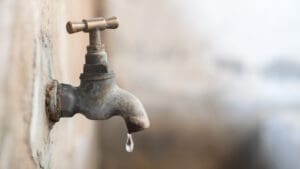
Taps could run dry without urgent action on drought, peers warn ministers

England’s water security is heading for a serious squeeze, and the bill for inaction will land squarely on the desks of farmers, food producers, manufacturers and the wider small business community.
That is the blunt message from a cross-party House of Lords committee, which on Thursday 21 May publishes a report warning that the taps risk running dry unless the Government moves quickly to capture, store and reuse more of the rain that already falls on these islands.
In Surviving drought: reclaim the rain, the House of Lords Environment and Climate Change Committee argues that climate change, a growing population, leaky Victorian pipework and thirsty industries are pushing the system towards a tipping point. Britain, the peers note, is not actually short of rainfall. The problem is that far too much of it is wasted, washed straight into rivers and the sea rather than held back for the dry months that climate science now tells us to expect with growing frequency.
The figures the committee cites are arresting. If ministers fail to act, public demand for water could outstrip supply by five billion litres every day by 2055, the equivalent of around 2,000 Olympic swimming pools draining away unmet each morning. That projection sits in line with the Environment Agency’s own National Framework for Water Resources, which has previously warned of a shortfall of similar scale unless leakage is cut and new sources of supply brought online.
A warning aimed at Whitehall, but felt on the shop floor
Baroness Sheehan, who chairs the committee, says the experience of the 2025 drought should serve as an early warning rather than a one-off. “Climate change is increasing the risk of drought through a combination of hotter summers and heavier winter rains, making the capture and storage of rainwater increasingly important,” she said. “We have already had a dry start to this spring, so it is critical that action is taken now to prepare for serious drought conditions, particularly as we enter a reported El Niño year.”
Forecasters at the Met Office have signalled a likely return of El Niño conditions from mid-2026, raising the probability of hotter, drier summers. For SMEs already nursing tight margins through a sluggish economic recovery, another summer of hosepipe bans, abstraction restrictions and stressed supply chains is the last thing the order book needs.
That much was clear last spring, when Business Matters reported on how drought conditions had begun hitting UK crop production, with reservoirs running low and farmers warning of early yield losses after the driest spring in 69 years. A year on, the peers say the lesson has barely been absorbed.
Four areas where ministers are urged to move
The committee’s recommendations sit in four broad buckets, each of them with direct read-across to the boardroom.
First, the peers want a proper grip on the numbers. That means better drought monitoring and impact data, and a full environmental and economic assessment that weighs the cost of doing nothing against the long-term value of building resilience. Without that, the committee argues, capital spending decisions on reservoirs, transfer schemes and demand-management measures will continue to be made in the dark.
Second, the report calls for a whole-of-society push on demand. Awareness campaigns, tougher water-efficiency standards in new homes, and incentives for water reuse and rainwater harvesting all feature. For the SME estate, this is likely to translate into firmer expectations on water-using appliances, fittings and processes, particularly in hospitality, food and drink and light manufacturing.
Third, the committee zeroes in on sectors that rely on direct abstraction from rivers and aquifers. It urges ministers to make it easier for farms, golf courses and other appropriate operations to build local resource reservoirs, and to introduce more flexibility into the abstraction licensing regime so that catchment-based water projects can scale. For the rural economy, that flexibility could be the difference between a viable harvest and a written-off crop.
Finally, the peers want emergency planning brought up to date. They are asking the Government to publish a prioritisation plan for severe drought by autumn 2026 at the latest, alongside a wider rollout of nature-based solutions, from wetland restoration to sustainable urban drainage, in both town and country.
Why this is a balance-sheet issue, not just an environmental one
The temptation in many quarters will be to file this report alongside the broader stack of climate warnings. That would be a mistake. Water is an input cost like any other, and one that the City is only now starting to price properly. Investors, lenders and insurers are sharpening their interrogation of corporate exposure to physical climate risk, and water scarcity sits near the top of that list for any business with a meaningful UK footprint.
The point was made forcefully in a recent Business Matters opinion piece arguing that the UK economy risks collapse without urgent investment in nature, with the financial sector urged to wake up to the fact that nature loss and water stress are no longer fringe concerns but central to long-term economic stability.
There is also a competitive angle. UK SMEs are, on the whole, ahead of the curve on sustainability, with Business Matters previously reporting that nearly two-thirds of small firms are taking practical steps to cut their environmental footprint. Those firms that have already invested in water-efficient kit, leak detection and on-site capture should find themselves better placed if regulatory pressure tightens, as the Lords clearly want it to.
The bottom line
Baroness Sheehan is unequivocal in her closing remarks: “Water is the foundation of life itself. The Government must act now to secure England’s most vital resource for the future and work with the public to ensure the taps don’t run dry.”
For business owners, the practical implications are already taking shape. Expect higher water bills in catchment areas under stress, tighter rules on abstraction and discharge, growing investor scrutiny of water risk in annual reports, and new commercial opportunities for firms offering harvesting, reuse and efficiency technologies. The smart money will not wait for Whitehall to catch up. The companies that get ahead of this curve, in much the same way that the best-prepared firms got ahead of net zero, are the ones likeliest to keep producing, serving and selling when the next dry spring arrives.
The peers have laid out the warning and the to-do list. The question now is whether ministers, water companies and businesses themselves are prepared to treat rainwater as the strategic national asset it has quietly become.
Read more:
Taps could run dry without urgent action on drought, peers warn ministers


More Stories
Getting to know you: Helen Watson, senior partner, Aaron & Partners
Helen Watson was voted the first female senior partner of Aaron & Partners in early 2026, 19 years after joining...
Badenoch pledges to restore tax-free shopping for overseas visitors
Kemi Badenoch has pledged that a Conservative government would restore VAT-free shopping for overseas visitors, bringing back the 20 per...
Can You Get Invoice Factoring With Poor Business Credit?
For a business waiting 30, 60 or more days for customers to pay, that distinction matters. Previous missed payments or...
How Adding a New Customer May Affect Commercial Trucking Coverage
Adding a new customer is a routine business decision for trucking companies — one that may also introduce changes in...
A Brief, Surprisingly Dramatic History of the Corporate Freebie
The promotional product has a longer and stranger history than most of the brands that hand them out. The father...
Beyond Search: Why Discovery-Led Shopping Is Reshaping UK Ecommerce
Online shopping has traditionally followed a predictable path: consumers know what they want, search for it, compare options and buy....