
Obituary: Minnesota native Richard Moe helped to redefine vice presidency

Richard Moe, a Minnesota native credited with reshaping the office of the vice president of the United States and later strengthening historic preservation efforts across the country, has died at 88.
According to his daughter, Alexandra Moe, he died of complications from Parkinson’s disease on Sept. 15 at an assisted living facility in Washington, D.C.
As an administrative assistant to then-Sen. Walter F. Mondale of Minnesota, Moe, with the help of another senator, Minnesotan and Democrat — and former vice president — Hubert H. Humphrey, persuaded Mondale to consider the vice presidency.
A few months later, future president Jimmy Carter picked Mondale as his running mate.
Up to that point, the only real role the vice president had was to be ready to step in if something were to happen to the president.
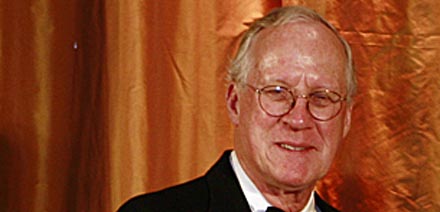
Richard Moe, a Duluth, Minn., native credited with reshaping the office of the vice president of the United States and later strengthening historic preservation efforts across the country, died Sept. 15, 2025, in Washington, D.C. He was 88. (File photo)
Between election night and Inauguration Day, Moe, Carter and Mondale convened in the Blair House across the street from the White House to shape Mondale’s role as vice president in the Carter administration.
Mondale suggested that he have unfettered access to Carter and the information flowing through the White House, an office in the West Wing, regular meetings with Carter and a meaningful advisory role, Moe wrote in a 2006 essay in Minnesota History.
“At the close of the meeting, Carter asked Mondale to write a memorandum incorporating his suggestions for the duties of the office. As we left Blair House, Mondale asked me to begin drafting the document that would prescribe his role for the next four years,” Moe wrote. “We didn’t realize it at the time, but the 11-page, double-spaced memo that followed would define what has become the modern vice presidency.”
What became known as the “Mondale Memo” transformed the office, and Moe stayed with Mondale, serving as his chief of staff during his entire vice presidency — from 1977 to 1981.
Not bad for a kid from Duluth.
Moe was born Nov. 27, 1936, in Duluth, and played in a ravine near his home, skied down a small hill off First Street and attended an elementary school run by the Duluth State Teachers College, now the University of Minnesota Duluth, the News Tribune reported in 2004.
After attending East Junior High School, Moe’s family left Duluth. His father, an obstetrician, died. His mother landed a new job in the gift shop at a Minneapolis hospital.
Moe went on to graduate from Williams College in Massachusetts and from the University of Minnesota Law School.
He married Julia Neimeyer, also from Duluth, whom he met at an ice rink.
He became chairman of the Minnesota Democratic-Farmer-Labor Party and, in 1972, moved to D.C. to be an administrative assistant to Sen. Mondale.
In a Ridder News Service article that ran in the Dec. 23, 1973, News Tribune, Moe said he entered politics in 1960 when John F. Kennedy was running for president, an era when “politics was regarded as something very high quality that attracted the best people.”
Watergate, however, had changed that. Although he said he felt “discouraged” by the “depressing year” of politics and politicians, he believed most were there for the right reasons.
“I consider myself a professional politician,” Moe said, “and I think the vast majority of those who are in politics are in it for the right reasons and they’re honest, decent people.”
After politics, he practiced law and then shifted careers, driven, in part, by an experience in Duluth.
At 12, he was chosen by his Boy Scout troop to attend a church service with Duluth’s Albert Woolson, the last surviving member of the Union Army in the Civil War.
“I have no idea why I was selected, but I’m glad I was,” Moe told the News Tribune in 2004. “I just remember being in the presence of this great man. He said a few nice words to me. Whatever they were, they made a lasting impression.
“My real interest in history began in earnest much later than that,” he said. “But my interest certainly has its roots in that church service and in Duluth, Minnesota.”
Moe’s 1993 book “The Last Full Measure: The Life and Death of the First Minnesota Volunteers,” detailed the First Minnesota Regiment’s role in the Civil War, including their decisive, but costly, charge that stopped a Confederate advance in one of the war’s most crucial battles — Gettysburg.
The New York Times said that the book led to the National Trust for Historic Preservation offering him the job as president, a role he held from 1993 to 2010.
The National Trust credited Moe’s leadership with securing the organization’s future by phasing out its taxpayer funding and establishing a successful fundraising and membership program.
In that role, he fought — and won — against Disney’s proposed historical theme park near Virginia’s Manassas Civil War battlefield, helped save historic structures in New Orleans after Hurricane Katrina and preserved President Lincoln’s D.C. cottage, where Lincoln spent part of his presidency and drafted the Emancipation Proclamation.
His advocacy also paid off in his hometown. Carolyn Sundquist, the board president of the Armory Arts & Music Center, said Moe played a pivotal role in saving the Duluth Armory.
The 1915 building had been slated for demolition, but she said that the Minnesota Historical Society, Moe and the National Trust staff helped local preservationists save the structure in the early 2000s.
“Absolutely, it made a difference,” Sundquist, who served as one of two Minnesota representatives to the National Trust board when Moe was president, said of Moe’s involvement.
During a 2004 visit to Duluth, he also advocated for the future of other structures, such as the now-renovated and vibrant NorShor Theater. Like the Armory, its future was in doubt at the time.
He also fought for downtown’s old St. Louis County Jail. In a 2009 op-ed in the News Tribune, Moe skewered the county’s conclusion that the jail could not be converted into something else.
Today, the old jail is home to 33 apartments.
“He was very passionate about Duluth and always had fond memories of it,” Sundquist told the News Tribune on Sunday.
He described some of those memories in a July 10, 2021, op-ed for the News Tribune, in which he urged Biden to reject copper-nickel mining near the Boundary Waters Canoe Area Wilderness.
“Growing up in Duluth in the 1940s and ‘50s was exciting for a youth bedazzled by the bountiful natural resources surrounding us, especially the magnificent Lake Superior and its incomparable North Shore,” Moe wrote. “Further north there was country that simply took your breath away, with plentiful opportunities for camping and canoe trips; at times I thought I was living in paradise.”
Alexandra, Moe’s daughter, said her father took up woodworking, building small cabins, tables, benches and a boat, a hobby that kept him connected to his home state.
“My dad was a very proud son of Minnesota,” Alexandra said. “He lived in Washington for more than fifty years, but always referred to himself as Minnesotan, Midwestern, and Norwegian.”
As a “big thinker” who “loved big ideas,” she said he encouraged her to try new things and take risks in work.
“He was a perpetual mentor to people, to young people, encouraged them to go after their dreams, and believed they could do it — and that was true of me,” Alexandra said. “He had an unconditional love for me, and belief in me. He showed his love and his kindness in his enthusiasm for whatever I was pursuing.”
In addition to his daughter, Alexandra, and wife, Julia, he is survived by a son, Andrew; a sister, Elizabeth Andes; and two granddaughters. He is preceded in death by his son, Eric.
Related Articles
DOJ sues Minnesota, St. Paul, Minneapolis, Hennepin County over immigration enforcement
First-ever statewide safety stand-down by MnDOT honors 2 workers
Minnesota man pleads guilty to attempting to join Islamic State group
Minnesota woman wins gold at world barefoot ski jump championships
Trump’s work visa fee may impact Rochester’s medical staff

More Stories
UK inflation rises to 3.5 per cent as public debt passes £3trn
UK inflation rose to 3.5 per cent in September, its highest rate for 11 months, as separate figures published today...
Alaa Jaber on Building a Career on His Own Terms
Building a career through self-employment meant learning to make decisions without always having a supervisor, an established process, or a...
Ralph Opacic Leads a Second Act in Orange County Arts Education
Ralph Opacic spent six years teaching choral and vocal music at Los Alamitos High School before he decided a classroom...
Music collaboration app CHAOS raises £1m ahead of public launch
CHAOS, a London-based app that brings music creators’ messaging, files and live writing sessions into one place, has raised £1m...
NatWest tells 30,000 staff to work in the office two days a week
NatWest has told more than 30,000 of its UK staff that they must work from its offices at least two...
Starling founder Anne Boden sells final stake at £1.7bn valuation
Anne Boden, the founder of Starling, has sold her remaining 2.7 per cent stake in the digital bank at a...