
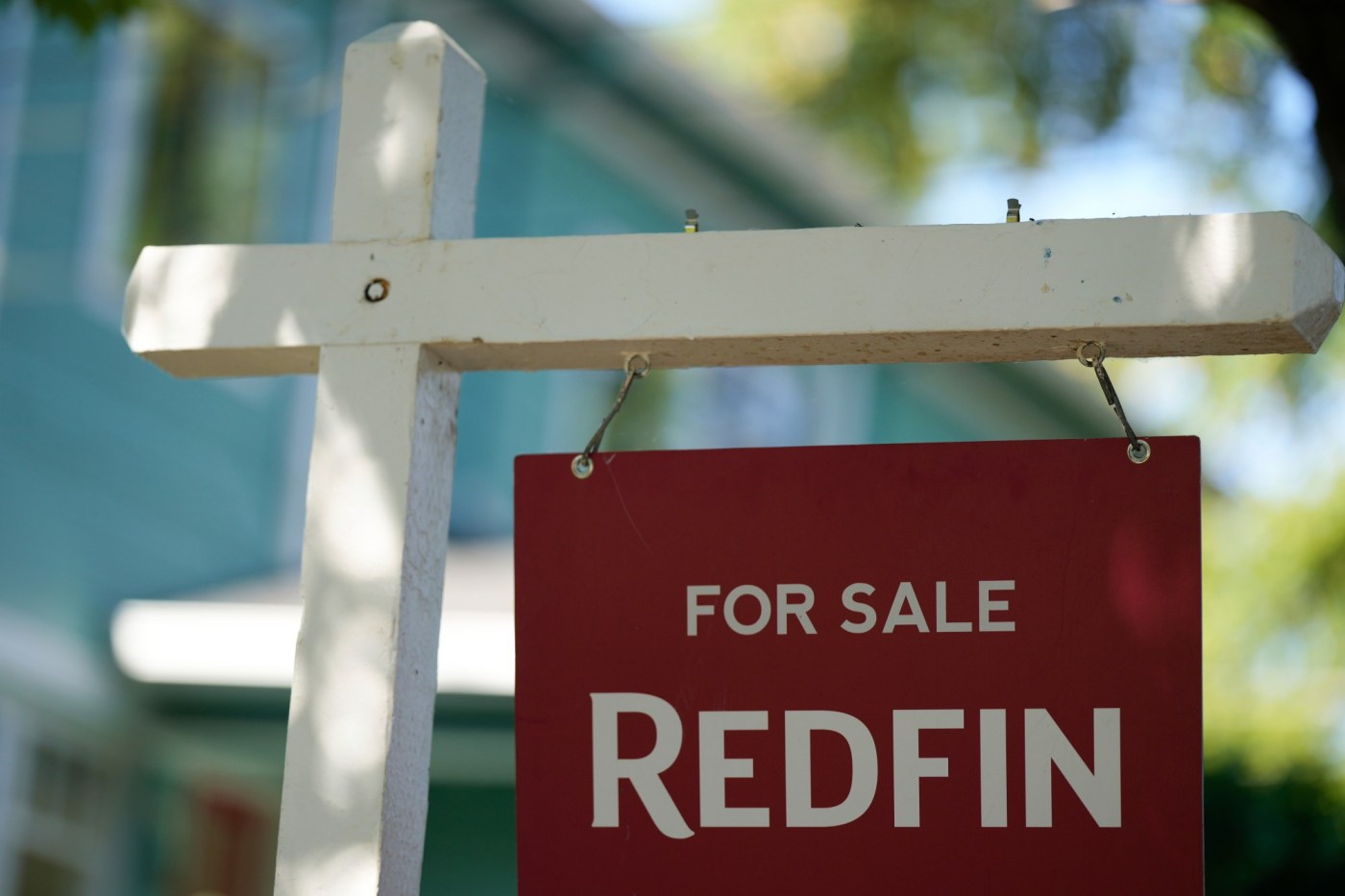
Average rate on a 30-year mortgage drops to 6.5%, lowest level since last October

By ALEX VEIGA, AP Business Writer
The average rate on a 30-year U.S. mortgage fell again this week, extending a recent trend that should give prospective homebuyers more purchasing power.
The long-term rate eased to 6.5% from 6.56% last week, mortgage buyer Freddie Mac said Thursday. A year ago, the rate averaged 6.35%.
Borrowing costs on 15-year fixed-rate mortgages, popular with homeowners refinancing their home loans, also fell. The average rate slipped to 5.6% from 5.69% last week. A year ago, it was 5.47%, Freddie Mac said.
Mortgage rates are influenced by several factors, from the Federal Reserve’s interest rate policy decisions to bond market investors’ expectations for the economy and inflation.
Rates have been mostly declining since late July amid growing expectations that the Fed will cut its benchmark short-term interest rate at the central bank’s meeting of policymakers later this month.
A similar trend happened last year in the leadup to a year ago, when the Fed cut its rate in for the first time in more than four years. At that time, the average rate on a 30-year mortgage got down to a 2-year low of 6.08%, but then climbed again, reaching above 7% by mid-January.
While the Fed doesn’t set mortgage rates, its actions can influence bond investors’ appetite for long-term U.S. government bonds, like 10-year Treasury notes. Lenders use the yield on 10-year Treasurys as a guide to pricing home loans.
The 10-year Treasury yield was at 4.18% at midday Thursday, down from 4.22% late Wednesday.
Related Articles
Murder suspect Luigi Mangione spotted as model on Shein website
Americans would save $100B if credit card rates were capped as Trump proposed, researchers say
If Trump’s biggest tariffs get thrown out, companies could get a refund — but not consumers
Trump says US would be on ‘brink of economic catastrophe’ unless justices rule his tariffs are legal
Wall Street ticks higher with hopes for coming cuts to interest rates
In a high-profile speech last month, Federal Reserve Chair Jerome Powell signaled the central bank may cut rates soon even as inflation risks remain elevated because of the Trump administration’s tariffs. That’s because of signs that the job market is slowing.
The government’s August job market snapshot is due out Friday.
Still, while a Fed rate cut could give the job market and overall economy a boost, it could also fuel inflation. That could push bond yields higher, driving mortgage rates upward in turn.


More Stories
Lidl to open more than 50 stores after sales rise to £13bn
Lidl GB increased turnover by 10.8 per cent to £13bn in the financial year ended 28 February 2026, with operating...
Nandy intervenes in BT’s TalkTalk deal, citing risk to life
The government has intervened in BT Group’s acquisition of TalkTalk, with Lisa Nandy, the Secretary of State for Digital, Culture,...
Getting to know you: Professor David Keene MBE, CEO, Aurrigo
Professor David Keene MBE is the founder and chief executive of Aurrigo International plc, the AIM-listed Coventry company that builds...
Getting to know you: Malcolm Seagrave, CEO, Hedgehog Lab
Malcolm Seagrave is chief executive of Hedgehog Lab, the Newcastle upon Tyne digital product studio that designs and builds software...
Tax experts call for inflation relief if capital gains tax rises
Any rise in capital gains tax (CGT) at the budget on 28 October must be accompanied by “inflation relief” on...
Tesco considers offer for 210-store Majestic Wine chain
Tesco is considering an offer for Majestic Wine Group, the UK’s largest wine retailer, which was put up for sale...