
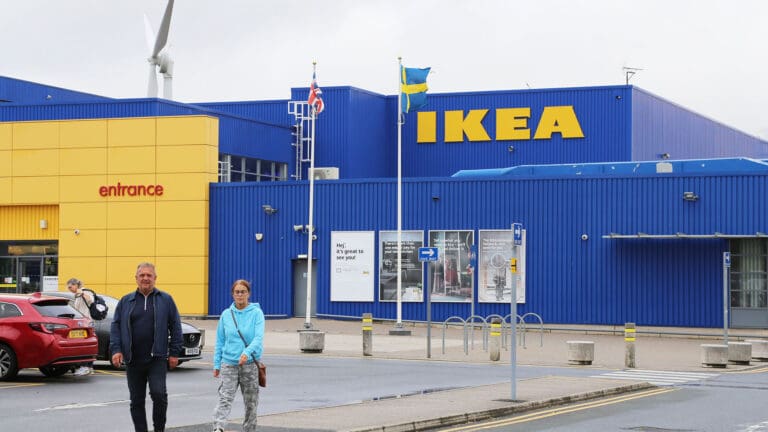
Ikea shelves UK store openings over business rates, says UK boss

Ikea has shelved several planned store openings in Britain because of the level of business rates, its UK chief executive has said, as sales at the flat-pack furniture retailer rose 0.5 per cent to £2.3bn in its latest financial year.
David McCabe, who took the top job in July, told The Times that the company pays more in business rates equivalent tax in the UK than in any other European market where it runs an Ikea store.
“We pay more business rate equivalent tax in the UK than in any other European market that we operate an Ikea in,” he said. “That has meant that viable projects have been abandoned. It’s not theoretical, it’s a fact.”
The report did not name the projects affected or say where they had been planned.
McCabe also warned of an “extremely challenging” furniture market. He said weak consumer confidence and pressure on household budgets had weighed on demand in the second half of the year.
McCabe described the autumn budget as a “missed opportunity” to ease costs on the British retail sector. He cited other pressures on the business, including increases to national insurance contributions.
“We do believe in the UK,” he said. “But if we can’t make that work then Ikea, us as a global company, we will invest in other European countries where it makes more sense to do that, and that would be a huge missed opportunity for us here in the UK.”
Business rates in England moved to a new set of multipliers on 1 April 2026. According to HM Treasury’s analysis of the 2026-27 multipliers, qualifying retail, hospitality and leisure properties with rateable values below £500,000 pay lower multipliers of 38.2p or 43p, while properties with a rateable value of £500,000 or more pay a high-value multiplier of 50.8p.
The changes drew warnings from the retail industry before they took effect. The property consultancy Colliers estimated that the reforms would add about £600m a year to the bills of the UK’s largest shops, and retailers warned in September 2025 that a surcharge on large properties could put about 400 stores and 100,000 jobs at risk.
Ikea, which was founded in Sweden in 1943 by the late Ingvar Kamprad, has been hit in the years since the pandemic as cost of living pressures have led households to cut back spending on new furniture and home renovations.
The wider group, which runs more than 500 stores worldwide, set out plans in September to invest £1bn in cutting prices on thousands of products.
Ikea UK, a subsidiary of Ingka Group, Ikea’s largest franchisee, said it had invested £54m in reducing prices across 425 products in August. Prices of selected lines, including the Billy bookcase, Hemnes daybed and Poang armchair, have been cut by a fifth on average.
A further promotional drive running from September to December focuses on seasonal offers in the run-up to the Christmas trading period.
Total visits to Ikea’s 31 UK stores rose by 7 per cent over the financial year. Sales in the kitchens category rose 14 per cent year-on-year amid improvements to its ranges and customer experience. Online and remote sales rose by 0.7 per cent.
Ikea declined to give a profit or loss figure for the period. Its fully audited accounts are due to be filed at Companies House in February.
More Stories
Wage growth slows to 3.5 per cent as unemployment falls again
UK wage growth slowed to 3.5 per cent in the three months to the end of September, official figures published...
TG Jones put up for sale 18 months after WH Smith shops deal
Modella Capital has put TG Jones, the chain formed from WH Smith’s former high street shops, up for sale about...
Milburn youth jobs plan would save government only £200m a year
Alan Milburn’s plan to get more young people into work would save the government only £200m a year, according to...
Keeping a Useful Electric Dirt Bike Practice Journal
A short journal turns those impressions into something you can use next time. It does not need lap times, a...
Common Industrial Pipework Problems and How Businesses Can Prevent Them
When something goes wrong, the effects can range from reduced equipment performance to costly leaks and unexpected shutdowns. Many pipework...
Bryce Neighbors and the Business Behind an Independent Auto Shop
Walk into most towns in Southern California and you will find a dealership service department within a few miles of...