
Developing Countries Face a Record Debt Burden as Borrowing Costs Remain High

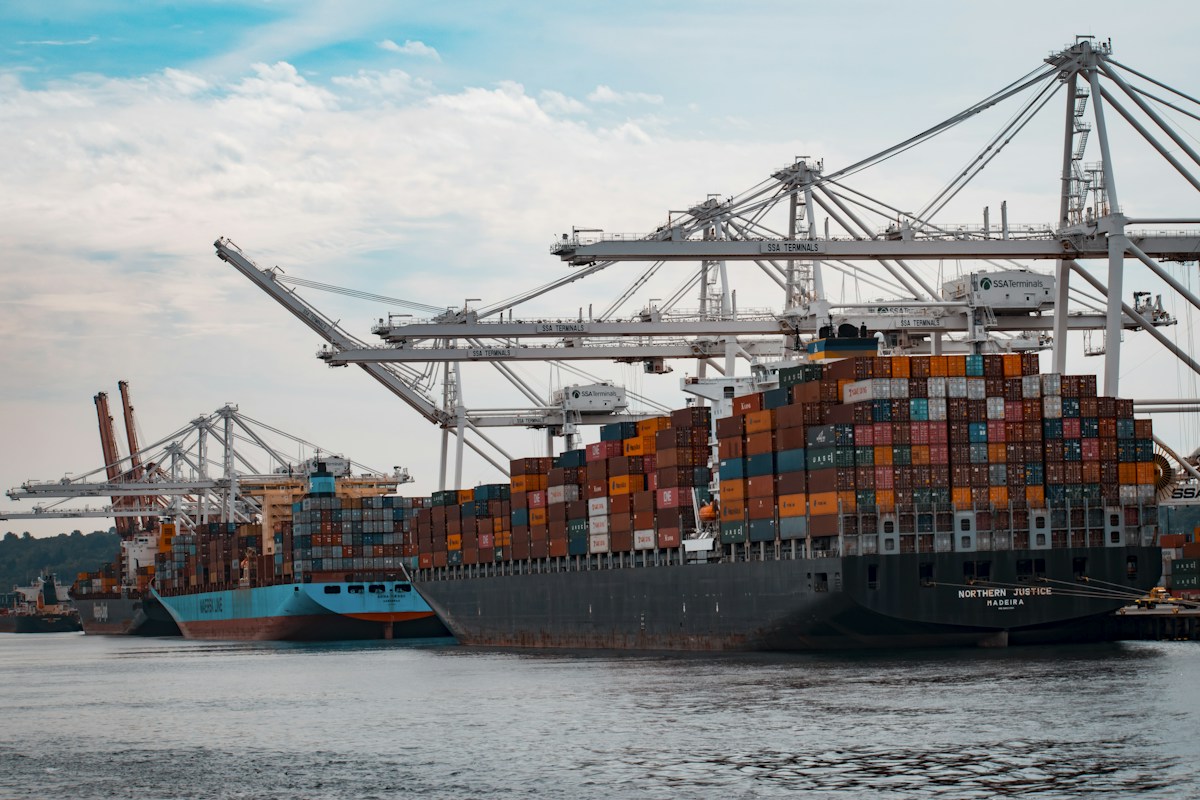
Infrastructure investment and international financing play a critical role in developing economies. Image: Unsplash
International Finance
Developing economies are facing a difficult financial challenge. Access to international capital markets has improved in several countries, and private investors have returned to markets that were previously difficult to access. Yet borrowing remains expensive, and the cost of repaying existing debt continues to put pressure on public finances.
In a report published on 5 November 2026, the World Bank announced that the external debt of developing countries had reached a record $9.4 trillion in 2025, an increase of 5.5% compared with the previous year.
The figures reveal a complicated situation. International financing is becoming more accessible, but the cost of obtaining it remains a serious obstacle to investment, infrastructure development and poverty reduction.
External debt reaches a new record
According to the World Bank’s International Debt Report 2026, developing countries’ external debt increased by 5.5% to $9.4 trillion in 2025. The Bank described this as the fastest annual increase since 2021 and approximately four times the average pace recorded between 2022 and 2024.
The increase was driven partly by renewed borrowing from private creditors. Public-sector bond issuance rose by nearly 35% to $251 billion, the highest level in five years, as several countries regained access to international bond markets.
Debt growth was particularly rapid among countries eligible for concessional financing through the World Bank’s International Development Association (IDA). Their external debt increased by 8.1% to approximately $1.3 trillion in 2025.
It is important to understand that external debt is not identical to government debt. The broader external debt statistics cover borrowing by different public and private borrowers, depending on the reporting category. The total therefore should not be interpreted as a $9.4 trillion bill owed exclusively by governments.
The price of borrowing remains a major problem
Although international financing has become more available, borrowing costs remain high for many of the poorest economies.
The World Bank reported that IDA-eligible countries paid an average interest rate of 8.2% on new private-creditor commitments in 2025, the highest level since 1989. The average rate on new bonds issued by these countries reached 9.4%.
By comparison, countries eligible for lending from the World Bank’s International Bank for Reconstruction and Development paid an average of 5.5% on new bonds.
This difference matters because governments borrowing at higher rates must allocate more future revenue to interest payments. The additional cost can make it more difficult to finance roads, electricity networks, schools, hospitals and other public infrastructure.
For businesses, expensive sovereign borrowing can also influence the wider investment environment. Higher government financing costs may place pressure on domestic interest rates, public investment and the availability of credit in local financial markets.
Debt repayments are absorbing large amounts of money
The amount of money being used to repay existing debt is another major concern.
Low- and middle-income countries paid approximately $1.4 trillion in principal and interest during 2025, an increase of 1.9% compared with the previous year. This represented a fifth consecutive annual increase in debt-service payments.
Payments to bondholders alone reached $363 billion. Some governments also issued new bonds to buy back or refinance maturing debt. Such operations can help spread repayments over a longer period, but they do not necessarily reduce the overall amount owed. They may also replace older borrowing with new debt at higher interest rates.
Between 2022 and 2025, developing countries paid $436 billion more in debt service than they received in new financing.
This difference illustrates the development challenge. When more money leaves an economy to service existing obligations than arrives through new financing, governments may have less room to support productive investment.
Why the value of debt can rise even when countries repay it
Currency movements also affected the reported increase in external debt.
The World Bank estimates that more than one-quarter of the $303 billion increase in public and publicly guaranteed debt in 2025 reflected the weaker US dollar. When debt denominated in other currencies is converted into US dollars for international reporting, exchange-rate movements can change its reported value.
This distinction is important. A higher dollar value does not necessarily mean that a government borrowed an equivalent additional amount during the year. Some of the increase can result from currency translation rather than new borrowing.
Nevertheless, exchange-rate movements can have real consequences. Countries that earn export revenue in local currency but owe substantial amounts in foreign currency may face greater repayment pressure if their own currency depreciates.
International markets are reopening, but the recovery is uneven
There are also some positive developments in the World Bank’s report. Long-term debt flows to developing countries shifted from a net outflow of $118 billion in 2024 to a net inflow of $45 billion in 2025.
This suggests that access to international finance improved during the year. More than ten countries had already exceeded their full-year 2025 international bond issuance by mid-August 2026, according to the Bank’s report.
However, a return to capital markets does not automatically mean that a country’s debt position has become sustainable. Governments must still consider the cost of borrowing, the maturity of their obligations, their foreign-currency exposure and the economic returns generated by the money they raise.
What can governments do?
Managing debt requires more than reducing borrowing. Developing economies need financing for infrastructure, education, healthcare, energy security and private-sector development. The central challenge is to ensure that new borrowing supports economic activity capable of generating future income.
Several priorities deserve attention:
Improve debt transparency: Governments need reliable information about public borrowing, guarantees, repayment schedules and foreign-currency exposure.
Strengthen public investment: Borrowed money should support projects with clear economic and social benefits, rather than inefficient spending.
Extend repayment flexibility: Governments should manage debt maturities carefully to avoid concentrating large repayments in a short period.
Develop domestic capital markets: A broader local financing base can reduce excessive dependence on foreign-currency borrowing.
Improve export competitiveness: Stronger export earnings can help countries generate foreign exchange needed to service external obligations.
Use concessional financing where appropriate: Lower-cost, longer-term financing can be important for essential development projects that cannot support expensive commercial borrowing.
For countries already facing unsustainable debt, restructuring may also need to form part of a broader recovery plan. The objective should be to restore financial stability while preserving the ability to invest in essential public services and future growth.
Debt sustainability will shape the next stage of development
The record external debt figure is a warning, but it does not mean that every developing economy is facing the same crisis. Countries differ in their export capacity, foreign-exchange reserves, debt structures, growth prospects and access to concessional finance.
The central issue is whether borrowing can generate sufficient long-term economic value to justify its cost. Debt used to finance productive infrastructure may strengthen an economy’s future capacity. Debt that primarily finances short-term consumption or repeatedly refinances expensive obligations can leave future governments with fewer choices.
For international investors, lenders and policymakers, the quality of a country’s economic institutions and debt management is becoming just as important as its access to capital markets.
Developing economies need international financing to expand their productive capacity. But access to money alone is not enough. Sustainable development requires financing that countries can afford, investments that generate lasting returns and debt policies that protect the economic opportunities of future generations.
Sources and further reading
World Bank — Developing Countries’ External Debt Surges to Record $9.4 Trillion (5 November 2026)
World Bank — International Debt Report 2026
World Bank — International Debt Statistics
Looking Times — Informed Today. A More Connected Tomorrow.


More Stories
How Artificial Intelligence Is Reshaping Global Trade and Creating New Winners
Artificial intelligence is transforming semiconductor manufacturing, international investment and global trade. Image: Unsplash International Business and Technology Artificial intelligence is becoming...
The Global Economy Is Resilient, but the Benefits Are Becoming Increasingly Uneven
Global trade and international supply chains remain important drivers of economic activity. Image: Unsplash Economic Analysis The global economy has...
Upcoming Horror Movies in 2027: Release Dates and Cast
Fans of horror movies have plenty to look forward to in 2027. The year brings the return of major franchises...
Global Trade Could Accelerate the Green Economy, but Countries Need Stronger Cooperation
Solar energy is becoming an increasingly important part of global trade, investment and the transition towards a low-carbon economy. Image: TheUltimateGrass...
AI’s Growing Energy Appetite Is Creating a New Global Infrastructure Challenge
Data centres are becoming essential infrastructure for artificial intelligence, cloud computing and the global digital economy. Photo: Carl Lender, via...
How AI Can Help Businesses Reduce Website Development Costs
In 2023, McKinsey set up a lab and timed more than 40 of its own software developers on routine tasks,...