
The Global Economy Is Resilient, but the Benefits Are Becoming Increasingly Uneven

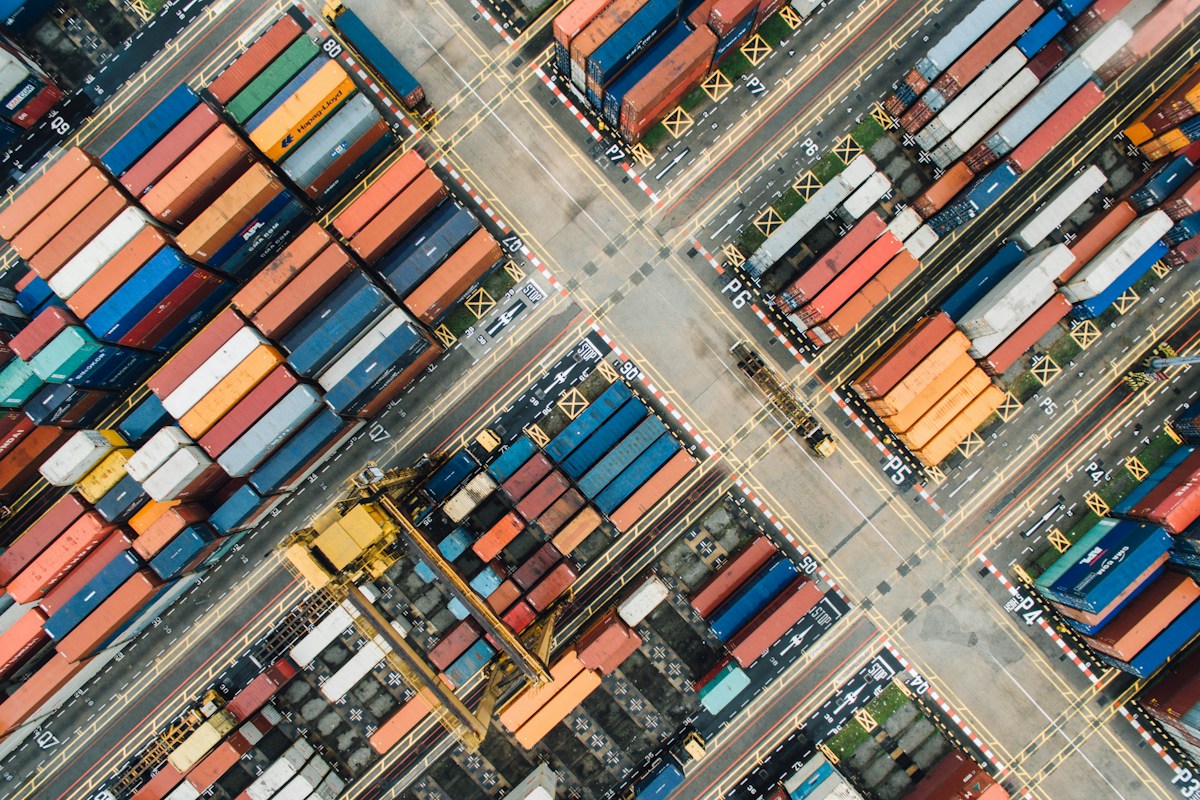
Global trade and international supply chains remain important drivers of economic activity.
Image: Unsplash
Economic Analysis
The global economy has demonstrated an unexpected ability to withstand a series of major disruptions. Geopolitical tensions, energy-market instability, trade uncertainty and changing financial conditions have not prevented economic activity from expanding. However, the latest outlook from the International Monetary Fund (IMF) reveals a more complicated picture: global growth is continuing, but its benefits are increasingly concentrated in particular countries, industries and businesses.
In its October 2026 World Economic Outlook, the IMF projects global economic growth of 3.1% in 2026, followed by an improvement to 3.4% in 2027. Global headline inflation is expected to reach 4.7% in 2026 before easing to 4.1% in 2027.
These forecasts suggest that the world economy is avoiding a broad collapse. Nevertheless, continued expansion should not be confused with economic security. Many countries and households remain exposed to high living costs, expensive financing and geopolitical shocks.
Why has the global economy remained resilient?
Several factors have helped businesses and governments absorb recent disruptions. Companies have adapted their supply chains, redirected exports towards alternative markets and diversified their sources of materials. These adjustments have reduced the immediate impact of trade restrictions and interruptions to international transport.
Energy markets have also demonstrated some flexibility. Changes in production outside affected regions, the use of inventories and adjustments in consumption have helped limit the economic damage from disruptions to energy supplies.
Another important source of economic momentum has been investment in artificial intelligence. Spending on computing infrastructure, semiconductors, data centres and related technologies has supported business investment and international trade. However, the benefits are not distributed equally across the world.
Countries with advanced technology industries, reliable electricity supplies, skilled workers and access to capital are better positioned to benefit from this investment cycle. Economies that depend heavily on imported energy or have limited participation in technology supply chains face a more difficult environment.
The growing divide between countries and industries
The current expansion is not a uniform global recovery. Some economies are benefiting from investment in advanced technology, while others are struggling with higher import costs and limited access to international finance.
The IMF’s analysis highlights the importance of energy costs and technological readiness in determining medium-term economic performance. Countries that can attract investment in digital infrastructure and develop the skills needed to use new technologies may improve their productivity. Those without the necessary infrastructure risk falling further behind.
This divide also exists within national economies. Large corporations with strong balance sheets can often absorb higher borrowing costs, invest in automation and reorganise production. Smaller businesses may have fewer financial resources and less bargaining power when energy, transport and financing costs increase.
The IMF projects average global output growth of approximately 3.2% a year during 2028–2031, below the 3.7% average recorded during 2000–2019. This suggests that even if the immediate economic outlook improves, the longer-term growth challenge will remain significant.
Inflation is not experienced equally
One of the most important economic issues is the difference between headline inflation and the actual cost of living experienced by households.
Food, transport and energy are essential expenses. Lower-income households generally spend a larger share of their budgets on these necessities than wealthier households. When the prices of these products increase sharply, poorer families have less flexibility to reduce other spending or absorb the additional costs.
An October 2026 IMF study examined cost-of-living crises in 85 advanced and emerging market and developing economies between 2005 and 2025. It found that 75 of the economies experienced at least one such episode during the period, while 46% experienced at least two.
The study also found that lower-income households experienced higher cumulative inflation than wealthier households during recent cost-of-living crises. This helps explain why a country can report improving economic growth while many people continue to feel financially insecure.
Why governments need more targeted support
Governments often respond to rising living costs by reducing consumption taxes, subsidising energy or introducing price controls. These policies can provide immediate relief, but they can also become expensive when applied to entire populations.
The IMF’s research finds that achieving comparable protection for vulnerable households through price-suppressing measures can require between three and 22 times the fiscal resources needed for targeted transfers, depending on the country and the nature of the shock.
Targeted support can direct public resources towards households that need assistance most while allowing market prices to reflect changes in supply and demand. This is particularly important for governments already facing high public debt and limited budget flexibility.
Effective social protection systems, accurate household information and efficient payment infrastructure can help governments deliver assistance more quickly during future crises.
What businesses and investors should watch
For international businesses, the main lesson is that economic resilience increasingly depends on flexibility. Companies need to understand their exposure to energy prices, transport routes, interest rates and suppliers located in politically sensitive markets.
Investors should also distinguish between temporary growth driven by a concentrated investment boom and broader improvements in productivity. Artificial intelligence may create significant long-term economic opportunities, but the financial returns will depend on how effectively businesses integrate the technology into their operations.
Governments face a similar challenge. They must preserve economic stability while investing in education, infrastructure, technology and energy security. Public spending that improves productivity can strengthen long-term growth, but poorly targeted spending may increase fiscal pressure without generating lasting benefits.
A resilient economy still needs stronger foundations
The October 2026 IMF outlook shows that the global economy remains capable of adapting to major shocks. However, resilience alone is not enough. Economic growth must become more widely shared, and countries need stronger public finances, more reliable supply chains and greater access to productive investment.
The next stage of global economic development will depend not only on how quickly the largest economies expand, but also on whether smaller and developing economies can participate in new sources of growth. Without broader access to technology, infrastructure and affordable finance, the global economy may continue growing while economic divisions become more difficult to overcome.
Sources and further reading
IMF — World Economic Outlook, October 2026: Resilience Under Strain, Urgent Choices
IMF — Chapter 1: Global Prospects and Policies
IMF — Chapter 2: Navigating a Shock-Prone World: Lessons from Cost-of-Living Crises
Looking Times — Informed Today. A More Connected Tomorrow.

More Stories
Upcoming Horror Movies in 2027: Release Dates and Cast
Fans of horror movies have plenty to look forward to in 2027. The year brings the return of major franchises...
Global Trade Could Accelerate the Green Economy, but Countries Need Stronger Cooperation
Solar energy is becoming an increasingly important part of global trade, investment and the transition towards a low-carbon economy. Image: TheUltimateGrass...
AI’s Growing Energy Appetite Is Creating a New Global Infrastructure Challenge
Data centres are becoming essential infrastructure for artificial intelligence, cloud computing and the global digital economy. Photo: Carl Lender, via...
How AI Can Help Businesses Reduce Website Development Costs
In 2023, McKinsey set up a lab and timed more than 40 of its own software developers on routine tasks,...
iPhone Overheating? Common Causes and Fixes
Apple designs its phones to work in different environments, including high air pressure, humidity, and hot and cold weather. When...
Global Trade’s New Geography: Developing Economies Face a Choice
By Looking Times | 14 November 2026 Photo: Igor Ovsyannykov, “Shipping containers in a port” (Port of Barcelona), via Wikimedia...