
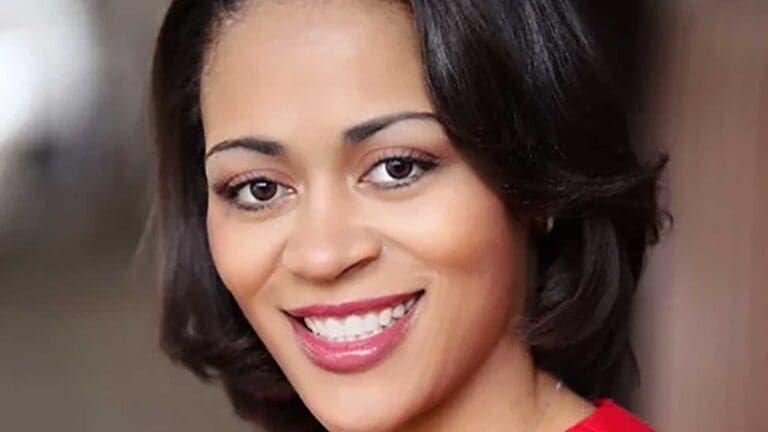
Dr. Brandice Allen: The Pediatric Dentist Building Care Around the Whole Family

Raised in Atlanta and educated at North Atlanta High School, Dr. Allen went on to study at Howard University and Saint Louis University before completing dental school at the University of Tennessee and a paediatric dental residency there as well.
That academic path, spanning three states and several disciplines, gave her a broad view of how oral health connects to a child’s overall development. It also shaped her belief that a dental practice should be a place families trust, not one they dread. Over the course of her career, Dr. Allen has built a reputation among colleagues and patients alike for patience with anxious children and clear, practical guidance for parents navigating their first dental visits.
Beyond the practice, Dr. Allen has taken on the role of Dental Director for Hope Mission 360, extending her clinical work into volunteer service. Her interests outside the office, travelling, biking, live music and theatre, and time with family, round out a picture of someone who treats work and life as connected rather than separate pursuits.
As a business leader in paediatric dentistry, Dr. Allen represents a model increasingly common among independent healthcare providers: clinically rigorous, community-oriented, and focused on long-term relationships over one-off transactions. Her story offers a useful lens on how small, specialised practices can build sustainable, trust-based growth in a sector often dominated by larger corporate players.
Interview with Dr. Brandice Allen
Let’s start from the beginning. What first drew you toward dentistry, and paediatric dentistry specifically?
I liked the idea of a job that combined precision with people. Dentistry gave me both. Once I started working with children during my training, I noticed how different that population is. Kids need a different kind of communication, a different kind of patience. I found I was good at that, and I liked it more than general practice.
Your education took you through several universities and states. How did that path shape you as a practitioner?
Every stop added something. Howard and Saint Louis University gave me a strong academic foundation. Tennessee is where I specialised, first in dental school and then in the paediatric residency. Moving around also taught me to adapt quickly to new teams and new expectations, which turns out to be useful in this field. No two clinics run exactly the same way.
What does a typical day look like for you now?
It’s a mix of clinical work and administrative decisions. I see patients through most of the day, but I’m also thinking about scheduling, staffing, and how the practice is running as a business. Paediatric dentistry has a rhythm to it. Mornings tend to be calmer, afternoons get busier once school lets out.
How has running a practice changed the way you think about the business side of dentistry?
Clinically, I was trained to focus on the patient in front of me. Running a practice means thinking about all of them at once, and about the people who work with me too. I had to learn budgeting, hiring, and how to read a balance sheet, none of which dental school covers in much depth. That part of the job took longer to feel natural than the clinical side did.
You’re involved with Hope Mission 360 as Dental Director. How does that work fit alongside your practice?
It’s a different kind of dentistry. In a mission setting, you’re often working with limited supplies and seeing patients who may not have regular access to care. That changes your priorities. You focus on what will make the biggest difference given what you have, rather than what would be ideal in a fully equipped clinic. It’s kept me flexible as a clinician.
Has that volunteer work changed how you run your regular practice?
It has made me more conscious of access. Not every family walks in with the same resources or the same history with dentists. I try to build that awareness into how we talk to parents and how we schedule care, so that the practice doesn’t assume everyone starts from the same place.
What do you see as the biggest shift in paediatric dentistry since you started?
There’s more attention now on prevention and on the connection between oral health and general health in children. Parents are asking more questions, which I welcome. It means visits are more collaborative than they used to be.
Outside of work, how do you spend your time?
I travel when I can, and I bike regularly. I go to live music and theatre often. Family time is a priority too. None of that is separate from the work, really. It keeps me steady enough to handle the parts of the job that are demanding.
What would you tell someone early in their career who’s considering paediatric dentistry?
Be sure you actually enjoy working with children, not just the idea of it. The clinical skills can be taught. The patience and the communication style are harder to fake, and kids can tell the difference.

More Stories
Gavin Southwell on Vetting Ventures, Hiring for Culture and Choosing Advisory Roles Wisely
For founders deciding where to commit people and resources, the harder task is establishing what survives closer examination. Gavin Southwell...
Bridging Europe and Asia: How UK Fintech Sends Is Reshaping Cross-Border Payments
They require a comprehensive, reliable financial ecosystem. This is precisely the direction in which the UK’s fintech sector is evolving,...
Jodie Kluver: From the Nonprofit Sector to Founding a Publishing House
She has been a core faculty member in the Department of Political Science at Bridgewater State University since 2006, where...
Daniel Cornell on the Other Side of the Acquisition Table
His career has included leading major banking practices, advising businesses on mergers and acquisitions, and working with private equity-backed companies...
Andrew Dutil: Building a Career in Claims Consulting and Contract Administration
His background runs through civil engineering and the U.S. Army Corps of Engineers, and his career shows how technical training...
Travis Bright on Building Smarter Homes Through Better Planning
Bright grew up in Greenville and developed an interest in hands-on work from an early age. After high school, he...