
Top DevOps Testing Tools for Faster Software Delivery in 2026

Most teams don’t have a testing problem. They have a speed problem. DevOps Testing Tools promise faster feedback loops, but flaky tests, slow pipelines, and maintenance overhead eat up that time before it’s ever saved. Keeping test coverage solid while codebases grow overnight is genuinely hard, and integrating tests into CI/CD without stalling deployments is harder still. After reviewing dozens of platforms across real enterprise use cases, this guide breaks down five tools worth serious consideration in 2026.
How the picks were chosen
Every option here was evaluated using publicly available information pulled from official websites, user reviews, case studies, and feature documentation across major review platforms and software directories. Only platforms with a demonstrated track record in QA testing made the cut.
→ See the full research breakdown
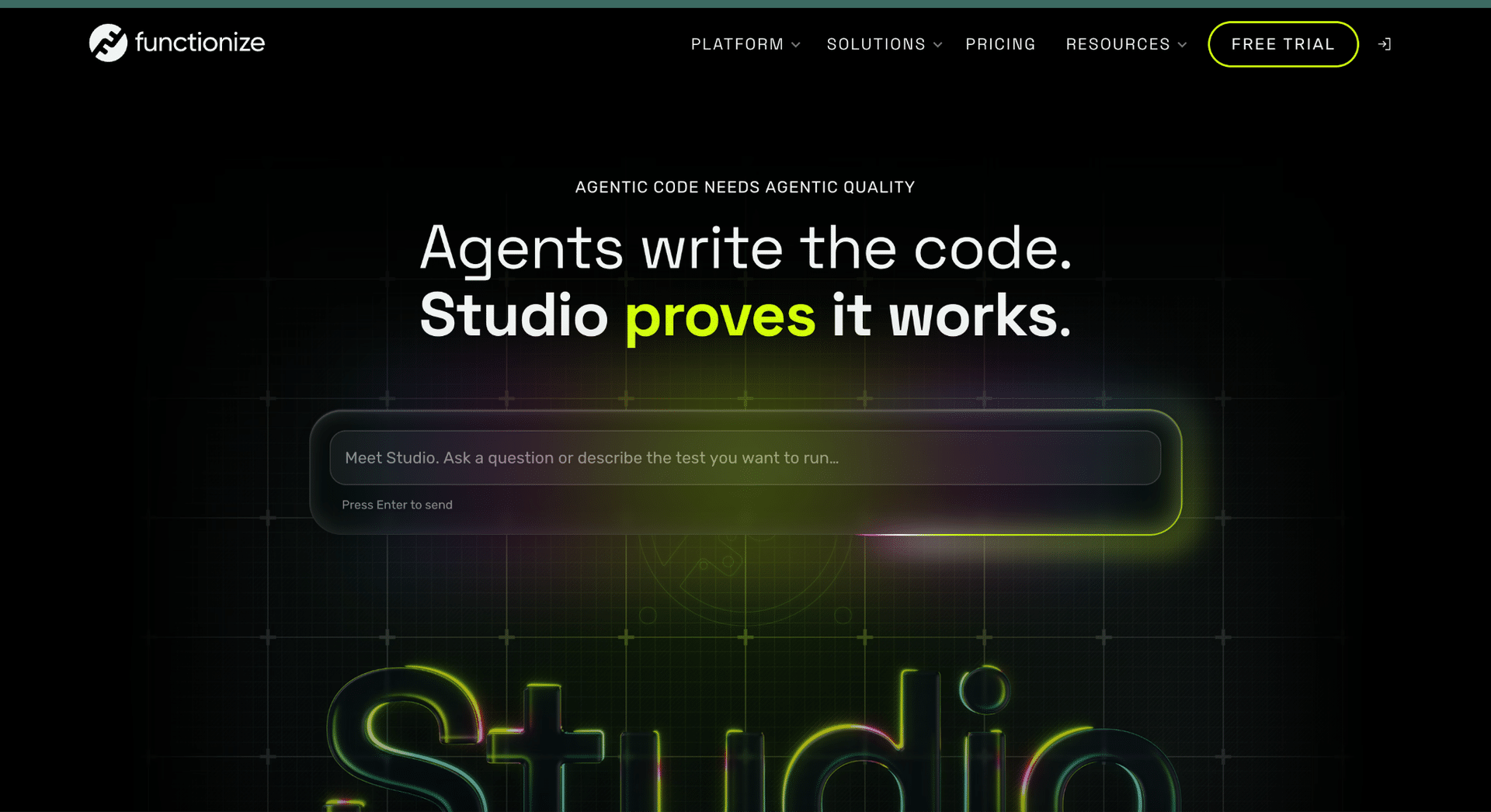
Functionize – Best for enterprise QA testing and autonomous testing automation
Postman – Best for API testing and development
Tricentis Tosca – Best for enterprise software testing and continuous testing automation
Cypress – Best for front-end automated testing and end-to-end testing
Sauce Labs – Best for enterprise QA testing and continuous testing automation
The Stakes Behind Choosing DevOps Testing Tools
The wrong tool doesn’t just slow your team down. It creates a ripple effect through your entire delivery pipeline.
Getting tests into fast-moving CI/CD pipelines without adding friction is genuinely difficult. When tests take too long or fail unpredictably, engineers start skipping them, and that’s when defect escape rate climbs.
Maintaining test coverage as codebases scale is another real pressure point. A tool that works fine at 50 test cases often buckles at 5,000.
Well-chosen DevOps testing tools directly shape your mean time to detect defects, your test coverage across unit, integration, and end-to-end layers, and your pipeline failure rate. Getting this decision right matters. It’s a delivery strategy.
5 DevOps Testing Tools Compared
Note: All data in this table is sourced from review platforms and the official websites of the listed companies.
Company NameYears OperatingTeam SizeHeadquartered InFunctionizeEst. 2014157Walnut Creek, CaliforniaPostmanEst. 20143,300San FranciscoTricentis ToscaEst. 2007400+Austin, TexasCypressEst. 201594Atlanta, GeorgiaSauce LabsEst. 2008322San Francisco, California
Functionize – Best for Enterprise QA Testing and Autonomous Testing Automation
How Does Functionize Operate?
Functionize is an AI-native testing platform built around self-healing agents that adapt in real time as applications change. Their platform ships with 99.97% element recognition accuracy and an 80% reduction in flaky tests, which for enterprise teams is a genuinely meaningful number. Teams looking for testing tools for DevOps that don’t require deep scripting knowledge will find the platform particularly useful, since non-technical users can create and deploy tests up to 90% faster than traditional approaches allow.
Why Pick Functionize for DevOps Testing Tools?
Functionize tackles the dual problem of test maintenance overhead and high flaky test rates by using machine learning to keep tests accurate even when the underlying application shifts. That kind of self-healing capability is rare at enterprise scale, and it’s what separates genuinely autonomous testing from simple record-and-playback automation.
What the Reviews Show:
Enterprise clients are seeing real, measurable results rather than incremental improvements. McAfee cut testing time from hours to minutes, and GE Healthcare reduced a 40-hour testing cycle down to four hours (a 90% labor saving, which is hard to argue with). Functionize was also named a Strong Performer in the Forrester Q4 2025 Wave Report on Autonomous Testing Platforms, which adds credibility beyond customer testimonials alone.
Postman – Best for API Testing and Development
How Does Postman Operate?
Postman built its reputation as the go-to tool for API design, development, and testing, and it’s grown well beyond a simple testing utility. The platform now covers the full API lifecycle, including automated testing, mock server creation, and documentation. With 500K customers and 98% of the Fortune 500 using it in some capacity, Postman’s reach across API testing teams is hard to overstate. Honestly, if your team tests APIs at any meaningful volume, Postman is likely already in your stack somewhere.
Why Pick Postman for DevOps Testing Tools?
Postman fills one of the more underappreciated gaps in DevOps pipelines: structured, repeatable API testing that teams across disciplines can actually run. Its automation capabilities combined with collaborative tooling mean QA engineers and developers can share test collections without constant handoffs.
What the Reviews Show:
Users consistently point to Postman’s ease of use and depth as a package deal that’s hard to find elsewhere. Teams appreciate how quickly new members can get up to speed, and the mock server capability gets mentioned often as a time-saver during parallel development cycles.
Tricentis Tosca – Best for Enterprise Software Testing and Continuous Testing Automation
How Does Tricentis Tosca Operate?
Tricentis Tosca takes a model-based, codeless approach to test automation that separates test logic from technical detail, meaning both technical and non-technical team members can build tests without getting into the weeds. The platform supports 160+ technologies and uses patented Vision AI for self-healing capabilities. Founded in Vienna in 2007 and now operating out of Austin, Tricentis has built a client base of 2,500+ organizations including Fortune 500 names like McKesson, Accenture, and Allianz. Gartner, Forrester, and IDC all recognize them as a market leader.
Why Pick Tricentis Tosca for DevOps Testing Tools?
Tricentis Tosca makes sense when your enterprise environment is genuinely complex: think legacy systems, ERP platforms, and dozens of integrated technologies running alongside modern cloud-native services. The risk-based testing approach helps teams prioritize where test coverage matters most, which directly reduces defect escape rate in production.
What the Reviews Show:
Tricentis earns strong marks for stability and breadth. The 2025 TrustRadius Top Rated awards for both Tosca and NeoLoad reflect consistent user satisfaction, and the platform’s AI Awards finalist status suggests the market sees real work here beyond just feature depth.
Cypress – Best for Front-End Automated Testing and End-to-End Testing
How Does Cypress Operate?
Cypress sits in a useful space between open-source accessibility and enterprise-grade cloud services. The Cypress App runs tests directly in the browser, which means developers get real-time debugging and visibility that most testing tools hide behind layers of abstraction. The Cypress Cloud extends that to analytics and test history at scale. With 3,700+ customers across 78 countries and over 5 billion tests recorded, the platform has earned strong trust in the front-end testing space. Test generation and flake resistance capabilities are newer additions that address real pain points.
Why Pick Cypress for DevOps Testing Tools?
Cypress tackles the developer experience gap that plagues many testing tools: tests are written in JavaScript alongside application code, which means developers actually write and maintain them rather than pushing work to a separate QA silo. That shift meaningfully improves test coverage consistency across the development cycle.
What the Reviews Show:
Teams that use Cypress regularly highlight the in-browser debugging experience as something that genuinely changes how they approach test failures. The open-source starting point (no paywall to start) also shows up as a reason teams adopt it before evaluating the cloud tier.
Sauce Labs – Best for Enterprise QA Testing and Continuous Testing Automation
How Does Sauce Labs Operate?
Sauce Labs was founded by Jason Huggins, the creator of Selenium, which tells you something about the depth of automated testing knowledge baked into the platform. The company runs a testing infrastructure covering web and mobile testing across 9,000+ real devices, with over 8 billion tests executed across its platform. Services span test authoring, visual testing, error reporting, and app distribution, making it one of the more complete coverage pictures available. Major enterprise clients include Walmart, Bank of America, and Indeed (think enterprise pricing, but with enterprise-grade infrastructure to match).
Why Pick Sauce Labs for DevOps Testing Tools?
Sauce Labs is built for teams that need real-device coverage at scale without managing their own device lab, which is expensive and time-consuming to do well. The unified platform combining web, mobile, and error reporting cuts down on the number of separate tools teams need to maintain across their QA stack.
What the Reviews Show:
Sauce Labs earned High Performer recognition in Bug Tracking in G2’s Summer 2025 Reports, and its Continuous Testing Cloud won the 2025 CODiE Award for Best Debugging and Testing Tool. The real-device library and cross-browser coverage are the features users talk about most. Year-over-year growth of 34% to $92.1M ARR signals the market is rewarding their approach.
Selection Framework: How Each Pick Was Evaluated
The research behind this list was built ground-up from publicly available sources, not from vendor-submitted materials or paid placements. Here’s how the evaluation process actually worked.
The Data Collection Phase
The starting point was a broad sweep of the DevOps testing tools space using software directories, community review platforms, technical publications, and vendor documentation. A longlist was assembled from sources including category pages on major review sites, case study libraries, and forum discussions from QA practitioners who work with these tools daily. The goal at this stage was breadth, catching tools that might be flying under the radar alongside the well-known platforms.
Narrowing Down the Candidate Pool
From that initial longlist, options with limited verification were removed first. Any platform without publicly accessible user reviews, meaningful case study documentation, or traceable customer evidence was set aside. Review patterns were analyzed for consistency across time periods, since a burst of recent reviews without historical depth can signal artificial inflation. Only platforms with sustained, multi-year evidence of actual use in QA and DevOps environments advanced to deeper evaluation.
Claims Subjected to Rigorous Testing
Every platform claim visible on official websites was cross-referenced against what users actually reported in reviews and case studies. Where vendor marketing described specific gains or test accuracy numbers, those figures were checked against customer-reported results to see whether independent evidence supported them. Platforms where vendor marketing and actual customer results diverged significantly were flagged or removed.
The Authority Layer
Recognition from independent industry analysts, publication mentions, and award citations were factored in as authority signals. Appearances in Gartner, Forrester, or IDC reports carry weight because those evaluations require independent verification of customer outcomes. Award wins from respected bodies like TrustRadius and CODiE were noted, not as the deciding factor, but as corroborating evidence that a platform’s reputation holds up under scrutiny beyond its own marketing.
DevOps Testing Tools Case Files
Each shortlisted platform was reviewed for the presence of dedicated service documentation covering DevOps-specific testing scenarios. Platforms with clear, detailed pages covering CI/CD pipeline integration, test automation depth, and environment management signals were rated higher than those with generic feature overviews. Verified case studies showing real outcomes tied to test execution time, defect detection, or labor savings carried the most weight in final placement decisions.
Finding the Right DevOps Testing Tools for Your Needs
No single tool is the right fit for every team, and the wrong choice usually shows up six months after deployment when maintenance costs or coverage gaps become visible. Here’s what to actually evaluate before committing.
Industry/Domain Experience: Look for tools with documented use cases in your specific stack and application type. A platform with strong web testing coverage might not serve a mobile-heavy product team as well.
Features and Service Options: Match features to your actual workflow needs. Self-healing and AI test generation matter more for teams managing large, shifting codebases. Raw browser and device coverage matters more for teams running cross-platform regression.
Pricing Structure: Most enterprise tools in this space don’t publish pricing publicly (not cheap, but worth understanding before a sales call). Factor in not just license costs but also maintenance burden and training time.
Results Measurement: Ask vendors how they measure outcomes. Flaky test rate, MTTD, and defect escape rate to production are the numbers that actually tell you whether a tool is working.
Industry Knowledge and Compliance: For teams operating in regulated environments, SOC 2 compliance and ISO 25010 alignment matter. Confirm that any tool under consideration meets the standards relevant to your deployment environment.
Final Words
Picking DevOps testing tools isn’t a one-time decision. It shapes how fast your team ships and how confident they are in what they ship. The tools in this list cover a real range: from autonomous platforms like Functionize to API-focused tools like Postman and real-device infrastructure like Sauce Labs. Your stack, your team’s technical depth, and your coverage gaps should drive the decision. As assisted test authoring matures, the gap between manual testing overhead and automated test confidence will only keep narrowing.
The post Top DevOps Testing Tools for Faster Software Delivery in 2026 appeared first on The Next Hint.


More Stories
Original Games and Familiar Brands: Two Creative Routes in Online Casino Entertainment
A familiar film title can make a game recognisable before anyone opens it. An original character has a different task,...
Weather System Off North Carolina Could Become Nor’Easter or Tropical Storm: What to Know
By T.J. Muscaro The National Weather Service and its National Hurricane Center are tracking a storm system sitting off the...
Wall Street Review: Nasdaq Sinks 4.48 Percent as Inflation Fears Hit AI Stocks
By Panos Mourdoukoutas The Nasdaq Composite fell 4.48 percent for the week as hotter-than-expected inflation data sent Treasury yields higher...
Republican Attorney General Candidate New York, Saritha Komatireddy, Lays Out Her Vision
By Juliette Fairley Fresh off a fiery political debate last week, Republican challenger Saritha Komatireddy on Oct. 15 laid out...
Chaos and Violence Grip France as Far-Left Mobs Storm City Halls, Torch Streets
By Etienne Fauchaire PARIS—Stones and fireworks were already flying across Place de la République before Saturday’s demonstration against rising costs...
High Gas Prices Could Be the Key Issue That Swings the Senate
By Jeremy Lott Enough voters are fixated on the price of fuel that it could be the deciding issue in...