
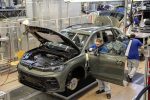
Volkswagen Approves Massive Restructuring With 50,000 More Job Cuts and Four German Plants Losing Auto Production

Volkswagen is moving ahead with one of the most dramatic restructuring efforts in its modern history, approving plans that could eliminate roughly 50,000 additional jobs while sharply reducing the size of its vehicle lineup. Combined with previously announced workforce reductions, the changes could ultimately affect around 100,000 positions across the company. The plan, backed by Volkswagen’s supervisory board, is aimed at making the German automaker leaner and more competitive as it deals with tougher Chinese rivals, pressure on profits and an increasingly complicated global trade environment.
The restructuring reaches far beyond payroll. Volkswagen plans to reduce its model portfolio by roughly 50 percent, a move that should help cut development costs and simplify production across its sprawling collection of brands. Auto production is also expected to be phased out at plants in Emden, Zwickau, Hannover and Neckarsulm between 2031 and 2034, although Volkswagen says it will investigate alternative uses for those locations. The workforce reductions are expected to extend into management as well, illustrating just how broadly the company intends to reshape its operations.
For Volkswagen, the urgency is becoming difficult to ignore. The company employs roughly 650,000 people globally, but its traditional scale has become increasingly expensive to maintain as competition intensifies. Chinese automakers have put tremendous pressure on established European brands with aggressively priced EVs, hybrids and increasingly sophisticated software, while trade tensions and tariffs have created additional headaches in markets such as the United States. Volkswagen also reported a 30 percent decline in after-tax earnings during the first half of the year as weaker performance in China weighed on its business.
There is an uncomfortable reality behind Volkswagen’s latest decision. Automakers that spent decades building huge global manufacturing networks are now being forced to decide which factories, vehicle platforms and models still make financial sense in a rapidly changing industry. Cutting 50,000 additional positions and ending automobile production at four German facilities would have been nearly unthinkable for Volkswagen not long ago. Now the company appears convinced that shrinking its footprint is necessary to protect its long-term future. What comes next could reshape not only Volkswagen’s lineup, but also the broader German automotive industry that has long depended on the company’s enormous manufacturing presence.

More Stories
When every kilometre counts, Suzuki puts fuel economy to the test
With fuel prices rising, Suzuki put its fuel-efficient range to the test. Discover how five Suzuki models performed on Pretoria’s...
Brilliant Design Features That Make the Alpine A310 VISION So Exciting
The A310 VISION also demonstrates the design opportunities offered by Alpine’s APP platform. Developed to support future sports cars, the...
Opel STX Concept Brings Active Aerodynamics to the Electric Estate Car
Opel is preparing a new concept car for the 2026 Paris Motor Show. Called the STX, it previews a future...
A Modern Citroën 2CV Sounds Great. Until You Think About the Price
Citroën has revived the 2CV name at the Paris Motor Show, displaying two concepts inspired by its most recognisable small...
Pickup Truck vs SUV Insurance Costs and What Drivers Should Know
Insurance belongs in the buying budget when the shortlist includes a pickup and an SUV. Either vehicle may cost less...
Porsche Mission S Could Get a Manual Transmission and That Makes This Mid-Engine Supercar Even More Exciting
Just when we thought Porsche’s stunning new Mission S concept couldn’t get any more exciting, the German automaker has revealed...