
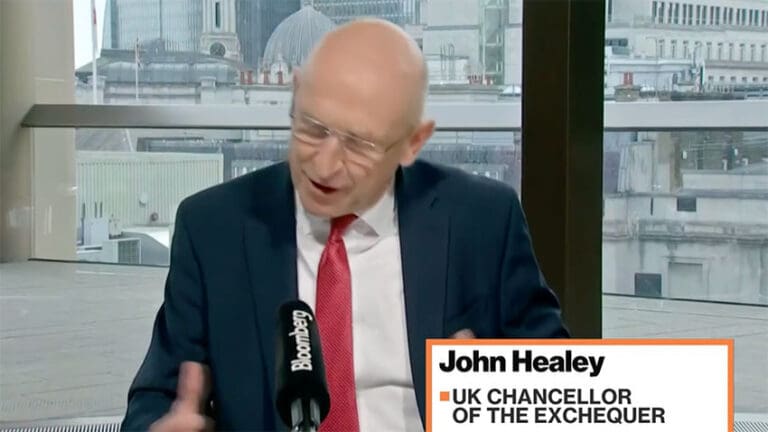
Cost of business worries me as much as cost of living, says Healey

Britain’s new Chancellor has told the country’s business owners that their pain is now firmly on his desk. In his first major broadcast interview since taking the job, John Healey used an appearance on Bloomberg TV to promise that he is “just as concerned about the cost of business as I am about the cost of living”.
It is a deliberate reframing. For two years, ministers have built their message around household budgets. Healey wants entrepreneurs to know the squeeze on their firms counts too.
“To British businesses, to British innovators, to British investors: I will back you as your Chancellor,” he said. “I’ll back you in financial services, in technology, in retail, in industry, in all parts of the economy.”
The pledge lands at a nervous moment. Business groups gave Healey’s move to the Treasury a cautious welcome, wanting warm words followed by action on the bills that have piled up.
Healey named the culprits directly: “tax, energy, supply chain costs, and labour”. Each will resonate with owner-managers. UK industrial energy prices remain among the highest in the advanced world, a structural drag on manufacturers and any firm running plant or premises. Hiring has cooled since employers’ National Insurance rose, and the energy and tax bills weighing on smaller firms have dominated the trade-body postbag for months.
The Chancellor acknowledged the mood. “I know things haven’t been easy,” he said. “We talk a lot in government about the cost of living, and that’s right. People have been facing increasing pressures… but so have all of you.”
He went further: “I know that businesses large and small have felt really squeezed.”
That squeeze is not abstract. While the cost of living has eased, with inflation running at 2.6 per cent in June, the cost of running a business has proved stickier. Energy contracts, wage bills and supplier prices have not fallen back in step.
Healey’s answer is a closer working relationship. “I want us to deepen our government’s relationship, our Treasury’s relationship with business,” he said. “I want to deepen it based on a shared ambition for Britain, not just an ambition for success in this square mile, but for every part of the country, or as the Prime Minister would say, in every postcode.”
For SMEs, the test is whether the rhetoric converts into policy. Warm words on backing business are cheap; lower energy bills, a lighter tax load and steadier supply chains are not. The Chancellor has set the bar himself by putting the cost of business alongside the cost of living. Owner-managers will now expect the Budget to show it.
The direction of travel, at least, is clear. A Chancellor who names tax, energy and labour as the pressures keeping business owners awake has correctly diagnosed the problem. Whether the Treasury writes the prescription is the question every firm will now be asking.


More Stories
Burnham hands EV targets decision to Haigh over wife’s industry links
Andy Burnham has stepped aside from a decision on Britain’s electric car sales targets because of a potential conflict of...
Roobet Philippines Open Pool Championship Kicks Off in Quezon City
The venue is part of what makes this such a special event. Hosted in the atrium of the massive Gateway...
Europe’s Late Effort To Save Its Industry
Openness caused a demand for global supply chains and a shift of production to lower-cost countries as well. Europe wasn’t...
6 Best Sites to Buy LinkedIn Followers, Likes and Connections in UK
Even with valuable content, getting noticed can be difficult when your follower count is low and your posts receive little...
6 Best Sites to Buy YouTube Views, Subscribers and Likes in UK
That is why some creators and businesses choose to buy YouTube views, subscribers and likes. These services increase visible engagement,...
How much development capacity is sitting in your deposit?
New research from property finance platform Brickflow, published in full in its report “The UK’s Most Expensive Mistake”, suggests the...