
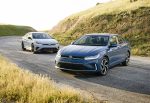
Porsche Taycan, 718, and VW Jetta Could Be on the Chopping Block as Volkswagen Group Seeks Major Cost Cuts

Volkswagen Group is looking hard at ways to simplify its business, and Porsche may not be immune from the knife. According to recent reports, VW is studying major cost-saving moves that could include trimming model lines across several brands, with Porsche’s next-generation Taycan, Cayenne Coupé, and a potential gas-powered 718 Boxster and Cayman successor among the models reportedly under review. Nothing has been officially confirmed, but the direction is clear: VW wants fewer overlapping products and more profit per model.
The pressure comes as VW Group deals with sliding sales, rising costs, global trade uncertainty, and stronger competition from Chinese automakers. CEO Oliver Blume has made it clear that the company needs to reduce costs across the board, especially within domestic production facilities. Reports indicate VW has already cut factory-related costs by an average of about 20 percent, but that may not be enough as the group works to protect profitability in a tougher market.
For Porsche, the situation is especially sensitive because the brand is supposed to be one of VW Group’s profit engines. Instead, Porsche has been dealing with weaker demand, slower EV momentum, and a rough financial stretch. The Taycan, once seen as a benchmark electric performance sedan, has become a more complicated business case as EV demand cools and competition grows. If VW is serious about cutting slower-selling or less profitable models, a next-generation Taycan could face a difficult internal debate.
The rumored gas-powered 718 successor may be even more painful for enthusiasts. Porsche has already moved toward an electric future for the Boxster and Cayman, but reports have suggested the company could still develop a combustion-powered compact sports car to serve buyers not ready for an EV. If that project is now in danger, it would mark another blow to traditional Porsche fans who still value lightweight, mid-engine, gas-powered sports cars. The 718 has never sold in SUV-like numbers, but it has long played an important role in keeping Porsche’s sports-car identity accessible.
Even the 911 may not be completely untouched, though the car itself is not going anywhere. Reports suggest Porsche could reduce the number of 911 variants rather than eliminate the model, which makes sense from a cost-control standpoint. The modern 911 lineup includes a wide range of trims, body styles, drivetrain layouts, performance packages, and special editions. Streamlining that complexity could save development and validation costs while preserving the core car that continues to anchor Porsche’s image.
The possible cuts would not stop at Porsche. Reports have also pointed to potential changes across VW, Škoda, Cupra, Seat, and Audi, with planned successors to models like the Jetta, Taos, Fabia, and Raval, along with Audi Sportback variants, possibly facing uncertainty. Whether all of this becomes reality remains to be seen, but the message from Wolfsburg is hard to miss. The era of endless niche models and sprawling product portfolios may be giving way to a leaner, more focused Volkswagen Group, and even Porsche’s most familiar performance nameplates may have to prove they can earn their place.
More Stories
Toyota Recalls Nearly 106,000 Land Cruiser SUVs Over Fuel Leak and Potential Fire Risk
Toyota’s legendary Land Cruiser has built its reputation on durability and reliability, but even one of the toughest SUVs on...
Legendary Mercedes-Benz AMG Hammer Could Make a Comeback as HWA Teases Stunning W124 Revival
Some cars earn legendary status through impressive sales figures, while others become icons simply because they were outrageously fast for...
10 Practical Gifts for Truck Owners Who Work Outdoors
Who actually needs another novelty keychain? For someone whose truck doubles as an office, a toolshed, and a lunchroom, the...
Uzbekistan September 2026: Chevrolet falls to 70.2% share, BYD up to 13.4%
The Chazor Champion is BYD’s best-seller in Uzbekistan. The Uzbek new car market is down -5% year-on-year in September to...
2027 GMC Yukon Invoice Price, Dealer Cost, and What You Should Pay Near You
The 2027 GMC Yukon sits at the upper end of the full-size SUV market, with a lineup that runs from...
2027 Honda Civic Invoice Price, Dealer Cost, and What You Should Pay Near You
The Honda Civic has been America’s best-selling compact car for decades, and the 2027 lineup adds meaningful new content with...