
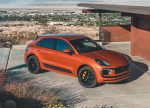
Gas-Powered Porsche Macan Production Ends in July as 911 Carries the Brand Through a Sales Slump

Porsche is finally closing the book on the gasoline-powered Macan, with production of the internal-combustion compact SUV set to end at the end of July. It is a major moment for the brand, considering the Macan has been one of Porsche’s most important volume models since arriving for the 2015 model year. What started as a controversial move into smaller SUV territory quickly became one of Porsche’s smartest business decisions, bringing new buyers into the showroom and helping fund the sports cars enthusiasts still love.
The timing, however, is not ideal. Porsche reported 122,306 global deliveries during the first half of 2026, down 16 percent from 146,391 vehicles during the same period last year. Nearly every major model line moved in the wrong direction, with the Cayenne down 9 percent, the Taycan down 25 percent, the Panamera down 38 percent, the Macan down 22 percent, and the recently discontinued 718 down 73 percent. The only clear bright spot was the 911, which climbed 19 percent and once again proved that Porsche’s core sports car still has remarkable staying power.
That makes the gas Macan’s exit even more significant. The all-electric Macan launched for 2024, but the combustion model remained a major seller while Porsche managed the transition. During the first half of 2026, Porsche delivered 35,315 Macans globally, and 19,695 of those were gasoline-powered versions. Put another way, the outgoing gas Macan alone accounted for about 16 percent of Porsche’s total global deliveries during that period. Losing that kind of volume will not be easy to absorb.
The Macan’s success was never hard to understand. It gave buyers Porsche handling, everyday usability, premium design, and a more approachable price point than many of the brand’s traditional offerings. It also arrived at exactly the right time, when compact luxury SUVs were exploding in popularity and buyers wanted something sportier than the usual German crossover formula. Even after more than a decade on sale, the gas Macan continued to feel like one of the more engaging choices in its class.
Now Porsche has to rely on the electric Macan to carry the nameplate forward, and that comes with obvious challenges. EV demand has been uneven, incentives have shifted, and many luxury buyers are still cautious about fully electric ownership. Porsche’s Taycan decline shows that even a respected EV from a performance brand is not immune to market pressure. The electric Macan may be talented, but replacing the volume and familiarity of the gasoline model will take time.
Reports suggest Porsche is working on a new gasoline-powered compact SUV that could arrive in 2028 at the earliest, likely giving the brand a bridge for buyers not ready to go electric. Until then, Porsche will lean heavily on the electric Macan, the Cayenne, and especially the 911 to steady the ship. The farewell to the gas Macan is more than just the end of a model. It is a reminder that Porsche’s move toward electrification comes with real sales risk, even for a brand with one of the strongest identities in the automotive world.


More Stories
Toyota Recalls Nearly 106,000 Land Cruiser SUVs Over Fuel Leak and Potential Fire Risk
Toyota’s legendary Land Cruiser has built its reputation on durability and reliability, but even one of the toughest SUVs on...
Legendary Mercedes-Benz AMG Hammer Could Make a Comeback as HWA Teases Stunning W124 Revival
Some cars earn legendary status through impressive sales figures, while others become icons simply because they were outrageously fast for...
10 Practical Gifts for Truck Owners Who Work Outdoors
Who actually needs another novelty keychain? For someone whose truck doubles as an office, a toolshed, and a lunchroom, the...
Uzbekistan September 2026: Chevrolet falls to 70.2% share, BYD up to 13.4%
The Chazor Champion is BYD’s best-seller in Uzbekistan. The Uzbek new car market is down -5% year-on-year in September to...
2027 GMC Yukon Invoice Price, Dealer Cost, and What You Should Pay Near You
The 2027 GMC Yukon sits at the upper end of the full-size SUV market, with a lineup that runs from...
2027 Honda Civic Invoice Price, Dealer Cost, and What You Should Pay Near You
The Honda Civic has been America’s best-selling compact car for decades, and the 2027 lineup adds meaningful new content with...