
Saudi Arabia Warns Iran It Will Be ‘The Greatest Loser’ If It Escalates Attacks

By Jack Phillips
Saudi Arabia issued a fresh warning to Iran on Monday following an Iranian attack that killed two Bangladeshi nationals in the kingdom.
The Saudi government is condemning the recent “Iranian attacks against the Kingdom and the member states of the Gulf Cooperation Council, as well as a number of Arab, Islamic, and friendly countries, which cannot be accepted or justified under any circumstances,” according to a Monday statement from the Ministry of Foreign Affairs posted on X.
“The Kingdom affirms that it retains its full right to take all necessary measures to safeguard its security, sovereignty, and the safety of its citizens and residents, and to deter aggression.”
Further Iranian attacks would represent an escalation that would have an adverse impact on Iran–Saudi relations, the ministry said.
“Iran would be the greatest loser,” it warned, concluding its statement.
The statement comes as the Saudi defense ministry announced early Monday that it had intercepted drones in the northern Jawf region and at the vast Shaybah oil field. Late Sunday, an attack in the central city of Kharj killed the two Bangladeshi nationals and wounded 12 others. All but one were from Bangladesh.
Nearby Qatari defense ministry said Monday it intercepted all 17 missiles and six drones launched from Iran toward the Gulf nation on Monday. There were no casualties or damage, the ministry said.
Starting on Feb. 28, the United States and Israel launched an aerial war campaign against Iran and killed a number of its leaders, including former top leader Ayatollah Ali Khamenei. Khamenei’s son, Mojtaba Khamenei, was named as his successor by the Iranian regime over the weekend.
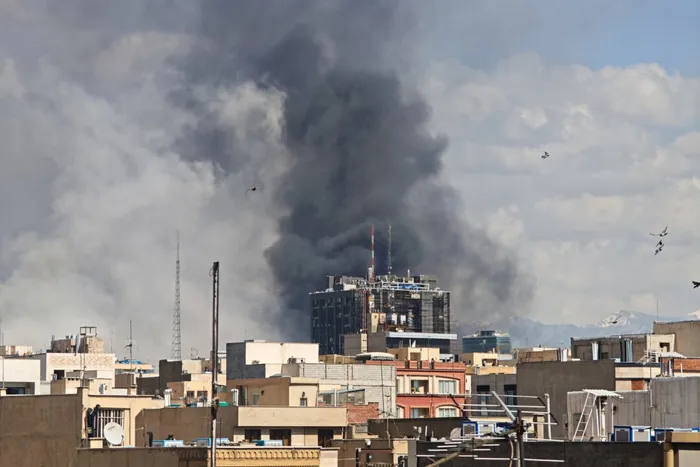
In response to the U.S.–Israel airstrikes, Iran has fired missiles and drones at neighboring countries, including Israel and U.S. trading partners in the region such as Qatar, the United Arab Emirates, and Saudi Arabia. Iran also fired drones or missiles toward the territories of Azerbaijan and Turkey last week, with Azerbaijani officials warning that it may respond to Iran if it doesn’t investigate.
At the same time, the U.S. State Department on Sunday ordered its non-emergency embassy staff to depart Saudi Arabia due to safety issues, citing heightened risks from terrorism, armed conflict, and drone or missile attacks from Iran and Yemen. It’s the first time that the U.S. government has ordered a departure order for Saudi Arabia since the conflict began.
The U.S. military announced on Sunday that a seventh American service member has died of injuries sustained during an Iranian attack on troops stationed in Saudi Arabia. The first six deaths were Army reservists killed in a March 1 attack in a Kuwaiti port.
Oil prices surged on Monday, leading to more worries that higher energy costs will fuel inflation and lead to less spending by U.S. consumers, the main engine of the economy. Tokyo’s benchmark Nikkei 225 index plunged as much as 7 percent in early Monday trading, while other Asian markets also tumbled.
The American Automobile Association, or AAA, reported on Monday that the average price for a gallon of regular gasoline is $3.478, a sharp increase over the average from a week ago, when it stood at $2.997 per gallon.
The Associated Press contributed to this report.


More Stories
German Airline Lufthansa to Cut 20,000 Flights to Save Jet Fuel
By Victoria Friedman German airline Lufthansa announced on April 21 that 20,000 short-haul flights would be canceled this summer due...
Duffy Seeking $10 Billion From Congress to Revamp Air Traffic Control System
By Aldgra Fredly U.S. Transportation Secretary Sean Duffy said on April 21 the department requires $10 billion in additional funding...
Iran Attacks 2 Container Ships After Trump Extends Ceasefire
By Tom Ozimek Iranian forces fired on two commercial vessels near the Strait of Hormuz on April 22, UK maritime...
Southern Poverty Law Center Charged With Fraud Over Payments to Informants in Extremist Groups
By Tom Gantert The Southern Poverty Law Center was indicted on federal fraud charges that accused it of illegally raising...
Dr. Oz Says Anti-Fraud Effort Coming to ‘All 50 States’
By Jack Phillips Dr. Mehmet Oz, the administrator of the agency overseeing Medicaid and Medicare, announced Tuesday that his agency’s...
US Retail Sales Jump in March as Higher Gas Prices Lift Spending
By Bill Pan Americans kept on spending in March amid a sharp rise in gasoline prices, new government data suggest....